


In Auguries of Innocence, William Blake wrote:
To see a world in a grain of sand
And a heaven in a wild flower,
Hold infinity in the palm of your hand
And eternity in an hour.
I’ve loved these lines for as long as I can remember. They felt profound the first time I read them, and they’ve only deepened with time — like all great art, they grow with you, taking on new meaning each time you revisit them.
For me, these words are an invitation: to notice the extraordinary in the ordinary. Blake suggests that the vast, ungraspable concepts — “heaven,” “infinity,” “eternity” — are too immense for our human minds to fully comprehend. Yet, in the small, tangible things around us, we can sense them.
The vastness of the universe (“a world”) can be glimpsed in the tiniest details of nature (“a grain of sand”), and heaven can be found in something as simple as a wildflower. Essentially, the microcosm reflects the macrocosm, and in paying attention to the little things of life, we find beauty, wonder, and even divinity. Blake’s lines are a call to open our eyes, slow down, and see the miracles that surround us every day…
REMINDER: Beauty is Truth is a reader-funded publication, supported entirely by you. There are no ads here, only independent writing devoted to celebrating beauty.
If you’ve been thinking about supporting my work, becoming a paid subscriber is the most meaningful way to do it:
With the annual subscription discount, it’s less than the cost of a coffee per month — and it’s what makes all of this possible.
But, of course, this is easier said than done. Advice like “open your eyes, slow down, and see the miracles” can sometimes feel like a cliché, far removed from the practicalities of daily life.
And this is where science and technology come in, allowing us to experience the wonders of nature in ways that our senses alone cannot. They help us realize that what seems simple often conceals vast universes within…
Take the microscope, for example. Its name comes from the Ancient Greek μικρός (mikrós), “small,” and σκοπέω (skopéō), “to look at, examine, inspect.” Under its lens, simplicity vanishes… A single drop of water teems with microbial ecosystems, symbioses, and ceaseless motion.
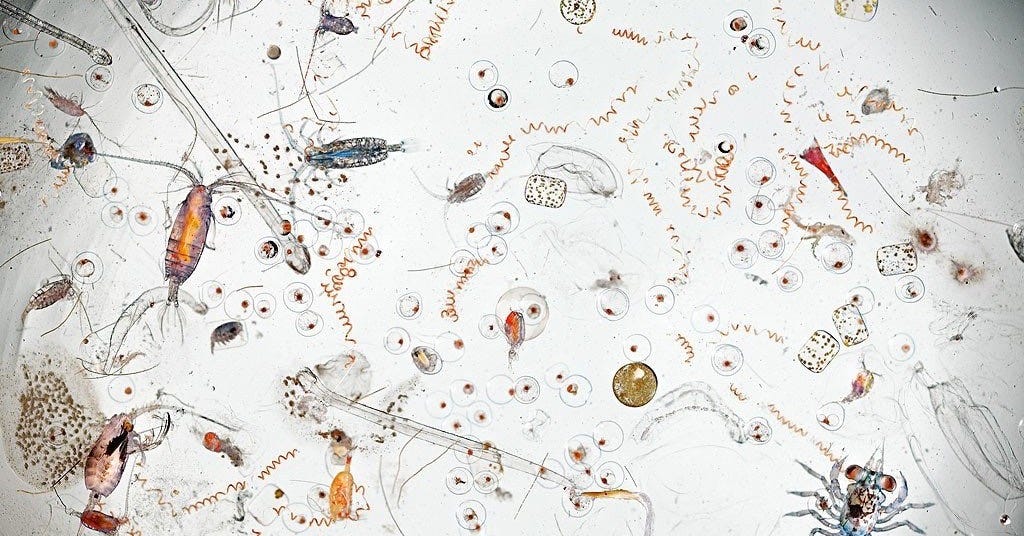
Shrinking the scale does not simplify the universe; if anything, it reveals a more crowded, dynamic, and interconnected world. What seems still to the naked eye seethes with life under magnification — molecules move, membranes fluctuate, particles collide. It’s poetic, in a way, that stillness, like silence, only exists at the human scale.
And then there’s the quantum world, where even observing changes reality. In the famous double‑slit experiment, electrons or photons form wave-like interference patterns when unmeasured — but the moment we try to detect their path, the pattern vanishes. Simply put, observing alters what is observed.
No matter our understanding — or our beliefs — there is something both revealing and profoundly moving about seeing the world in ways that transcend our senses. As Blake wrote in The Marriage of Heaven and Hell:
If the doors of perception were cleansed, everything would appear to man as it is, Infinite. For man has closed himself up, till he sees all things through narrow chinks of his cavern.
Here are 5 microscopic glimpses of the world — images that reveal the hidden beauty of things we normally overlook, helping us grasp what it truly means to “see a world in a grain of sand”:
1. Human Eye
This stunning photograph by Suren Manvelyan opens a window into the depth of the human eye. Beyond the cornea lies the iris, the colored part of the eye that regulates the size of the pupil.
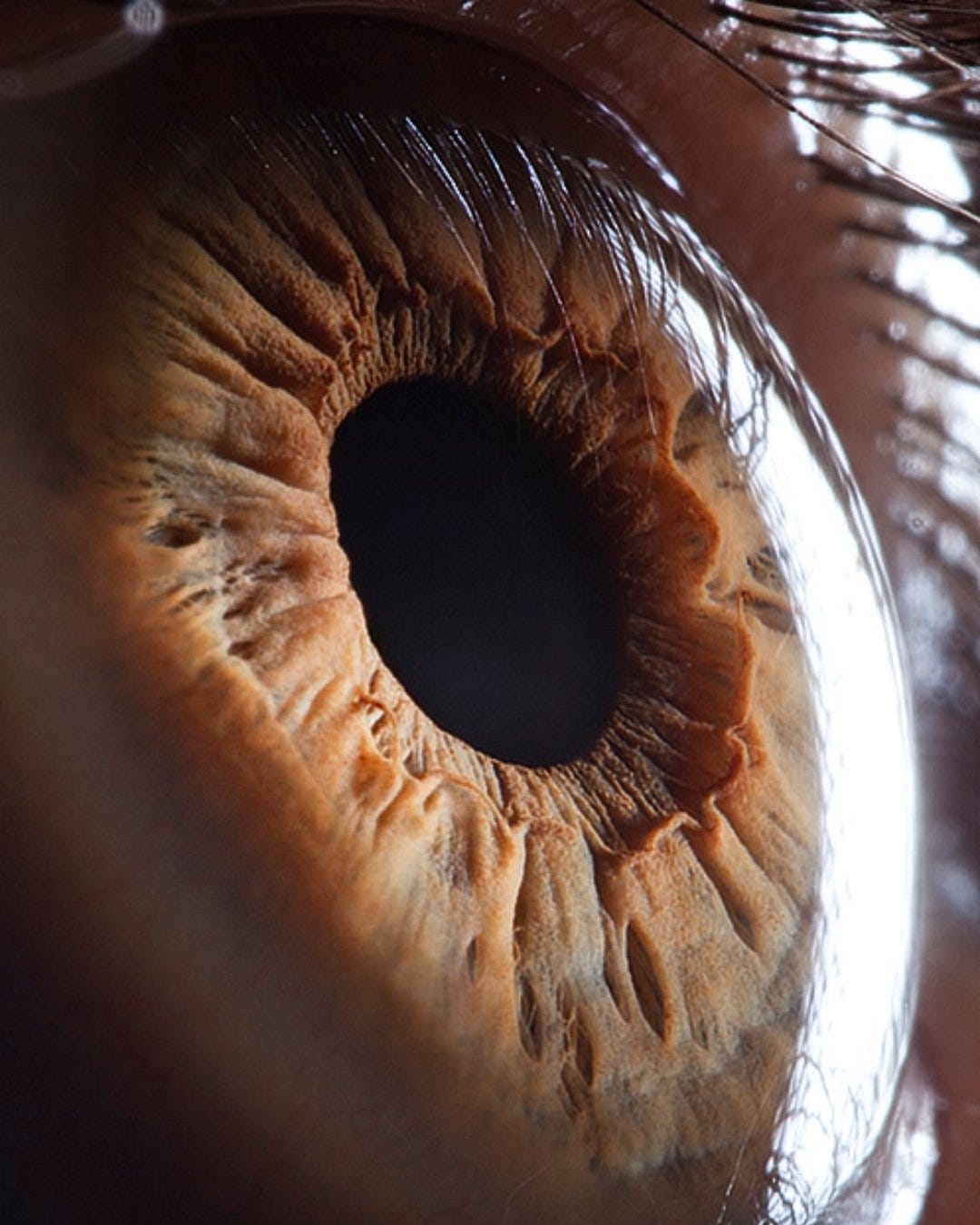
Up close, the iris is a landscape of folds and radiating fibers shaped by tiny muscles that control light. No two irises are the same… each carries a microscopic fingerprint unique to the individual. Eye color is not simply painted on: it arises from light interacting with the layered structures and pigments within the iris itself. The human eye shows us that even a seemingly simple surface can be an intricate, living mosaic…
2. Grains of Salt
Under a microscope, most common table salt (sodium chloride) forms near-perfect cubes.
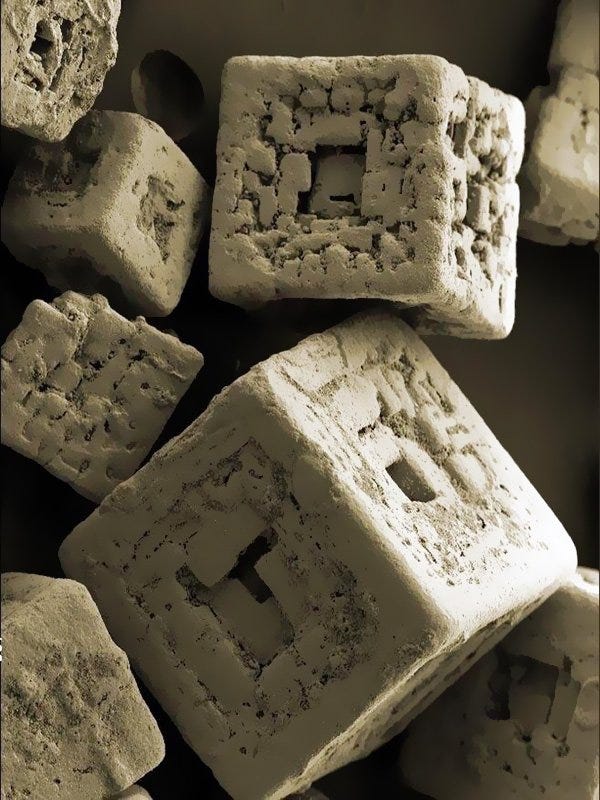
Each crystal reflects the regular arrangement of ions in the lattice. What appears as just a grain is actually a geometric masterpiece — proof that order can arise from the smallest building blocks of matter.
3. Cat’s Tongue
I couldn’t wait to show you this…
Under a microscope, a cat’s tongue looks like a forest of tiny little tongues:
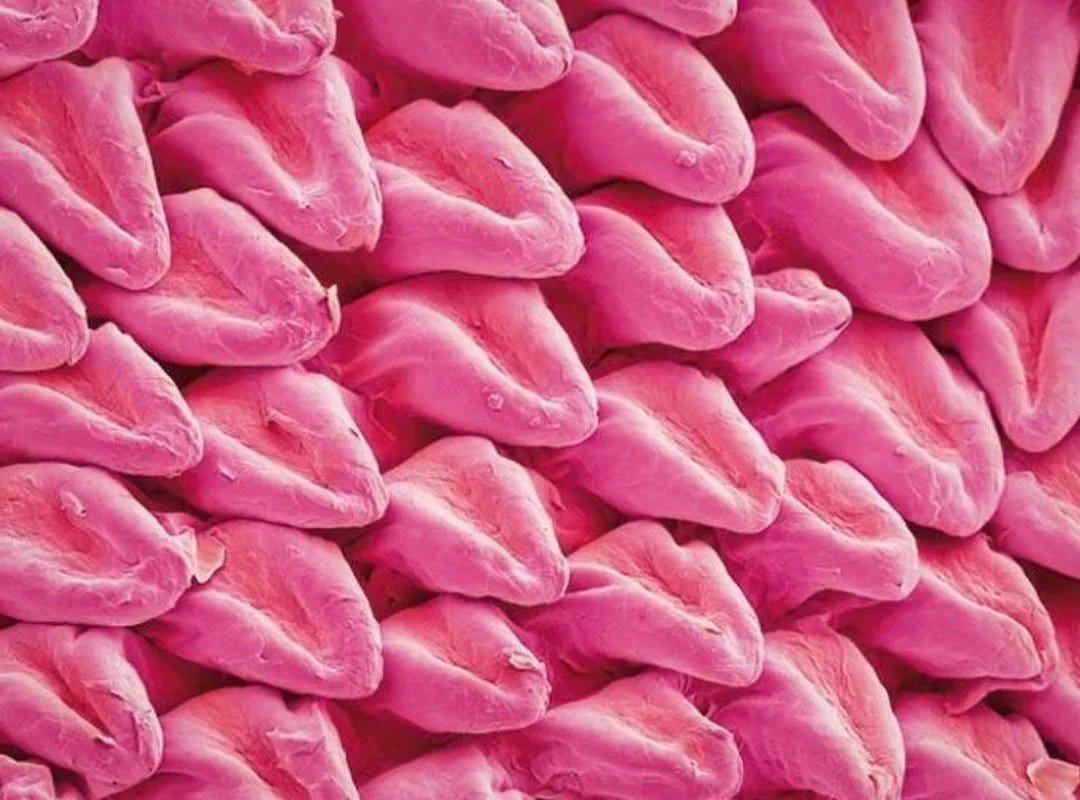
This is because it is covered with hundreds of backward-facing spines called papillae. Magnified, these spines resemble hooks or bristles made of keratin, the same material found in hair and nails. These structures allow cats to groom efficiently, detangling fur and removing debris… a perfect example of how even the subtlest structures are designed for survival.
4. Spider Eyes
These are close-up shots of spider eyes captured by Spanish macro photographer Javier Rupérez.
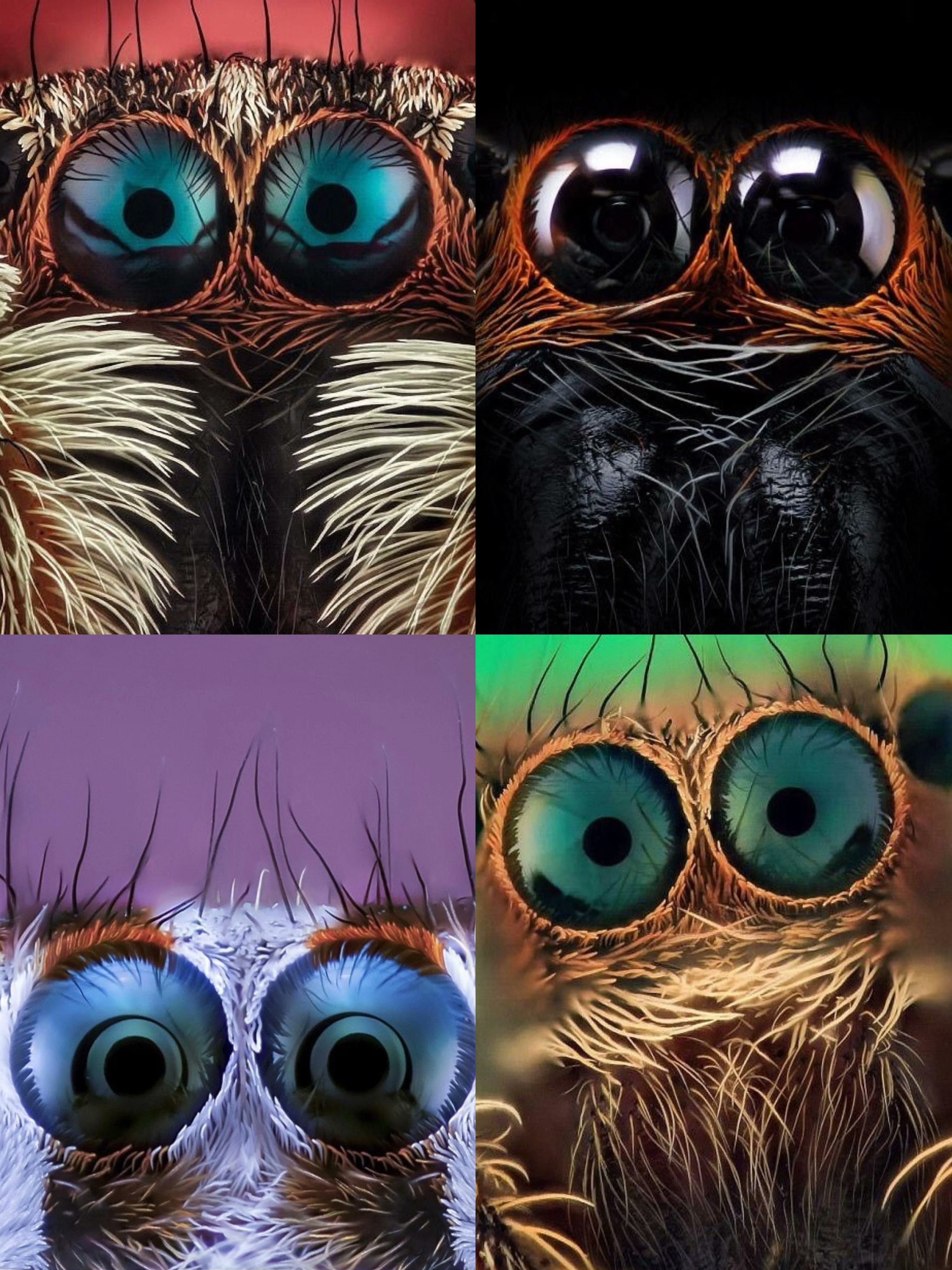
In an interview, he observed:
The eyes of spiders are particularly impressive when viewed from very close. They look like beings from another planet.
5. Snowflakes
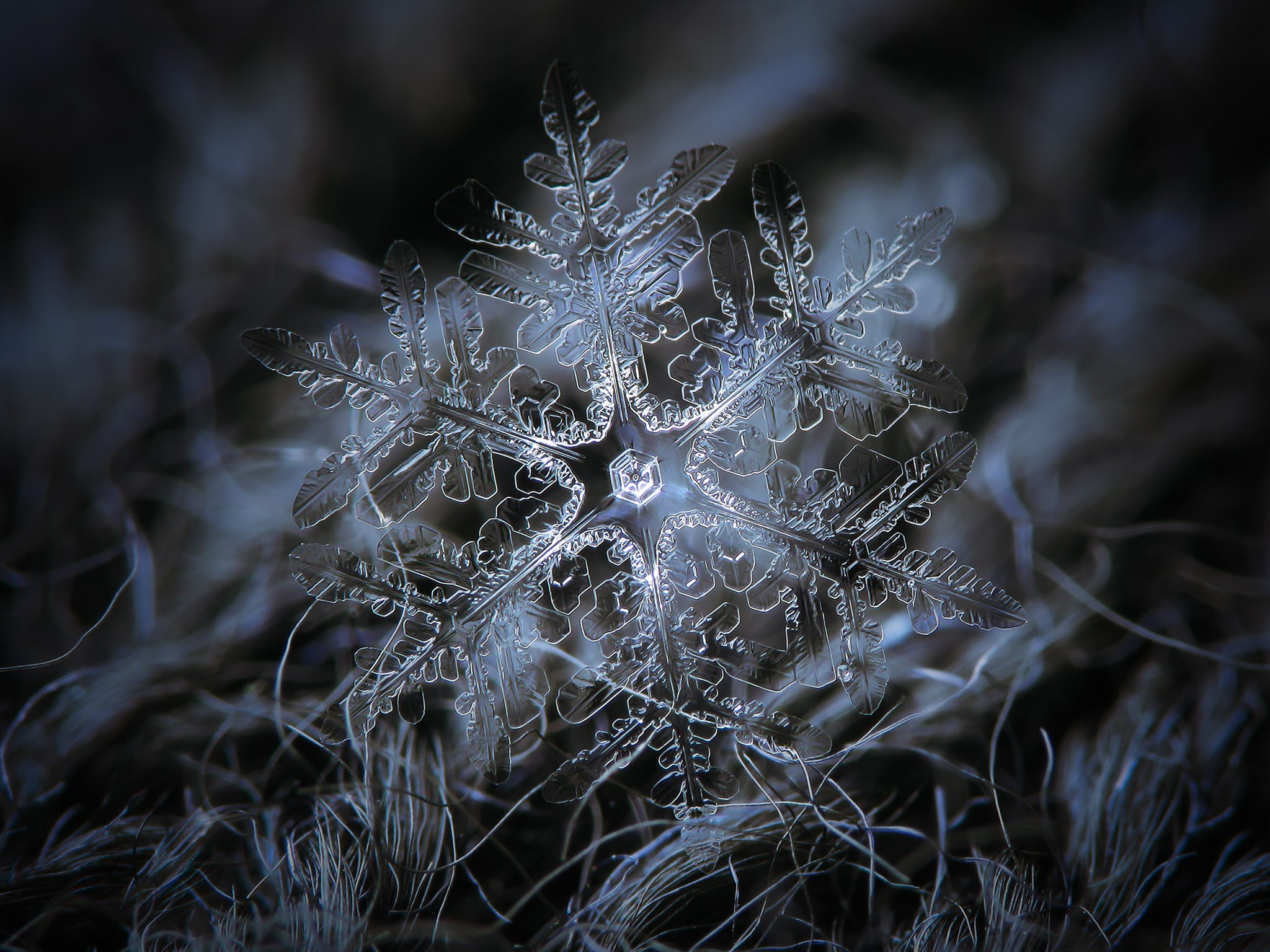
These macro photographs of snowflakes by Alexey Kljatov reveal a world at once minuscule and endless…
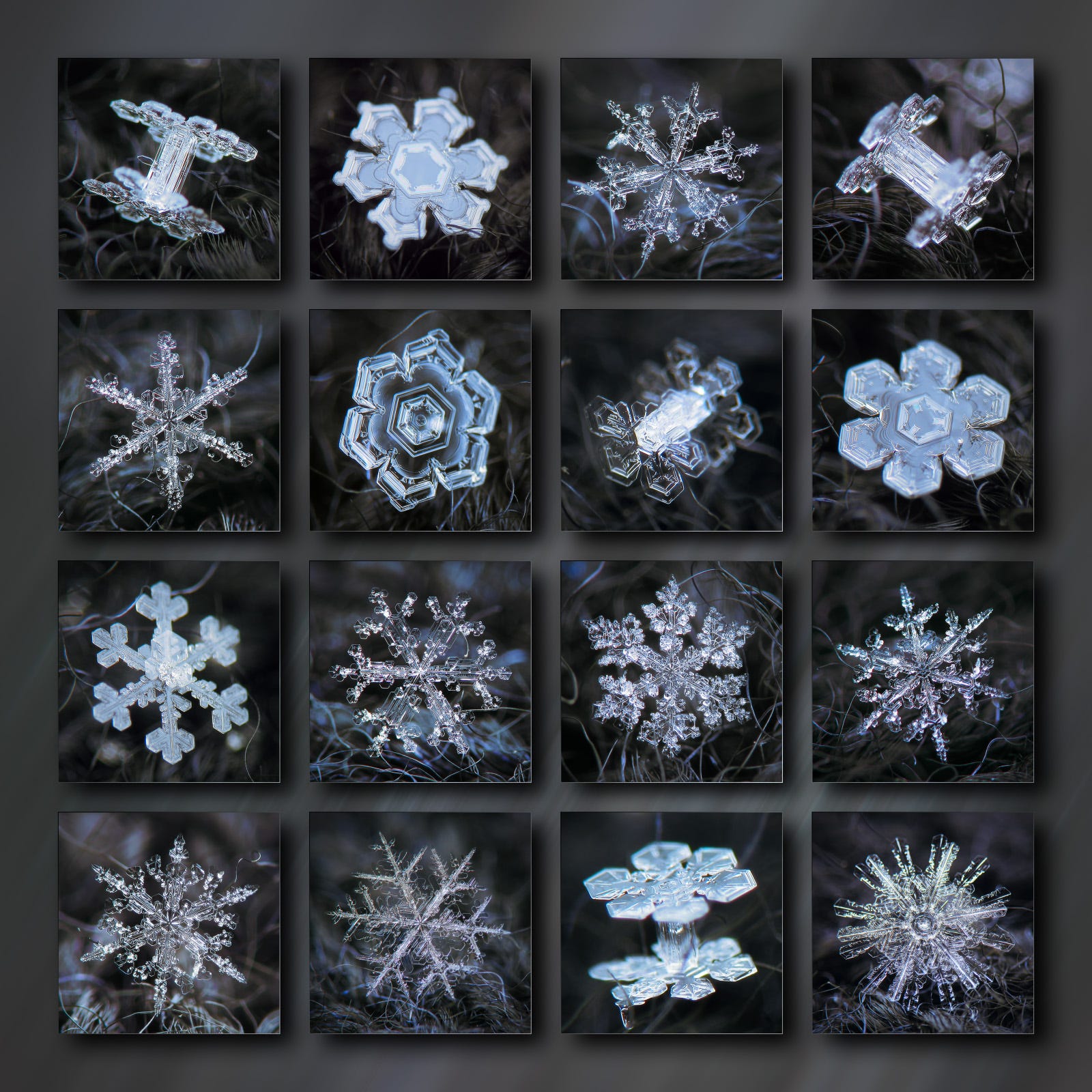
Every snowflake grows from a six-sided structure, where water molecules bond in symmetry, and each branch mirrors the others like a miniature universe shaped by invisible laws. In these transient forms, the microcosm reflects the macrocosm once more: a reminder that wonder is woven into the smallest details, and that the infinite can be held, if only we take the time to see it…
Thanks for reading! A quick reminder: this newsletter is completely independent and free of advertisers. If you enjoy the content, consider contributing a few dollars a month — and as a bonus, you’ll get access to exclusive articles, the subscriber-only chat, and the full archive:
Your support means the world to me — thank you for making it possible to continue this work.
Your newsletter is one of the most amazing, beautiful, fascinating "stops" on the internet. This was another wonderful experience. I consistently say, "wow!" to the images, accompanied by your concise, helpful writing.
Beautiful poetry, beautiful images and a beautiful perspective on life itself. Pointing out that making the choice to really see the glories of our world will make life better seems so simple and so true and if more people decided to do so would make us more joyful. Thank you. Have a beautiful day.