


Some paintings are mirrors disguised as windows. You think you are looking out at a stranger’s world, and slowly you realize you are looking at yourself…
We are taught to approach art like a puzzle: to decode the symbols, admire the technique, and work out what it all means. But no one has ever wept in front of an artwork because the composition was balanced. We are moved because a feeling we were sure was ours alone is looking back at us out of the canvas.
The word “emotion” comes from the Latin emovere, “to move out.” And that is exactly what the greatest paintings do: they reach into us and draw something long buried back into the light, where we can finally see it.
The great masters always knew this was the point. Edvard Munch once said:
I don’t believe in an art that is not born out of man’s need to open his heart.
But it was a legendary novelist who explained it best. In his essay What Is Art?, Leo Tolstoy argued that it exists for one reason only:
The activity of art is based on the fact that a man, receiving through his sense of hearing or sight another man’s expression of feeling, is capable of experiencing the emotion which moved the man who expressed it.
And then comes the part I love most:
The receiver of a true artistic impression is so united to the artist that he feels as if the work were his own and not someone else’s, as if what it expresses were just what he had long been wishing to express. A real work of art destroys, in the consciousness of the receiver, the separation between himself and the artist. In this uniting of it with others lies the great attractive force of art.
What follows are 8 paintings that manage it. Some are famous, some you may never have seen. But they all share one thing: they say what we can’t…
REMINDER: this is a teaser for my subscriber-only articles.
Beauty is Truth is a reader-funded publication. There are no ads here, only independent writing devoted to celebrating beauty.
If you’ve been thinking about supporting my work, becoming a paid subscriber is the most meaningful way to do it:
With the new annual subscription discount, it costs less than a coffee a month — and it’s what keeps all of this going. Gift subscriptions to Beauty is Truth are now available too:
1. The One Who Never Stopped Waiting
This is the most heartbreaking reunion in all of literature, and to understand it, you first have to know who the dog is…
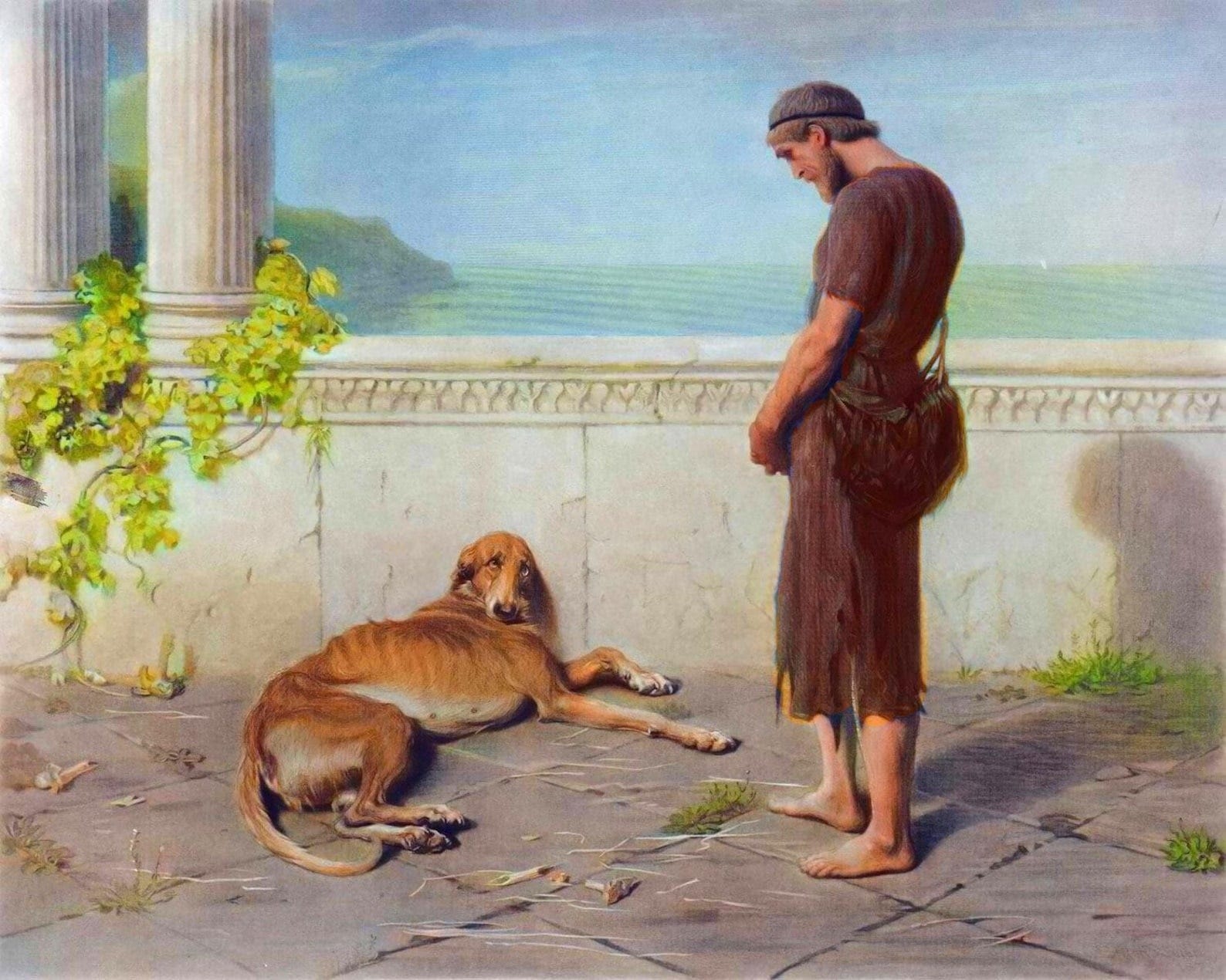
His name is Argos, and he belonged to Odysseus.
Before sailing for Troy, Odysseus had bred him himself, and the puppy grew into the finest hunting dog on the island. But the war came before Argos was even fully grown. Homer tells us that Odysseus “got no joy of him,” because he left before their life together could properly begin. It is the same phrase Homer uses, one book earlier, for Odysseus’s infant son. The dog and the child, both left behind before the bond could form.
Odysseus did not come home for twenty years…
When he finally returned to his island, he came in disguise, dressed as a beggar, because his house was full of men trying to steal his wife and his kingdom, and to survive he had to be a stranger in his own home. At first, not one person knew him. Not the servants who had worked his land for twenty years. Not the people who had known his face all their lives. Not even his wife.
But lying in the dirt, too weak to stand and covered in ticks, was an old dog. Argos had waited twenty years for a man everyone else believed was dead…
And when a filthy stranger shuffled up to the gate, the dog lifted his head. He knew. Something in that ruined old body still recognized the man, and he was the only one in all of Ithaca who did. He pricked up his ears. He tried to rise, and could not. And he wagged his tail, one last time, for the master he had never stopped waiting for.
Odysseus saw him. But because he was in disguise, surrounded by enemies, he could not run to him. He could not kneel in the dirt and hold him. He could not even say his name. He could only look at his oldest friend, and turn away so no one would see the tear running down his face.
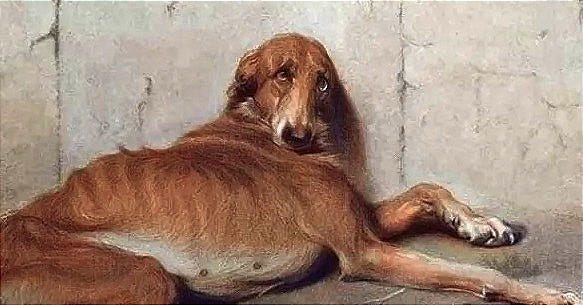
That is the moment Briton Rivière painted in 1885: the old dog, the disguised king frozen mid-step, and the terrible, silent distance between them that love was not allowed to cross. Look at the dog’s face. Anyone who has ever loved something and waited for it understands that face completely, without a word of explanation.
And then, in Homer’s own lines:
The dark shadow of death closed down on Argos’ eyes, the instant he had seen Odysseus, twenty years away.
He had held on to life for one reason, and one reason only: he was waiting to see Odysseus come home. And the moment he finally did, he let go…
2. The Painting That Explains Why Art Exists
You have probably seen this painting online. A knight in armor stands against a wall while the woman who loves him traces his shadow onto the stone.
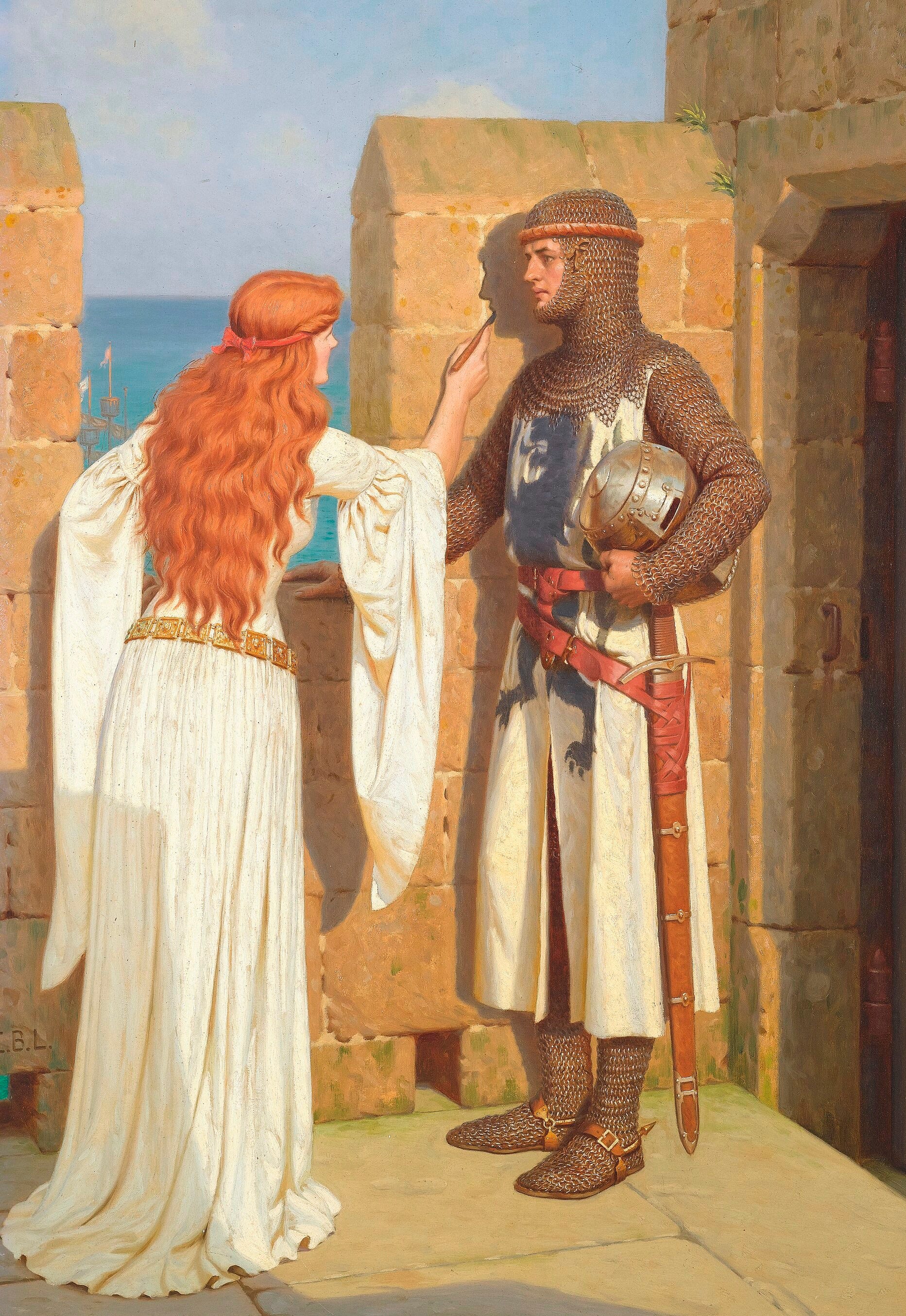
Soon he will be gone, perhaps forever, and what she is doing in these last few minutes is something human beings have done for as long as we have had someone to lose, and it may be the very reason art exists at all…