


Something Walt Disney said has been on my mind lately:
I love the nostalgic myself. I hope we never lose some of the things of the past.
He was talking about the world at large, but it reads differently now, because so much of what he built has become exactly that: a thing of the past...
There was a time, and it wasn’t so long ago, when a Disney film was made entirely by hand. Not rendered by a room full of computers, but drawn by hundreds of people, hunched over desks for years at a time, up to twenty-four separate drawings for every single second you watched.
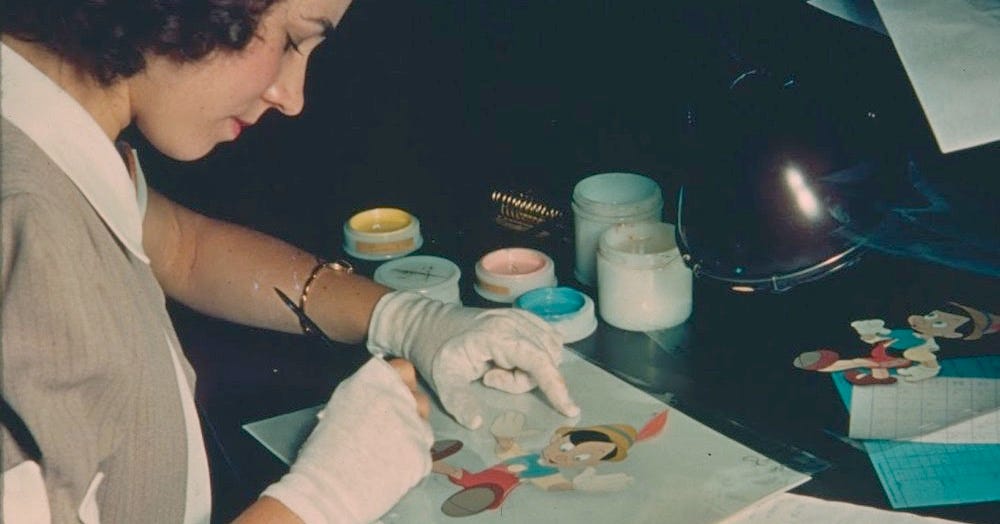
We have forgotten what the word even means. “Animation” comes from the Latin anima: soul, breath, the thing that makes a living creature alive. To animate something is, in the most literal sense, to give it a soul. And that is the honest way to describe what these people were doing.
Someone would sit alone with a pencil, and out of talent and patience and a devotion that’s hard to imagine today, breathe a soul into a dead drawing so completely that a child in a dark theater would forget it wasn’t real, cry over it, and carry it for the rest of their life.
That craft is gone now. The films are still here, but no one makes them this way anymore, and in an age that hands more and more of its art to AI, it’s hard to imagine anyone ever will again. Which makes it worth remembering what those artists were actually reaching for. Walt even had a name for it. He called it “the plausible impossible”: not a hyperrealistic copy of the world, but something stretched and exaggerated beyond anything that could ever be real, because he understood that a drawing which imitates life exactly feels dead on the screen.
What follows are 5 films that show you what it took, and just how astonishing the people behind them were, achieving by hand what no machine has ever managed to fake…
REMINDER: Beauty is Truth is entirely reader-funded. There are no ads here, only independent writing devoted to celebrating beauty. And it can only continue with your help.
If you’ve been thinking about supporting my work, becoming a paid subscriber is the most meaningful way to do it:
With the new annual subscription discount, it costs less than a coffee a month, and it is what keeps all of this going.
Gift subscriptions to Beauty is Truth are now available too:
1. The Film That Should Have Ruined Him
To understand what these people were capable of, you have to start at the beginning, with the film everyone was certain would fail…
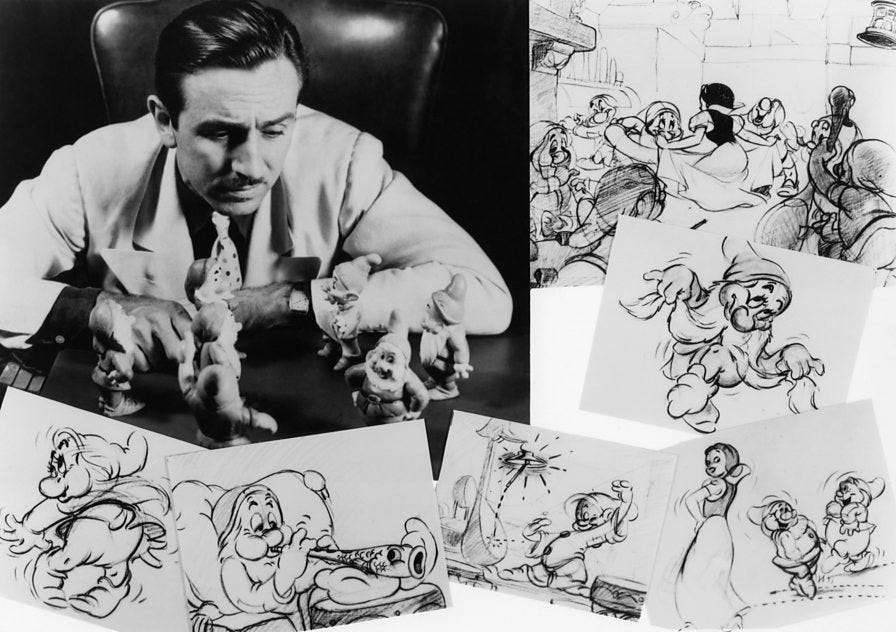
In 1934, Walt Disney told the world he was going to make a feature-length cartoon. Nobody had ever done it and the entire industry thought he had lost his mind. They called it “Disney’s Folly,” and waited for it to bankrupt him. Even his own wife told him that nobody would ever pay to sit through a cartoon about dwarfs.
The scale of what he was attempting is hard to take in even now: Snow White took around three years, 750 artists, and nearly two million separate paintings to complete.
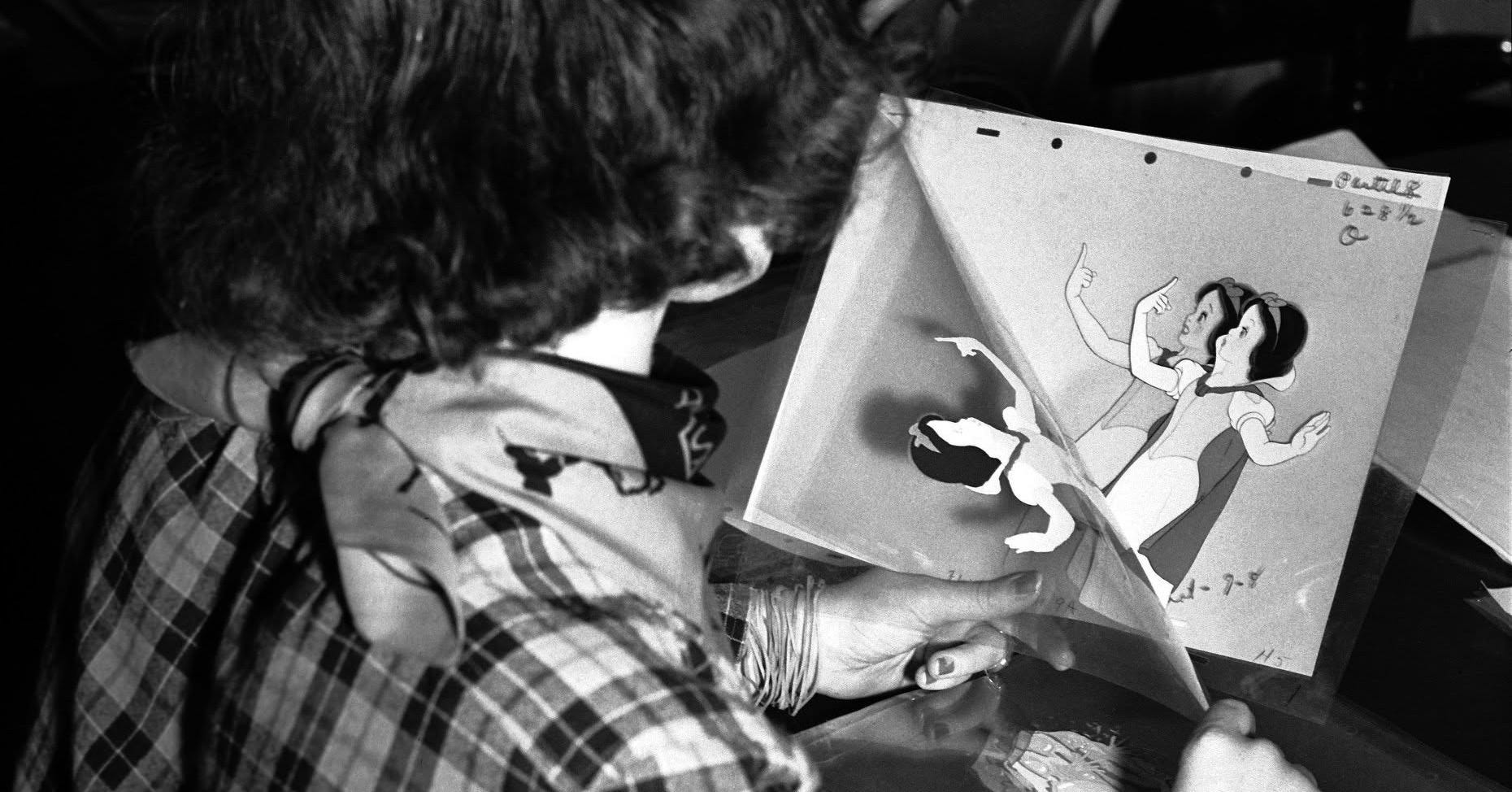
The budget, which was supposed to land somewhere near a couple hundred thousand dollars, ballooned to almost one and a half million, an unthinkable sum in the middle of the Depression, and Walt had to borrow against everything he owned to finish it.
But the part that matters most is what they had to invent to do it. A flat cartoon couldn’t hold a viewer for eighty minutes; it needed depth, a world you could fall into. So Disney’s team built a machine to create it. They called it the multiplane camera, a tower standing over ten feet tall that held layers of separately painted glass, foreground, middle, background, each at a different distance from the lens.
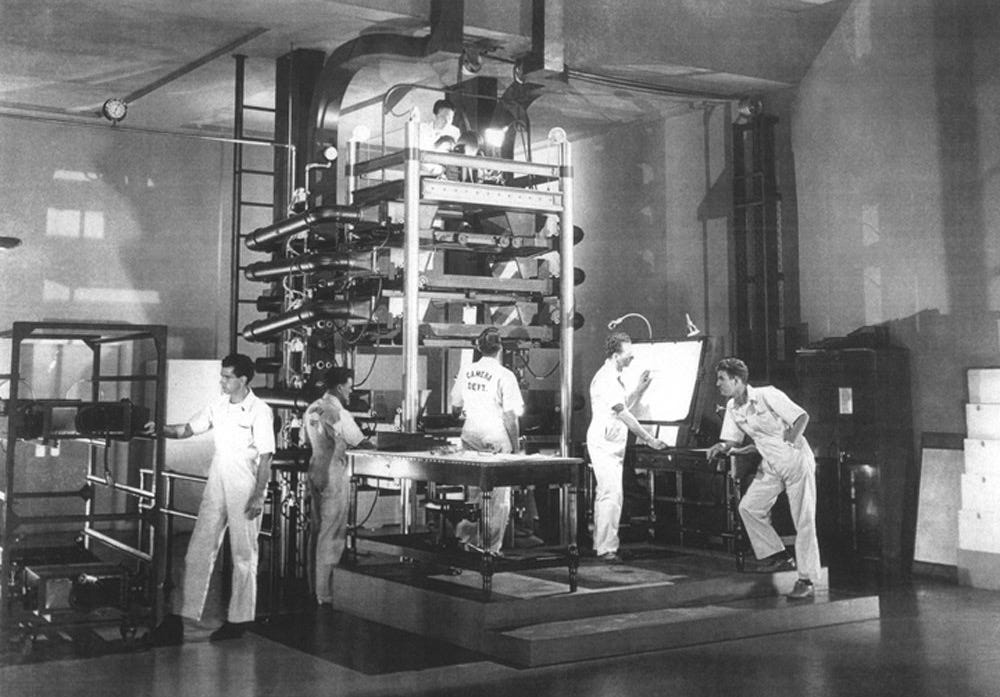
By moving those panes independently, the camera could push through a scene, past the trees and into the forest, and for the first time a drawing had genuine space inside it. They tested the whole apparatus first on a short film called The Old Mill before they dared trust it with the feature.
Walt, being Walt, was delighted with his new toy and he told Time magazine:
I get a kick just watching the boys operate it.
And then it opened. On the night of December 21, 1937, at the Carthay Circle Theatre in Los Angeles, a room full of Hollywood royalty, the very people who had called it a folly, rose to their feet. The film went on to become the most successful picture in the world. Far from ruining Walt, it built his studio, and it invented an entire art form, the one every film after it would be measured against…
That is where this story begins: with hundreds of people, bent over two million drawings, betting everything they had on the idea that a cartoon could steal your heart.
2. An Entire Year Spent Drawing Water
Three years after Snow White, the studio made Pinocchio, and to this day anyone who studies animation for a living will tell you it is the most technically perfect hand-drawn film ever made.
There is a whole craft inside animation that most people never think about, called effects animation. It is the art of drawing everything that isn’t a character: the rain, the smoke, the fire, the shadows, and hardest of all, the water. A person can be drawn as a shape that moves. Water has no shape. It ripples, splashes, catches light, turns to foam, goes dark and heavy when you sink beneath it, and every one of those behaviors has to be understood and then drawn, by hand, frame after frame, until it looks like the real thing.
To see what that actually meant, look at this original hand-painted production cel from the film:
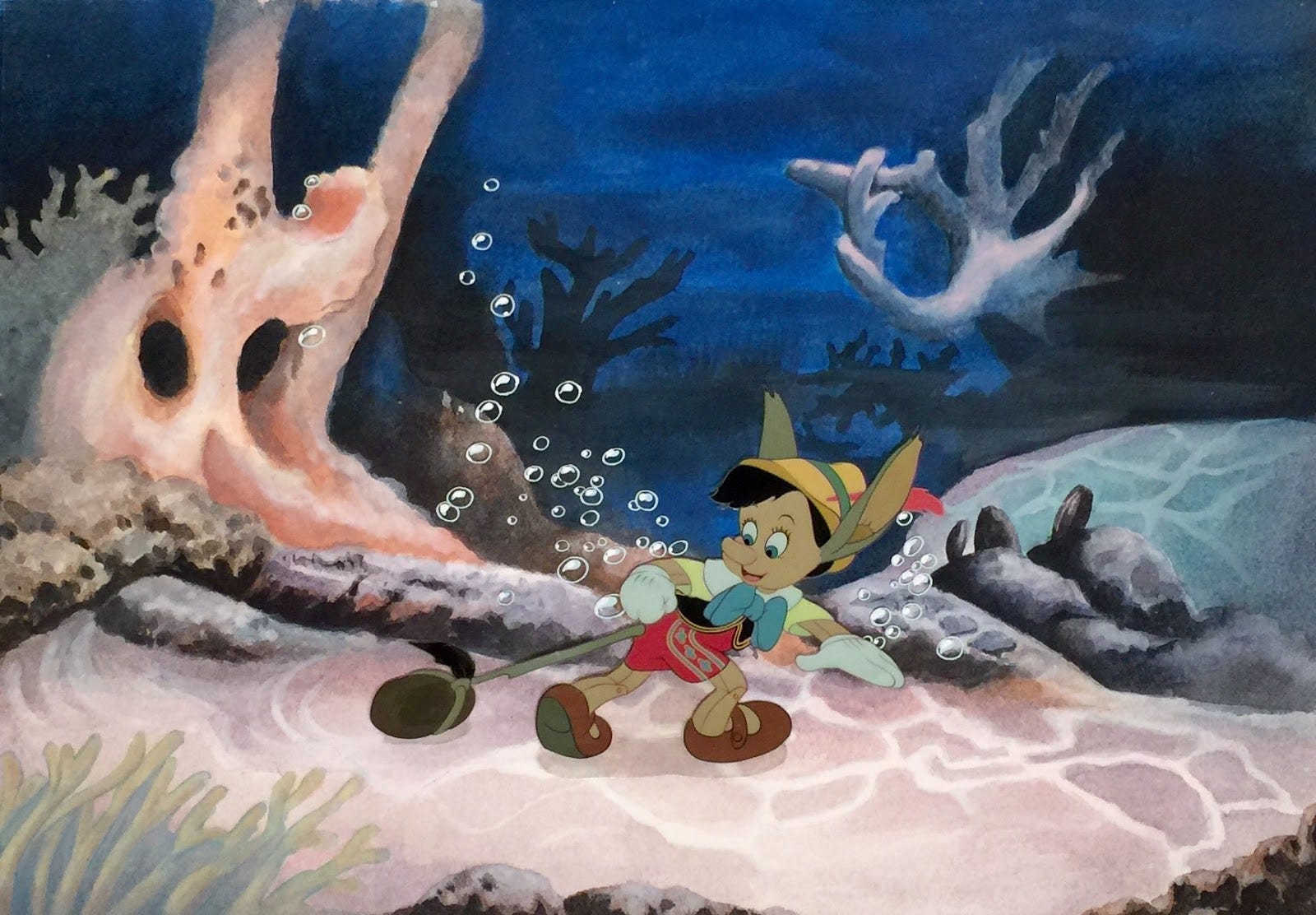
One of the effects animators on Pinocchio, a man named Sandy Strother, kept a diary while he worked. He spent a full year animating nothing but water. A year of one man’s working life, drawing water until it moved the way it does in the world.
And it worked...
To give the ocean depth, the animators packed detail into the nearest waves and let it fall away toward the horizon, then traced every wave a second time in colored pencil to give it a sculpted, three-dimensional edge. The result stunned even the artists who made it. Ollie Johnston called it “one of the finest things the studio’s ever done.” His colleague Frank Thomas put it more bluntly:
The water looks so real a person can drown in it, and they do.
Then there is Monstro, the whale. The climax is a chase across a raging sea against a leviathan that swallows ships whole, all of it conjured by hand. And the care ran deeper than what reached the screen: to help animators draw a character consistently from every angle, Walt built a whole department that sculpted them first, in clay. Before a single frame of Geppetto was drawn, a sculptor had shaped the old woodcarver in three dimensions so the animators had something real to turn in their hands and study from every side.
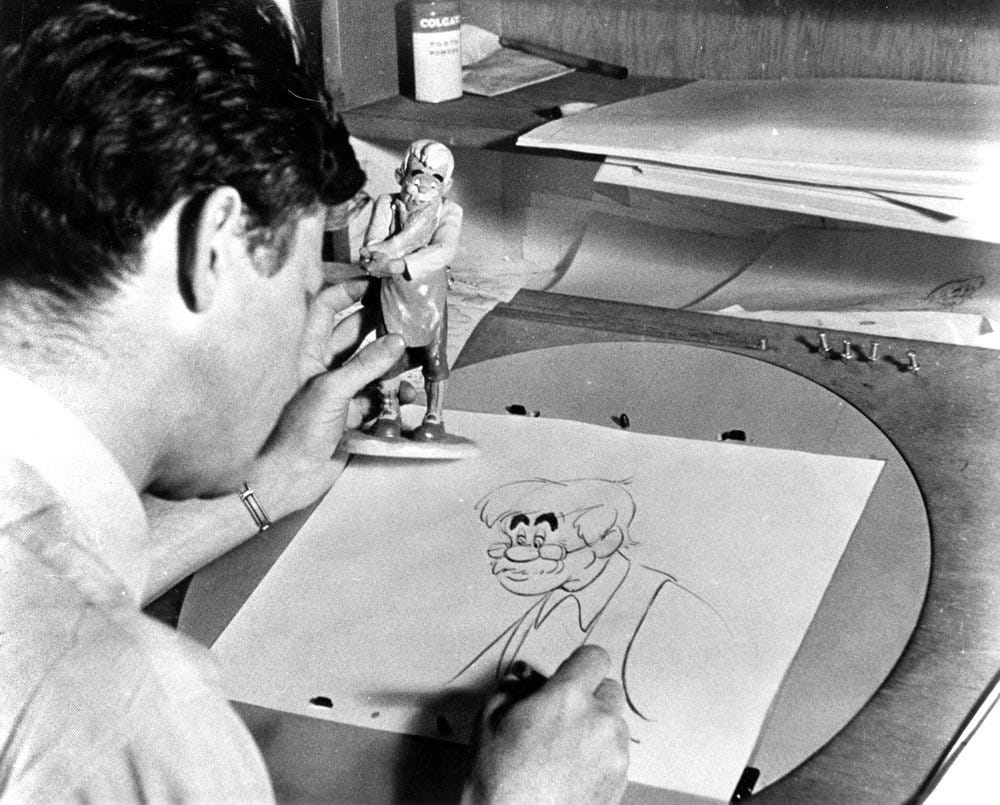
And that is why the artistry behind Pinocchio never ceases to amaze me: every drop in that ocean was a choice someone made by hand, one frame at a time. A year of a person’s life went into it, just so the sea would look real enough to drown in…
3. The Man Who Painted a Fairy Tale Like a Cathedral
By the late 1950s, Walt Disney was restless. His recent films had been criticized as pretty but flat, cartoons without a soul of their own. So for Sleeping Beauty, he did something he had never done before. He handed the entire look of a feature film to a single painter, and told him to make something nobody had ever seen.
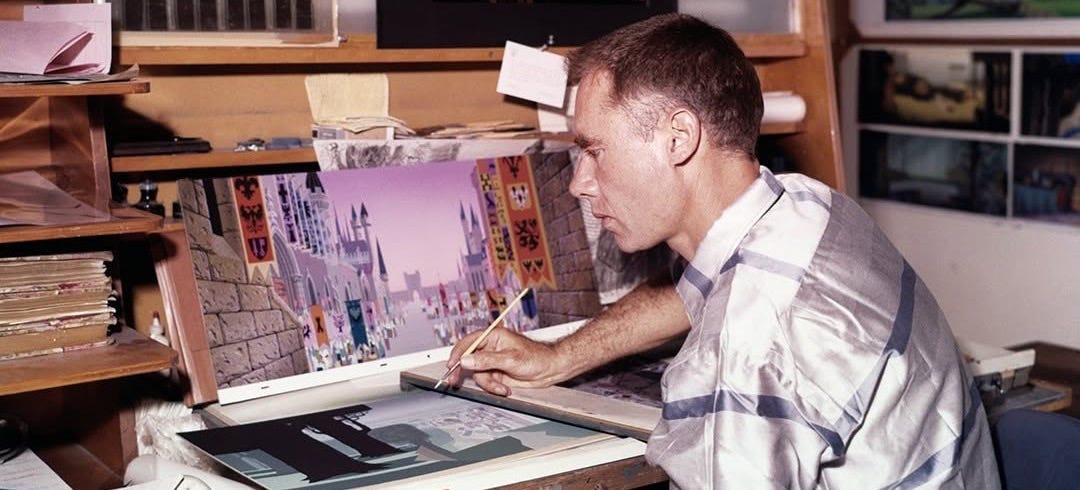
The painter was Eyvind Earle, an American artist who had sold a watercolor to the Metropolitan Museum of Art at the age of twenty-three. The idea began when one of the studio’s layout artists visited the Cloisters in New York, stood in front of the medieval unicorn tapestries, and came back with a thought: what if a film could look like that?
Earle took that thought and built an entire world from it.
He studied the unicorn tapestries, fifteenth-century illuminated manuscripts, Persian miniatures, Gothic cathedrals, Bruegel, Botticelli, and he fused them into something unlike any cartoon before or since. In his own words:
I wanted stylized, simplified Gothic. Straight, tall, perpendicular lines like Gothic cathedrals. I rearranged the bushes and trees in geometrical patterns. I made a medieval tapestry out of the surface wherever possible.
Walt understood exactly what he was asking for, and exactly what it would cost him. He told the film’s sequence director:
What we want out of this is a moving illustration. I don’t care how long it takes.
The production stretched across nearly the entire decade of the 1950s.
It was shot in an enormous 70mm widescreen format, which meant every background had to be painted far wider and in far greater detail than a normal film, and a single one could take weeks. Earle personally set the color and directed the look on virtually every background in the movie. The forest scene alone reportedly cost ten thousand dollars. By the time it was finished, Sleeping Beauty had become the most expensive animated film ever made, around six million dollars, which is something like sixty-five million today.
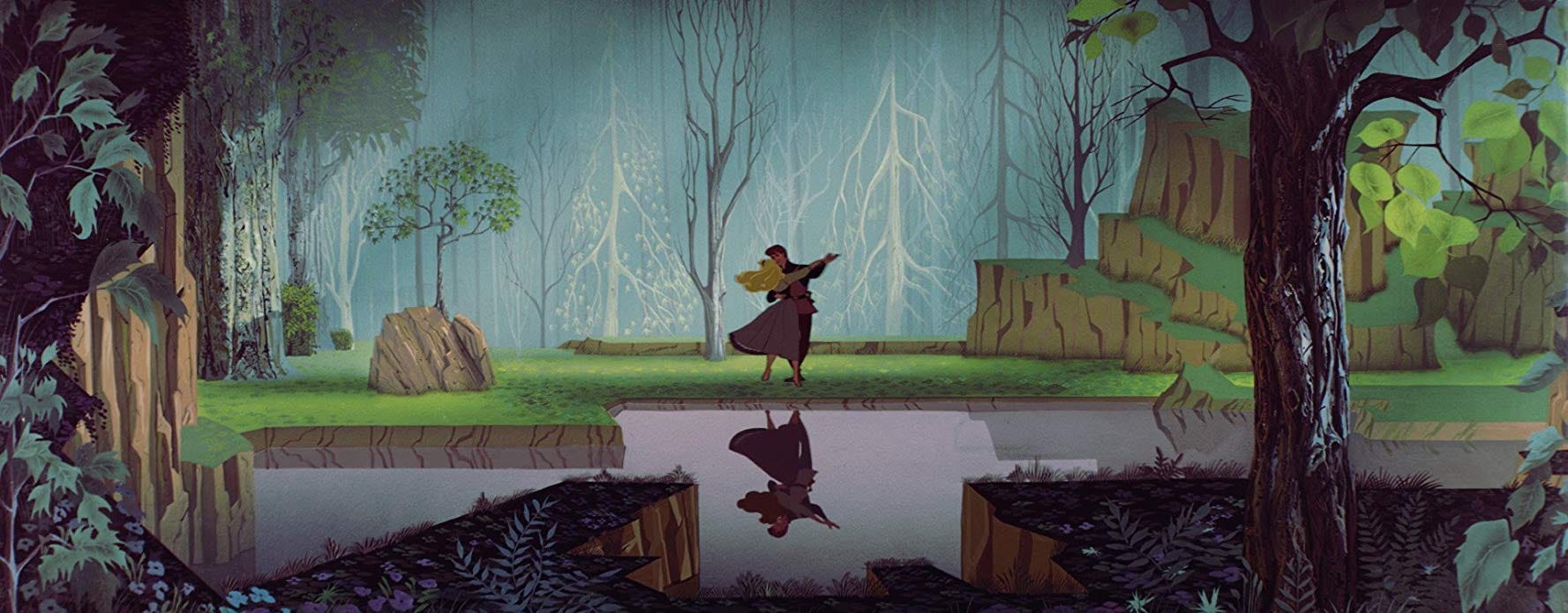
And the labor did not stop with the paintings: this was among the last Disney features whose characters were inked onto celluloid entirely by hand, every outline of every character on every frame, traced in ink by an artist, before it could be painted and photographed.
The film was a commercial disappointment when it opened in 1959. It very nearly broke the animation department. But look at it now and it does not look like a cartoon at all: it looks like an illuminated manuscript that someone taught to move, made in an age when a studio would still let one obsessive painter spend the better part of ten years turning a fairy tale into fine art…
4. The Machine That Saved the Studio and Broke Walt’s Heart
This is the moment the story turns.
Sleeping Beauty had been a masterpiece, but it had nearly ruined Disney. Years of work and six million dollars for a film that lost money at the box office; the hand-inking of every single cel, one outline at a time, had become so slow and so expensive that it threatened to close the animation department for good. And the next film, One Hundred and One Dalmatians, presented a problem that would have been almost unthinkable to draw the old way: not one spotted dog, but ninety-nine of them, each covered in spots that had to move and shift with every step, across a feature-length film.
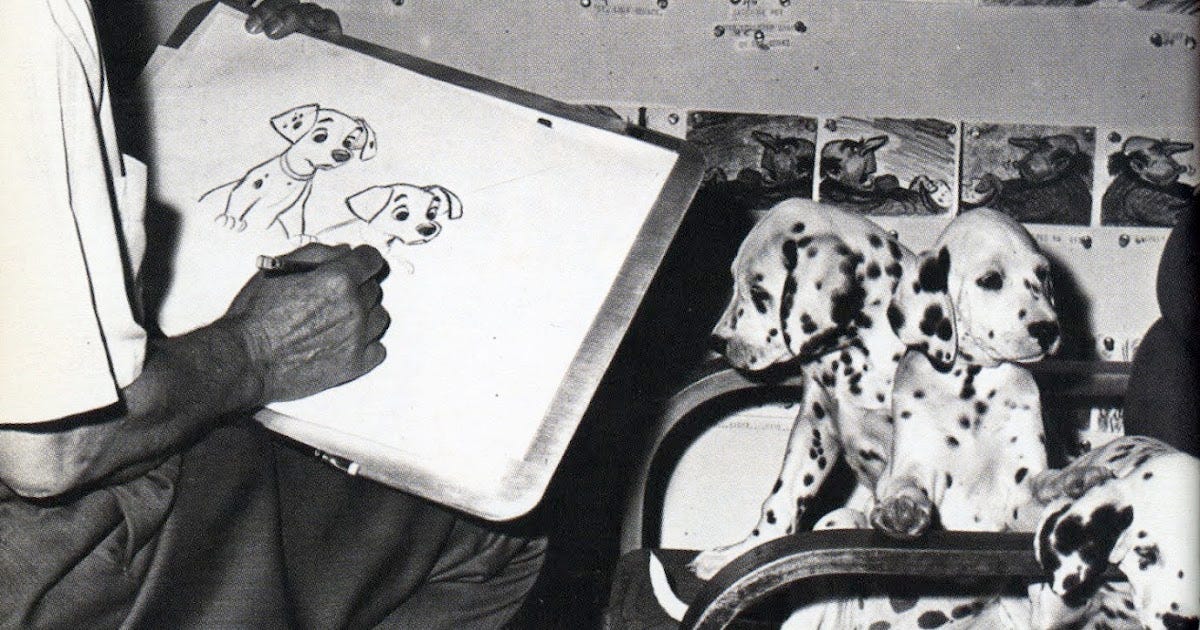
The old method could not survive this. Something had to give.
The rescue came from a man named Ub Iwerks, one of the most important figures in the studio’s history, the co-creator of Mickey Mouse himself. Iwerks had been tinkering with the office photocopier, the Xerox machine, and he found a way to adapt it to animation. Instead of handing every drawing to the ink department, where an artist would painstakingly trace the animator’s pencil lines onto the clear celluloid by hand, the Xerox camera could now transfer those pencil drawings directly onto the cel.
It solved everything. The ninety-nine dogs became possible because the spots could be reproduced and repeated where once they would have taken armies of inkers years. The crushing cost of hand-inking vanished: it saved the animation department, and very likely the studio’s future in feature films.
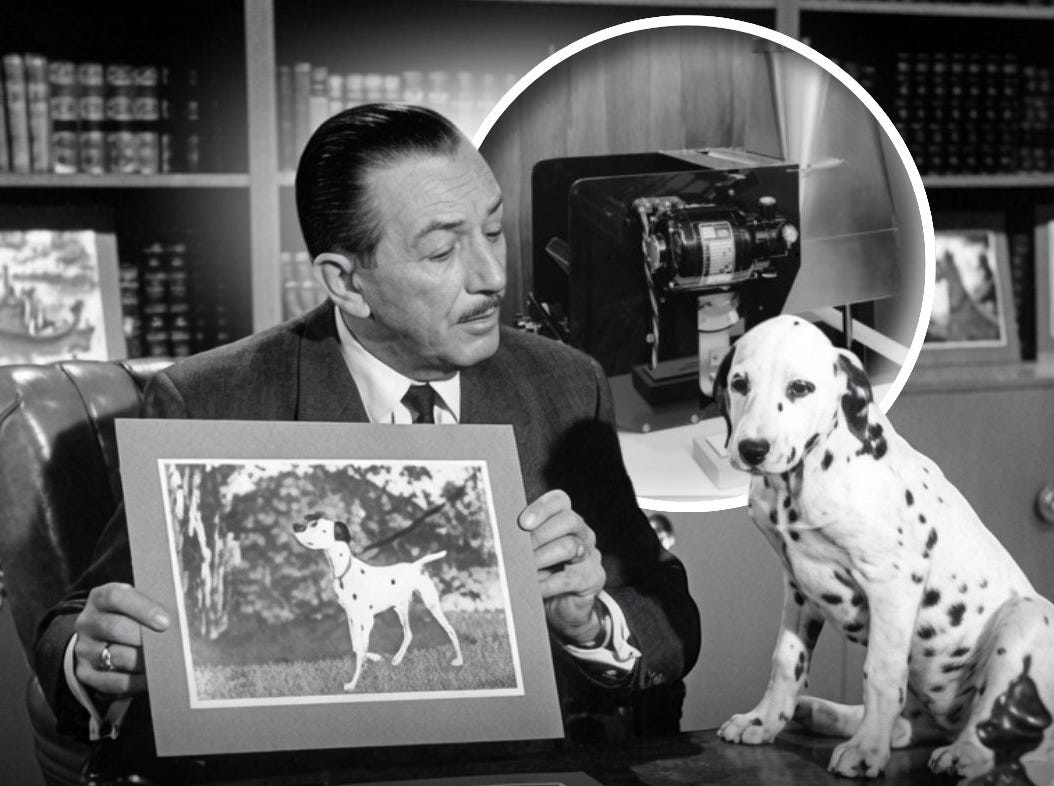
But it came at a price... the Xerox left every character with the animator’s raw pencil line: rough, dark, scratchy, toner clinging imperfectly to the slick cel, nothing like the clean, delicate, hand-traced ink line Walt had spent his entire life perfecting. To him, the film looked unfinished. He is reported to have genuinely disliked the harsh new style, feeling it cheapened the artistry the studio had been built on. The most beautiful line in animation, the one that had made Snow White and Pinocchio and Sleeping Beauty beloved classics, had been traded away to survive.
And it worked so well that the studio used the Xerox process for roughly the next thirty years. The hand-inked cel, the craft of those hundreds of artists tracing every line by hand, effectively ended here, in 1961, with a machine, out of necessity, over the objections of the man whose name was on the door…
The wonder was still there in the films that followed. But something had been lost, and everyone who loved the old way knew it.
5. The Last One Made by Hand
And so we come to the end, in more ways than one.
By the late 1980s, the studio had been through a long, cold decade. The animation department had nearly been shut down, but in 1989 came a film about a mermaid who trades her voice for a pair of legs, and it brought Disney roaring back to life. The Little Mermaid revived the studio, launched what people now call the Disney Renaissance, and sent audiences out of theaters singing.
But there is something about it that almost no one in those theaters understood at the time. They were watching the end of an era…
The Little Mermaid was the last Disney feature film ever made using the traditional hand-painted cel method. This is not a matter of opinion: it is the official record. The Smithsonian’s National Museum of American History, which holds one of its cels, states it plainly: it was the last one made the old way. Every film that followed would be colored inside a computer.
There is a fitting poetry in what the film demanded. It is set almost entirely underwater, which meant bubbles, thousands upon thousands of them, each one an effect that had to be drawn by hand. The task was so enormous that the studio had to send much of the bubble work to another animation house just to complete it.
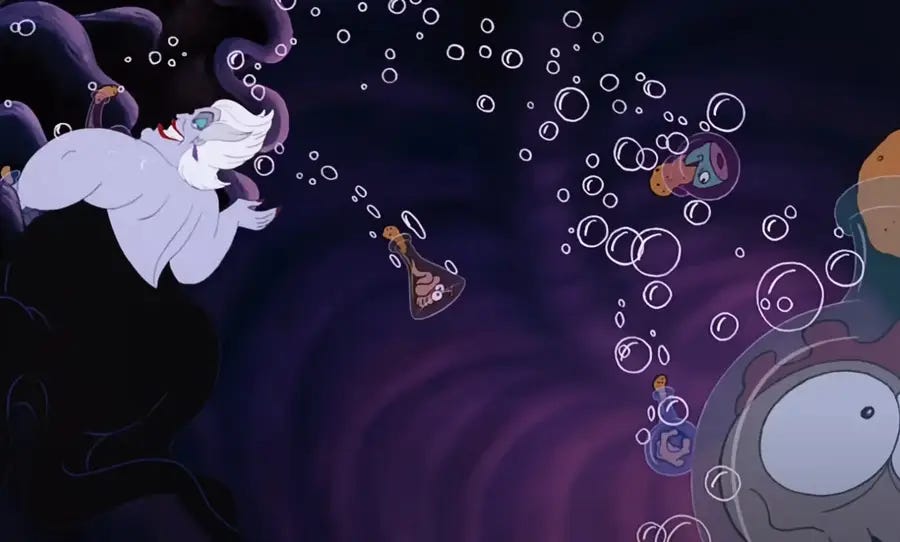
And when they reached for the old multiplane camera, the fourteen-foot tower that had given Snow White its depth back in 1937, they found it had fallen into such disrepair that it could barely be used…
Think about the span of it: from Snow White in 1937 to The Little Mermaid in 1989, more than fifty years, an unbroken chain of human hands. And this was the last link in that chain. The artists who finished it could not have known they were the last to do it the way it had always been done, closing a door that had stood open since before most of them were born.
In the end, the films were not made of ink and paint at all. They were made of people, and of a labor so patient and so hidden that we mistook it for magic…
Consider just the last step, the one nobody thinks about: the Ink and Paint department, where the animators’ pencil drawings became finished, colored cels. According to the Walt Disney Family Museum, this was done for decades by around a hundred women, most under twenty-five. An inker traced every line of every character by hand, in white gloves with the fingertips cut off, using the finest pen nib made, so that not one speck of dust could reach the celluloid. At full speed she managed eight to ten cels an hour, and a film needed hundreds of thousands. They mixed their own colors, too: Snow White’s blush was rouge dabbed from their own compacts, and the Blue Fairy’s wings needed a paint kept so cold they worked beside an open refrigerator. For all this they earned eighteen dollars a week, many of them waking at 4:40 to catch a streetcar to the studio.
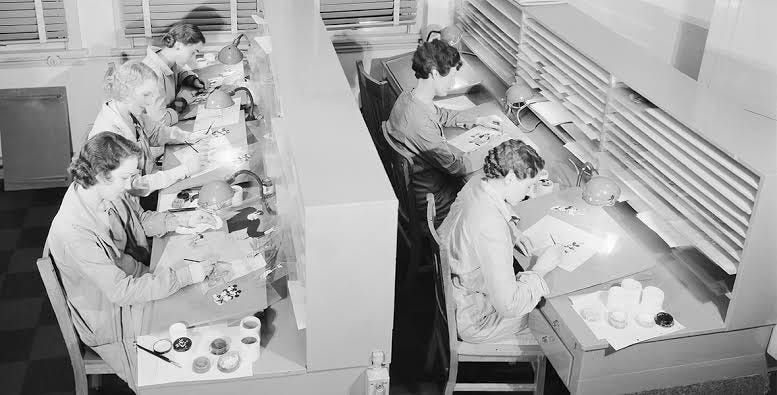
And here is the thing that ought to stay with us: almost every one of them, looking back, said they loved it, and that it was a privilege. They gave their eyes and their best years to work the world would never see their names attached to, so that a child would believe, for ninety minutes, that a drawing was alive.
Today everything chases realism, and somehow the more real it looks, the less alive it feels. Because the thing that made those old films breathe was not the accuracy, but the person on the other side of the drawing. The human hand…
That is what we are trading away. We went from hands, to computers, to AI, and at every step there is a little less of the person left in it. The machine is faster, it never tires, and it never asks for even the eighteen dollars a week those women were paid. But it has never once loved anything or anyone… and you can feel that absence, the way a room feels different when no one is home. The author Joanna Maciejewska put it better than anyone:
I want AI to do my laundry and dishes so that I can do art and writing, not for AI to do my art and writing so that I can do my laundry and dishes.
We got it backwards. We are handing the machines our creativity, and keeping the drudgery for ourselves.
Those worlds were built by hand, by people, one line and one frame and one bubble at a time. We were lucky to have grown up inside them. And we may be the last ones who did…
Thanks for reading. Everything here, the research, the writing, all of it, is made by one person, with no team and no company behind it, and no ads or sponsors influencing a single word. That independence is only possible because of my readers. If these pieces mean something to you, please consider becoming a paid subscriber for a few dollars a month, and unlock the full archive:
Every subscription genuinely makes a difference.
Thank you for helping keep this work alive.
As usual, I cannot read your words without leaving a comment of gratitude. I read EVERY word of your prose right through the end. Thank you James! ❤️
As an animation screenwriter, I cherish this. Thank you.