


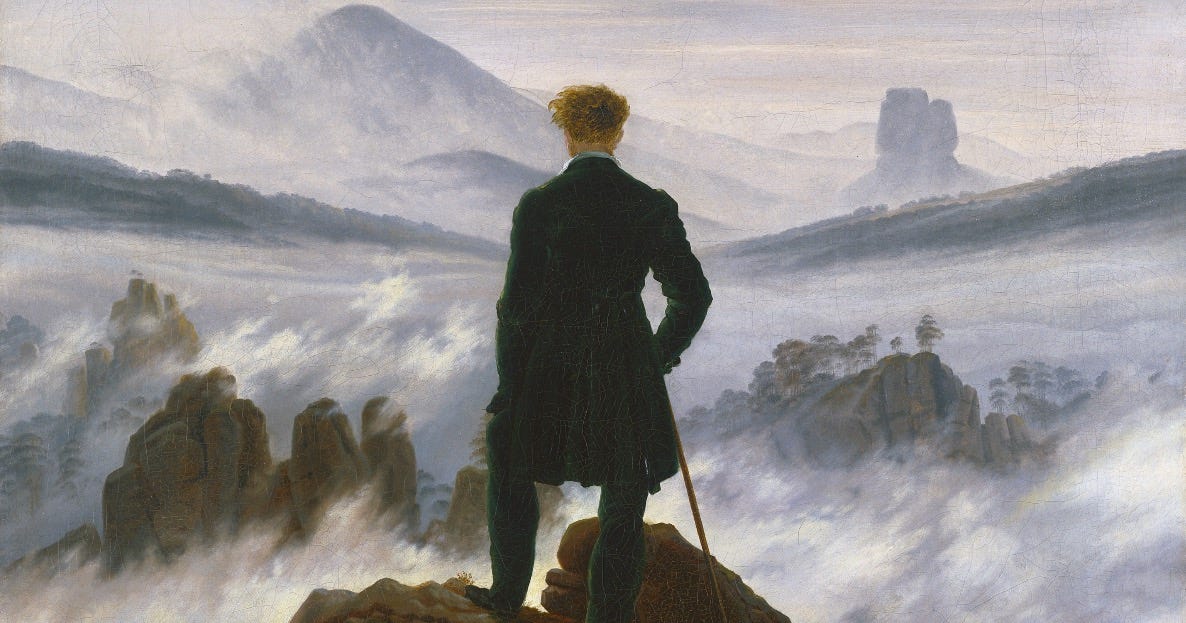
The Italian filmmaker Federico Fellini once said:
A different language is a different vision of life.
And how true that is. We tend to treat words as if they were windows, clear and neutral, things we look straight through to reach the world waiting on the other side. But words are not windows. They are closer to images: approximations drawn by fallible hands, rough sketches of experiences too large and too strange to fit through the narrow gate of the lips.
The words we happen to inherit draw the borders of what we are able to notice, even of what we are able to feel. Linguists have a name for this idea: they call it linguistic relativity, and there is real evidence behind it. For example, speakers of languages that carry specific words for certain colors can actually distinguish those shades faster than people whose languages fold them all together.
Your native tongue is not only a way of describing reality. To a degree most of us never realize, it helps determine which parts of reality you notice at all…
And there is something even stranger underneath this. Ask people how they think, and you will get wildly different answers. Some hear a constant inner voice narrating their lives in full sentences; others think almost entirely in pictures, and only translate them into words when they have to speak. A few report almost no inner monologue at all. We assume everyone’s interior life runs on the same machinery as our own, and we are simply wrong. Which means that when a feeling rises up in you that you cannot name, the problem may not be that the feeling is vague, but that your language never built a door to it.
Here is the consolation. Somewhere, in some other tongue, that door very often already exists. Another culture, on the far side of the world, felt the exact thing you could not name, and gave it a single word.
What follows are 6 of those words. None of them translates cleanly into English. All of them describe something you have almost certainly felt. My hope is that by the end, you will not only recognize yourself in them, but carry one or two of them with you, like keys you did not know you were missing…
REMINDER: this is a teaser for my subscriber-only articles.
Beauty is Truth is entirely reader-funded. There are no ads here, only independent writing devoted to celebrating beauty.
If you’ve been thinking about supporting my work, becoming a paid subscriber is the most meaningful way to do it:
With the new annual subscription discount, it costs less than a coffee a month — and it’s what keeps all of this going.
Gift subscriptions to Beauty is Truth are now available too:
1. The Hardest Word to Translate
At the very southern tip of South America, where Chile and Argentina splinter into a maze of cold islands battered by the sea, lies the place the early European sailors called Tierra del Fuego, the Land of Fire. For thousands of years it was home to the Yaghan people, who lived as nomads along those frozen channels. Their language belongs to no family but its own, an isolate, with no known relative anywhere on earth. And it gave the world what the Guinness Book of World Records once called the most succinct word ever recorded.
The word is mamihlapinatapai. It describes a look: the silent look exchanged between two people who both want the same thing to happen, who both sense the other wants it too, and who are each waiting, hoping, that the other will be brave enough to begin...
You know this look. It is the breath before a first kiss, the instant when every thought either person has ever had arrives at once and freezes them both in place, a hundred invisible hands pulling them back from each other, each one wanting it, each one afraid to be the one who moves first.
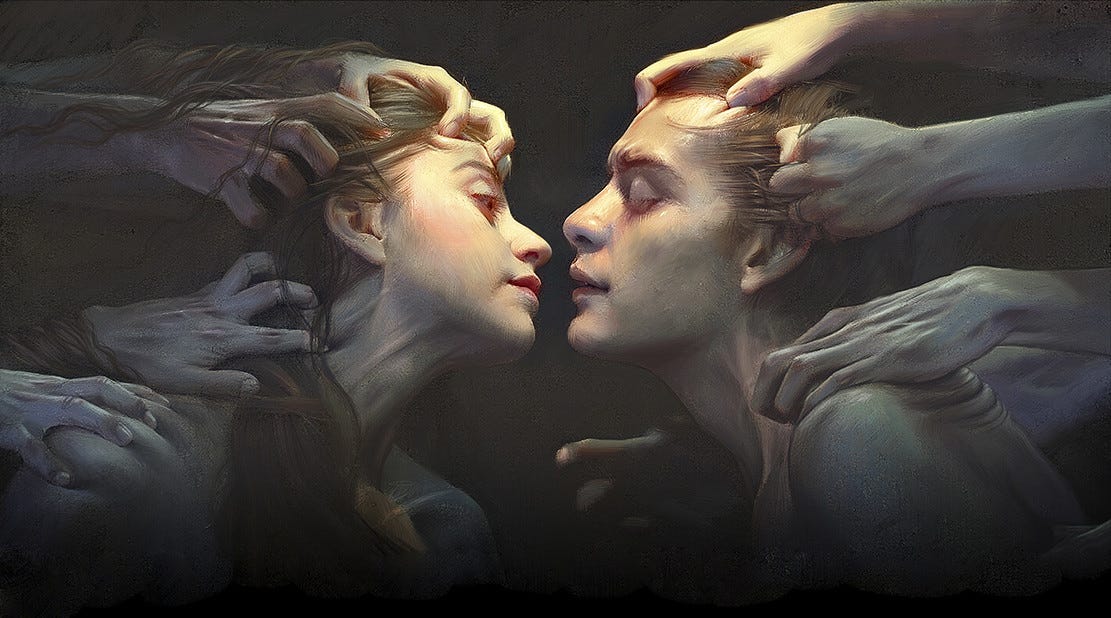
It is the moment everyone who has ever been truly in love carries with them for the rest of their lives…
And perhaps that is why the word moves us so deeply. Because a shared look is where love begins, but it is not where love lives. As Antoine de Saint-Exupéry wrote:
Love does not consist in gazing at each other but in looking outward together in the same direction.
Mamihlapinatapai is the instant before that turn: the last moment of two separate people, just before they decide to face the world as one.
But what makes the word so remarkable is where it comes from. Cristina Calderón, the last person who spoke Yaghan fluently, died in 2022, and took with her the last living version of a language thousands of years in the making. Out of all of it, the word the world chose to keep is one about hesitation, about the thing left unsaid, about everything we lose by waiting for someone else to go first. There is something to learn in that. A tiny community at the bottom of the world found a word for a feeling every one of us knows, while the great languages of the world, spoken by billions, never managed to name it…
2. The Word for Leaving a Piece of Your Soul Behind
There is a difference you can feel instantly but struggle to name: between a meal made to feed you and a meal made to love you, between work done to finish it and work done to mean something.
One language built a single word for that difference, and it may change how you do everything…