


Pablo Picasso once said:
Painting is just another way of keeping a diary.
Something I have always found interesting about paintings is how easy it is to forget that there was a human being behind them. Maybe it is because they can seem almost too beautiful to be real, as if they came from somewhere supernatural. But every artwork hanging in every museum in the world was made by a real person, on a real day, in the middle of a real life, a life with money troubles, love affairs, grief, ambition and fear.
Each canvas is a page torn from that diary Picasso talked about. We just rarely read it that way, because the painting does not let us. It shows us the beauty and keeps the story to itself…
There is a word that captures precisely what this is about. When we reveal something, we are reaching, without realizing it, for the Latin revelare, built from re, “back,” and velare, “to veil.” To reveal, at its root, means to draw back the veil, to lift the covering off a thing and show what was always underneath. And that is exactly what a painting is: a surface, a veil of paint, with something hidden behind it.
You have almost certainly seen every one of the 5 paintings ahead, but behind each is a true story most people have never heard. And in many cases, the story leads back to the same place: the artist. Picasso understood this better than anyone, and something else he once said gets to the heart of what follows:
Every portrait that is painted with feeling is a portrait of the artist, not of the sitter.
Look closely enough at any of the artworks below, and you will find the person who made it hiding somewhere inside.
Let me show you where…
REMINDER: this is a teaser for my subscriber-only articles.
Beauty is Truth is entirely reader-funded. There are no ads here, just independent writing devoted to celebrating beauty. And it can only continue with your help.
If my posts have meant something to you, becoming a paid subscriber is the most meaningful way to support this work. With the new annual subscription discount, it costs less than a coffee a month. Join here:
Gift subscriptions to Beauty is Truth are now available too. Beauty is best when it’s shared, so if a friend or family member comes to mind, consider passing a little of it into their inbox:
1. The Golden Woman Whose Name Was Stolen
Let’s start with her. You have seen her before, I’m sure of it, but you have probably never been told her story: a woman stands wrapped in a shimmering cascade of gold, her pale face floating above a jewelled choker, the whole surface so encrusted with real gold and silver leaf that it seems a mosaic more than a painting…
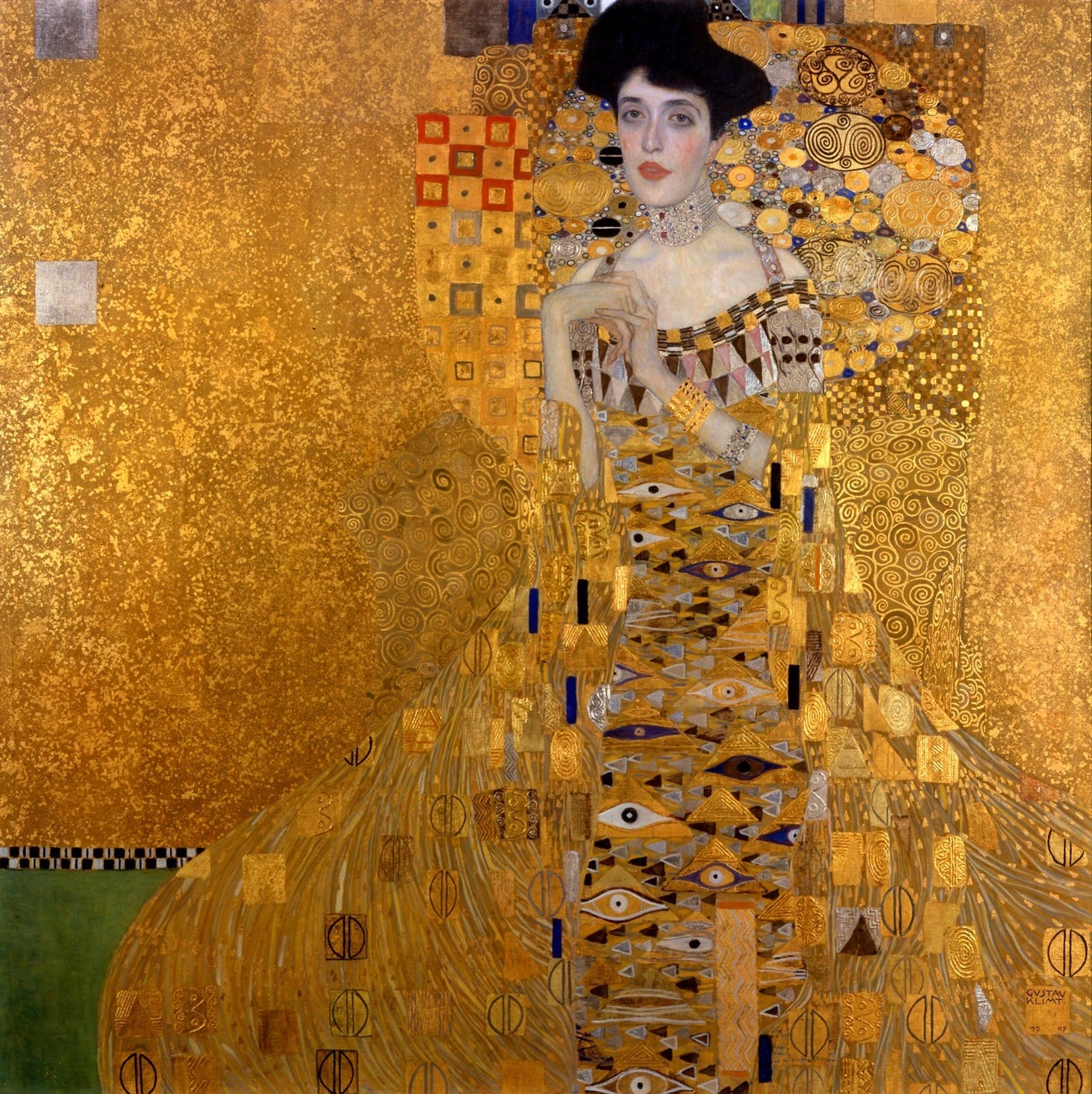
Gustav Klimt made it in Vienna in 1907, at the height of his powers, and he worked over it like nothing else he ever did, producing more preparatory drawings for this one portrait than for any other canvas of his career. The woman was Adele Bloch-Bauer, the elegant, intellectual wife of a wealthy sugar magnate, and she and her husband were central figures in the cultural elite that made Vienna, in those years, one of the most brilliant cities on earth.
Some have always believed that Klimt and Adele were more than painter and subject, and that all that obsessive gold was, in part, a portrait of his own feeling for her. Adele died young, of meningitis, in 1925. And because of that early death, she was spared what came next…
In 1938 the Nazis marched into Austria, and the Bloch-Bauer family, like most Jewish families in the country, was stripped of everything it owned. Their home was looted, and their art collection, including five paintings by Klimt, was seized. Adele’s husband fled the country with almost nothing and died in exile, believing the portrait of his wife was lost forever.
The painting was too beautiful to hide away, so the Nazis hung it in a Vienna museum for all of Austria to admire. They simply stripped the title “Portrait of Adele Bloch-Bauer” off the frame, because the name was Jewish, and renamed her Woman in Gold. For the next sixty years, one of the most beloved paintings in the country hung there as an anonymous golden stranger, advertised proudly as “the Austrian Mona Lisa,” while the real woman and her name were scrubbed out of the story as though they had never existed.
But there was one person left who remembered her. Adele’s niece, Maria Altmann, had escaped to the United States as a young woman, and in 2000, in her eighties, she decided to fight. She sued the Republic of Austria to get her aunt back. It was very nearly hopeless: a refugee widow against a national government, over a painting the whole country now considered part of its soul. The battle went on for years, all the way to the United States Supreme Court. And she won. In 2006 the golden portrait was returned to the family it had been taken from almost seventy years before.
The Neue Galerie in New York, which is now home to the painting, describes its journey as a remarkable story of “perseverance and justice.”
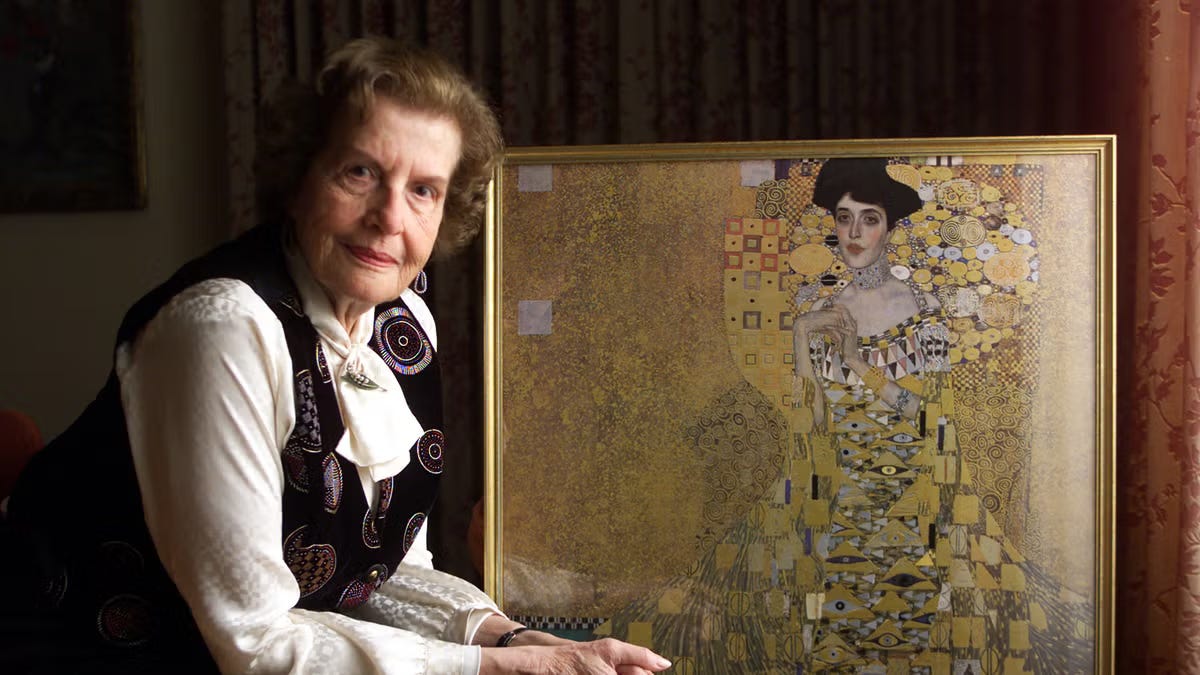
For decades she had hung there in her gold, admired by everyone and known to no one. Then someone refused to let that be the end of it. And that is what all five of these paintings are underneath the beauty everyone can see: not mere objects, but people, with names that can be taken and, sometimes, given back…
2. What Paris Saw That We No Longer Can
In 1884, a young painter in Paris made one small decision with his brush, certain it would make him famous overnight.
It did the opposite: within days it had destroyed the woman in the painting, and before long it would drive him out of the country too.
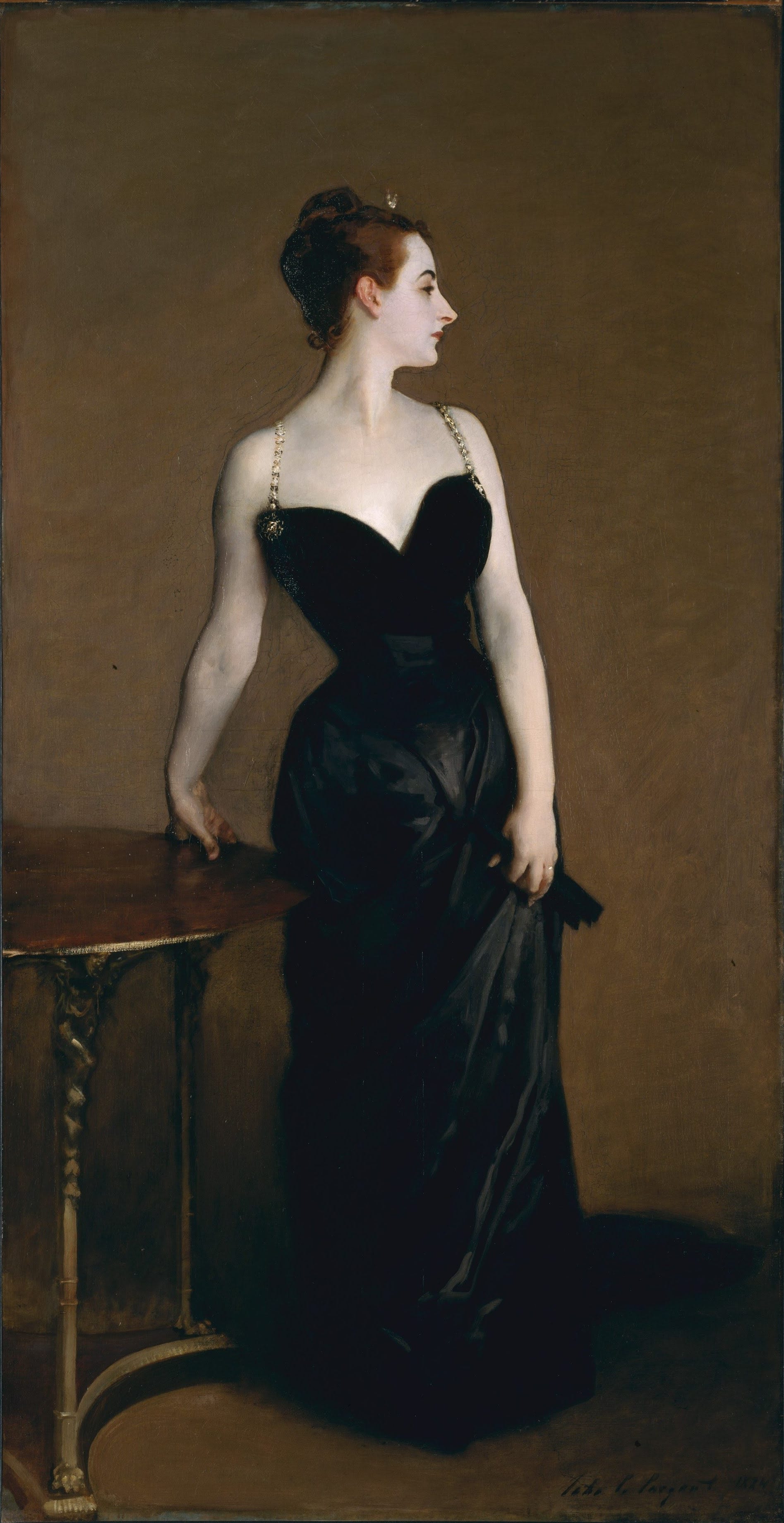
Looking at it now, you would never guess what all the fuss was about, and that is because the offending detail is no longer there. He painted over it. But when this portrait was first unveiled, it was so scandalous that a mother watched her daughter’s life fall apart in a single afternoon, and the woman herself would spend years unable to bear the sight of her own face.
So what did he do? The answer is hiding in plain sight. And once you see it, you will not believe it caused all of this…