


Every block of marble began at the bottom of a sea: when tiny marine creatures die, their shells settle on the seafloor, and over immense spans of time they harden into limestone. Buried deep underground, that limestone is slowly transformed by heat and pressure into marble. The white marble of Carrara, quarried in the Tuscan mountains since Roman times and the stone of both the Pietà and the David, was born this way, from creatures that lived in a warm tropical sea in the age of the dinosaurs.
I can’t think of anything more poetic than the fact that the face of the Virgin carved by Michelangelo began as countless small lives at the bottom of an ancient sea. Life became stone, and millions of years later a human hand turned that stone back into flesh…
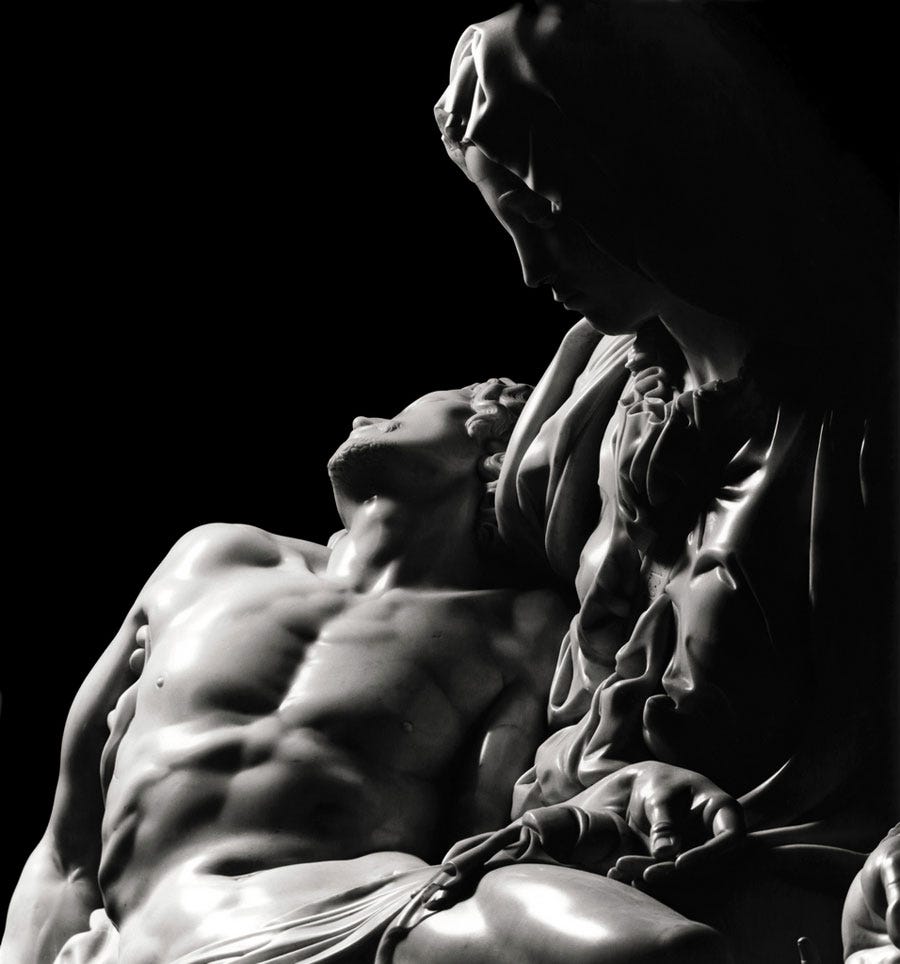
The ancient Greeks called this material marmaros, a word that may come from marmairein, “to shine,” and the name fits better than they could have known, because marble’s glow comes from within. When light strikes it, part of that light slips beneath the surface and travels through the stone before finding its way back out. Our skin behaves the same way, which is why you can still see a red glow when you close your eyes in bright sunlight. Marble, in other words, treats light much the way our bodies do, which is why, in the right hands, it can pass for skin.
The 5 sculptures below are, to me, the greatest ever made, each carved by an artist who knew how to draw that hidden light out of the stone, and each with a story almost as extraordinary as the marble itself. Two centuries ago, in his Ode on a Grecian Urn, John Keats addressed an ancient work decorated with “marble men and maidens,” and his words fit every sculpture in this article:
Thou, silent form, dost tease us out of thought
As doth eternity
Perhaps that’s the marble’s final transformation, the last step of a journey that began in an ancient sea: every time someone stands before these works and forgets the world for a while, a fragment of the earth’s deep past becomes a shining door onto eternity…
REMINDER: Beauty is Truth is entirely reader-funded. There are no ads here, only independent writing devoted to celebrating beauty. And it can only continue with your help.
If my posts have meant something to you, becoming a paid subscriber is the most meaningful way to support this work. With the new annual subscription discount, it costs less than a coffee a month. Join here:
Gift subscriptions to Beauty is Truth are now available too. Beauty is best when it’s shared, so if a friend or family member comes to mind, consider passing a little of it into their inbox:
1. The Abduction of Proserpina
In Ovid’s Metamorphoses, young Proserpina, daughter of Ceres, goddess of the harvest, is gathering flowers in a meadow when Pluto, god of the underworld, falls in love with her at first sight. He seizes her and carries her off in his chariot, down through a chasm in the earth into the darkness below.
The work is also known as The Rape of Proserpina, a title that comes from the Latin raptus, meaning “seized” or “carried off,” and Bernini chose to carve the instant her feet leave the ground…
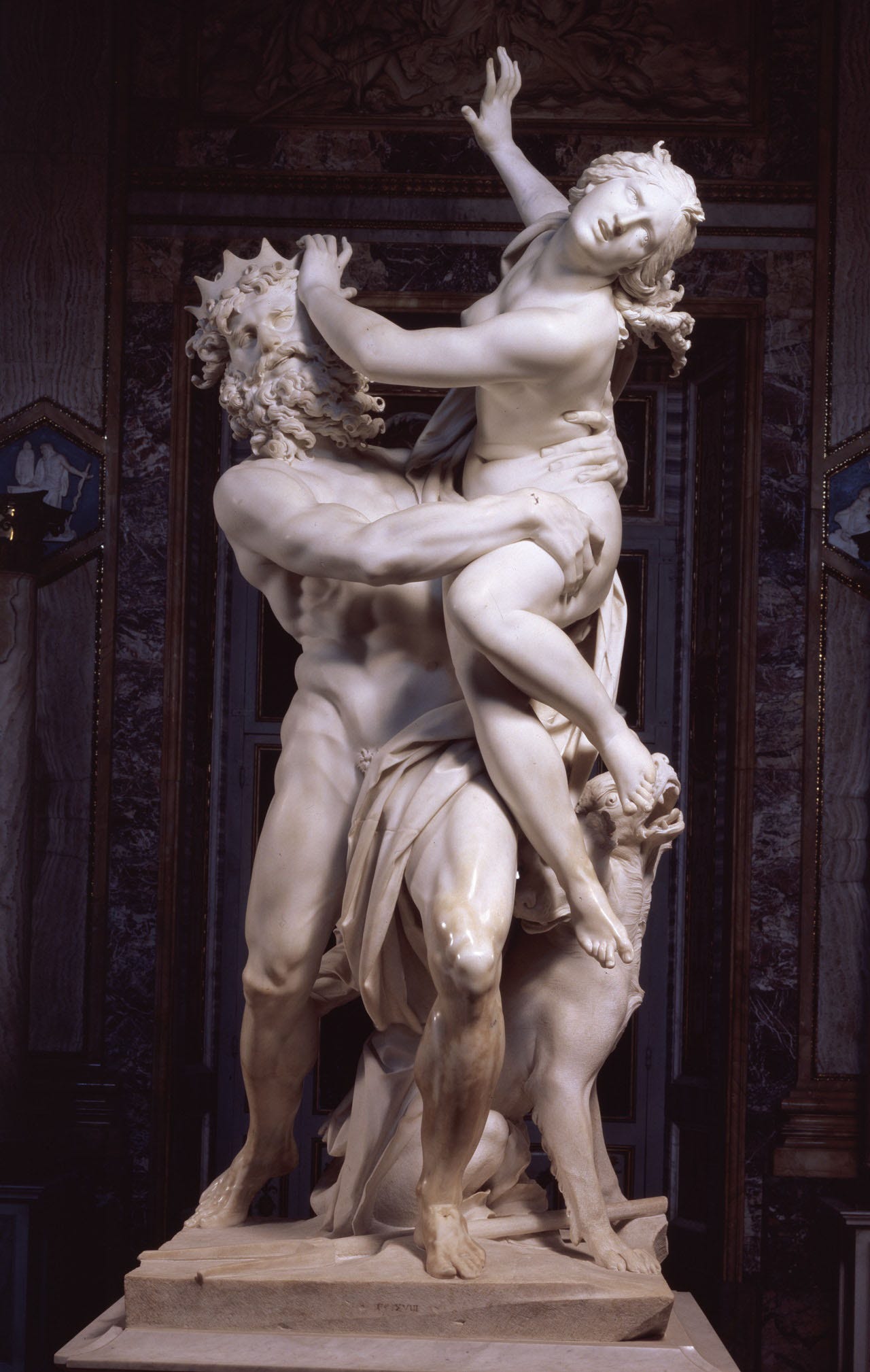
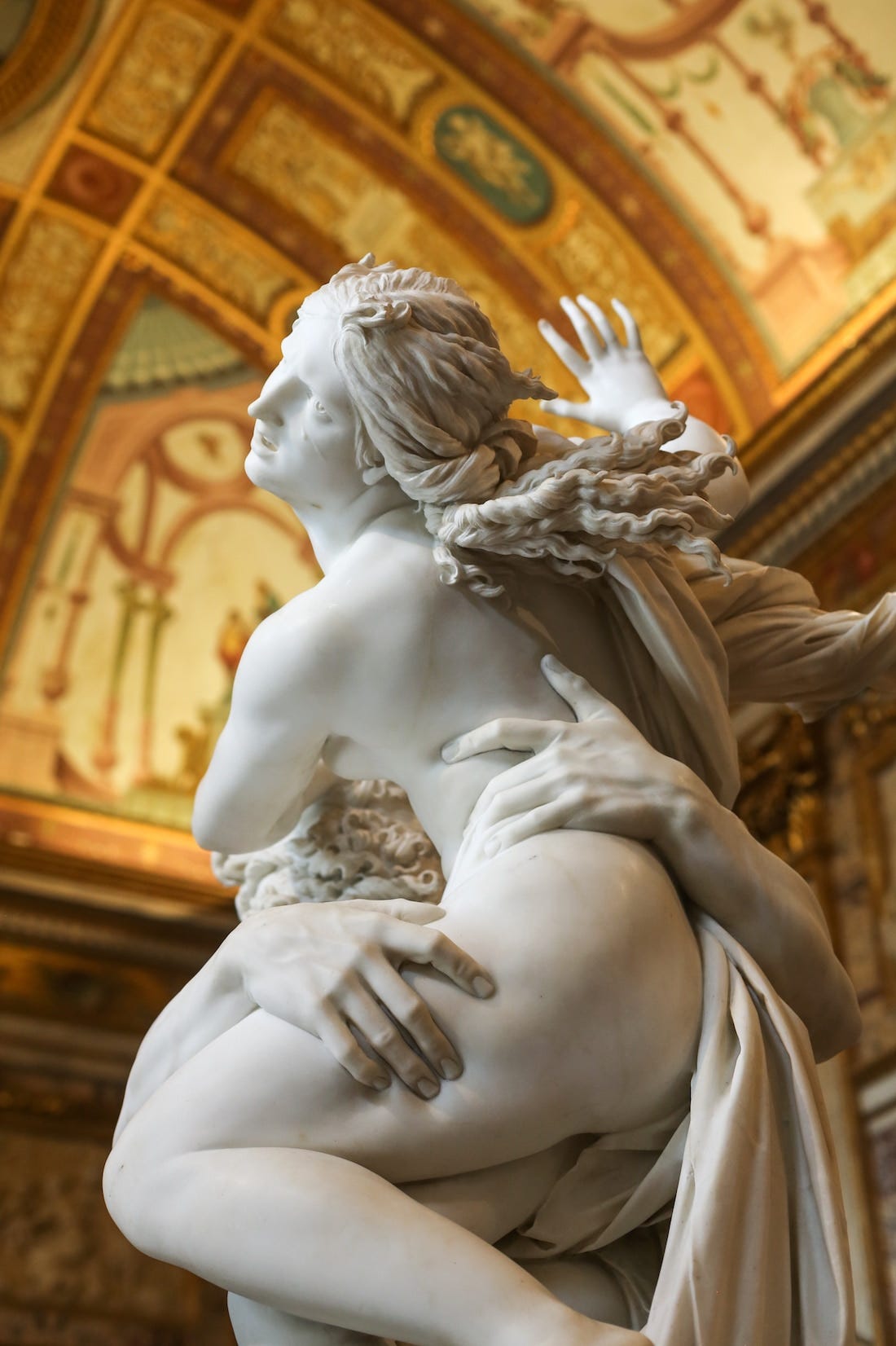
Pluto strides forward, his whole weight resting on one foot, while Proserpina twists in his arms, pushing his face away as tears run down her cheeks. Behind them, the three-headed Cerberus guards the gates of the underworld. Then comes the detail that made this sculpture famous around the world: where the god grips her thigh, his fingers press into her flesh.
Bernini was only 23 when he finished it, and the group stands more than two and a half meters tall. He liked to boast that in his hands marble could become as soft as wax, and here he proved it, working the surface with abrasives until the stone looked soft enough to give way. Of all its wonders, the art historian Howard Hibbard singled out “above all the yielding flesh of the girl.”
I have stood in front of it, and I can tell you that nothing prepares you for the moment you see those fingers in her thigh with your own eyes. For a few seconds, you forget it is stone at all:
Cardinal Scipione Borghese commissioned the work for his villa in Rome, but soon after it was finished he gave it away to Cardinal Ludovico Ludovisi, nephew of the new pope, most likely as a diplomatic gift. It remained with the Ludovisi family for nearly three centuries, until the Italian state acquired their collection, and in 1908 it finally returned to the villa it had been made for.
According to the myth, Proserpina was allowed to return to her mother for part of every year, and each time she came back, the fields turned green again. It was the ancients’ way of explaining why crops grow only in the warmer months. Her statue shared her fate: it was carried off almost as soon as it was born and brought home centuries later, as if, even in marble, Proserpina could never stay away from the world above for long…
2. Pietà
Michelangelo was six years old when his mother died in 1481, and he spent much of his childhood with a nanny whose husband was a stonecutter. Years later, according to Vasari, he would say that “along with the milk of my nurse” he had received “the knack of handling chisel and hammer.”
Seventeen years after his mother’s death, on 27 August 1498, a French cardinal in Rome, Jean de Bilhères de Lagraulas, signed a contract with the 23-year-old sculptor for “a clothed Virgin Mary with dead Christ in her arms,” meant for his funeral chapel in the old basilica of St. Peter’s. Michelangelo had already traveled to the quarries of Carrara to choose the block himself, and the banker Jacopo Galli, who guaranteed the contract, promised it would be “the most beautiful marble work in Rome today.”
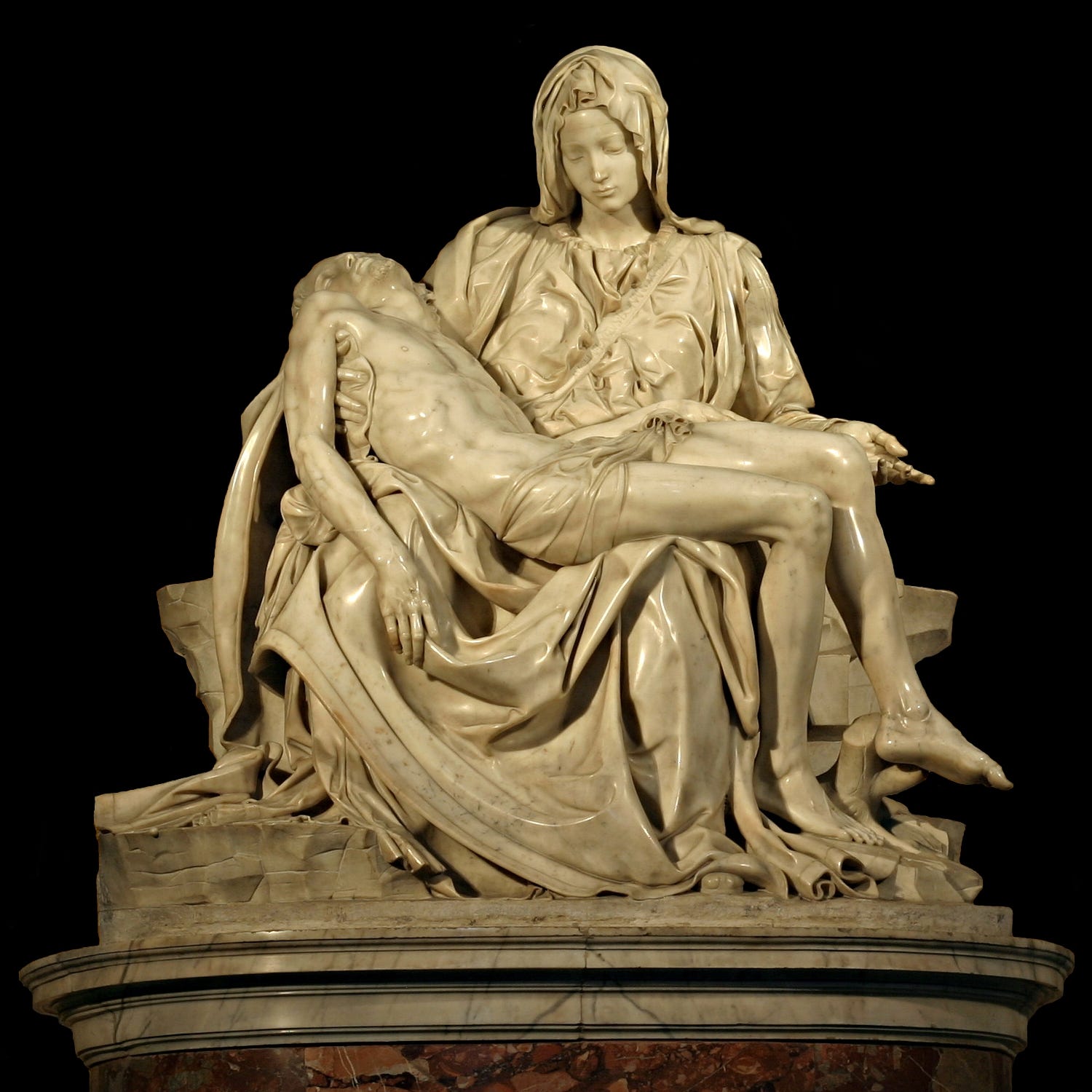
The cardinal died on 6 August 1499 and never saw it finished. Soon after, Michelangelo heard visitors crediting the work to a sculptor from Lombardy, and according to Vasari he returned one night with a lamp and carved his name across the sash on Mary’s chest: MICHAELANGELUS BONAROTUS FLORENTINUS FACIEBAT, “Michelangelo Buonarroti of Florence made this.”
It’s the only work he ever signed and he regretted it almost immediately…
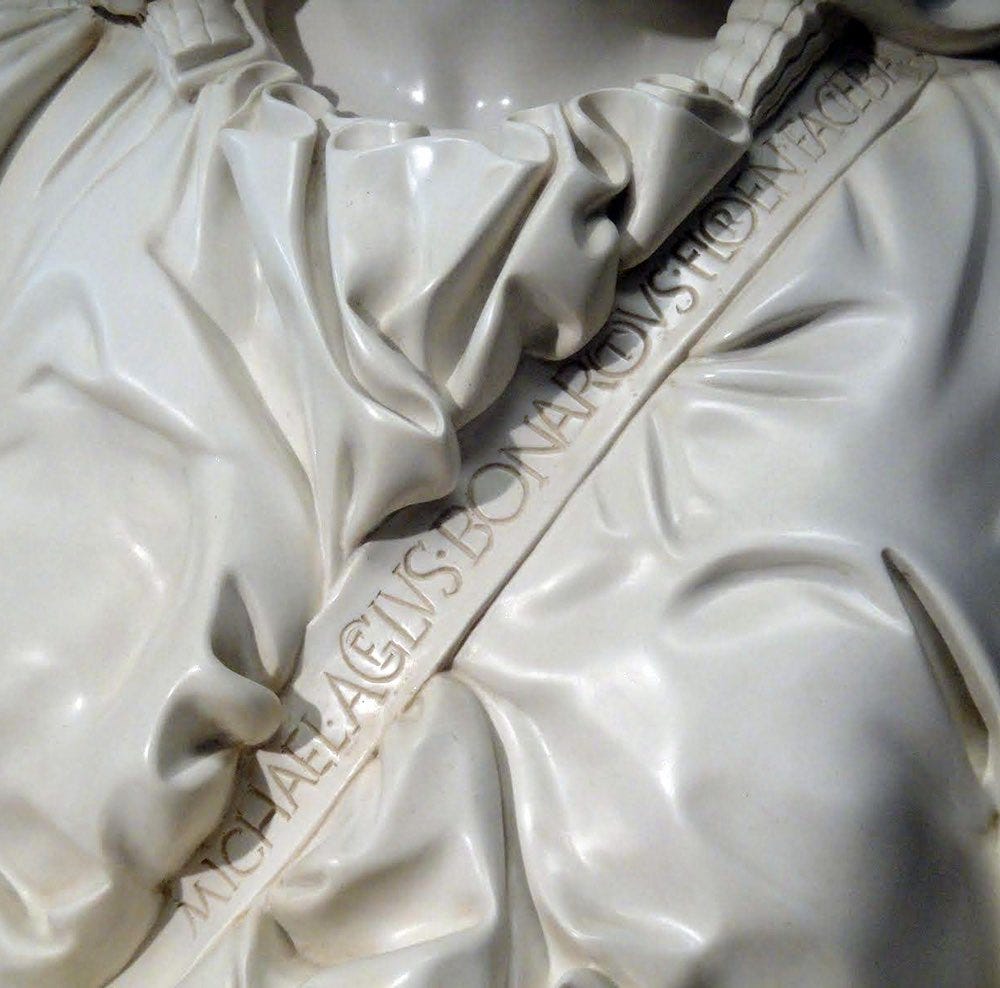
Writing in 1550, Vasari himself could hardly believe what he was looking at:
It is certainly a miracle that a stone, at first with no form at all, was ever reduced to that perfection that nature barely manages to form in flesh.
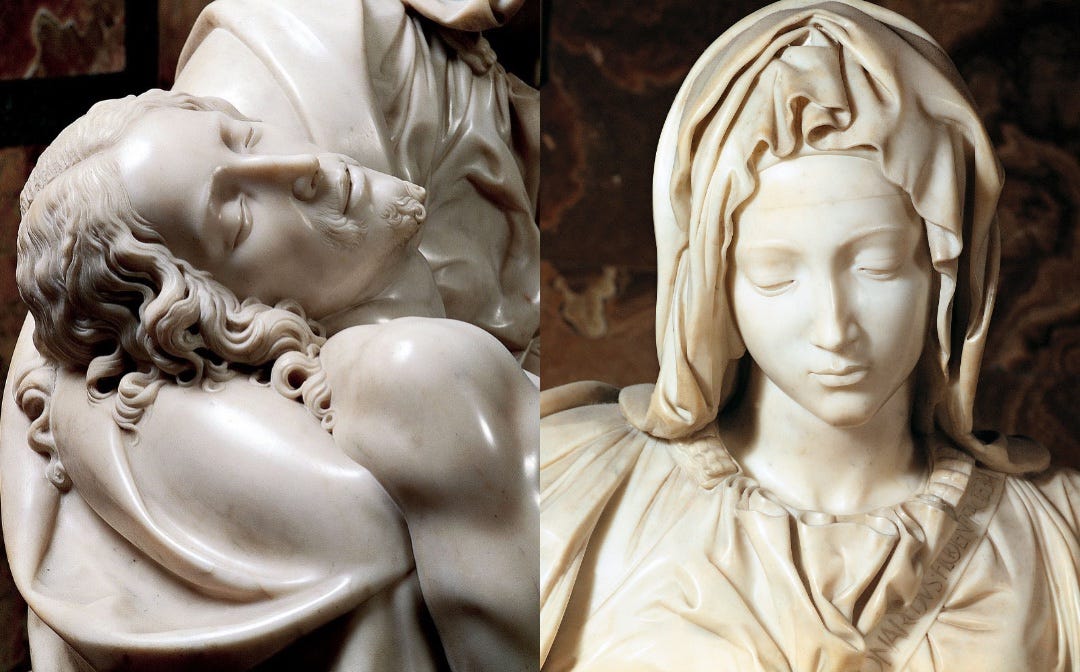
In 1964 the Pietà crossed the Atlantic for the New York World’s Fair, sealed in a steel container designed to float if the ship went down, with a bright orange top so it could be spotted from the air and a buoy to broadcast a distress signal. It made the voyage in the cabin-class swimming pool of the liner Cristoforo Colombo, the spot with the least vibration, and in New York visitors filed past it on a conveyor belt. When it came home in November 1965, Pope Paul VI ordered that it would never travel again.
Seven years later, on Pentecost Sunday 1972, a man shouting that he was Jesus Christ struck it fifteen times with a hammer, breaking off Mary’s arm at the elbow and part of her nose. Restorers spent months putting her back together from the recovered fragments, and today she sits behind bulletproof glass.
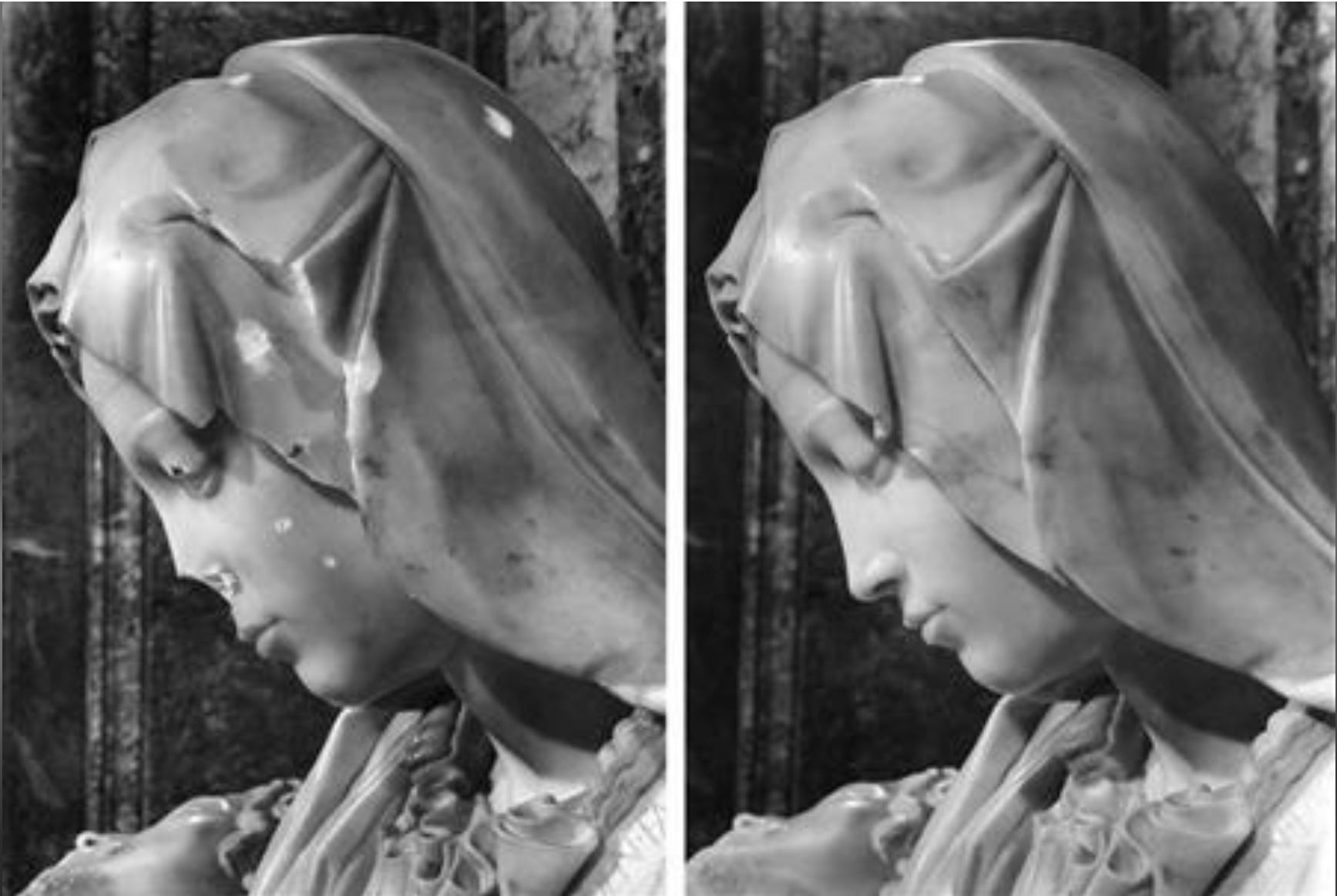
Whenever I picture her there, I think about that six-year-old boy, left without his mother’s arms among the hammers and chisels of a stonecutter’s home, who seventeen years later gave the world the most loving arms ever carved…
3. Apollo and Daphne
Soon after giving away Proserpina, Cardinal Scipione Borghese asked Bernini for another group, and this time he kept it for himself. The subject is the nymph Daphne, who wanted to belong to no one, fleeing from Apollo, the god who had fallen in love with her. Exhausted, she cries out to her father, the river god Peneus, in Ovid’s words:
Destroy my beauty which has brought too much delight!
Her prayer is answered just as Apollo reaches her. Ovid describes how “her feet, so swift a moment before, stick fast in sluggish roots,” and Bernini carved that very instant. Her hair is still streaming in the wind of her flight, but leaves are already bursting from her fingers, and bark is climbing up her legs to close around her body. Apollo’s hand rests on her side, where, the poet tells us, he could still feel “her heart trembling under the new bark.”
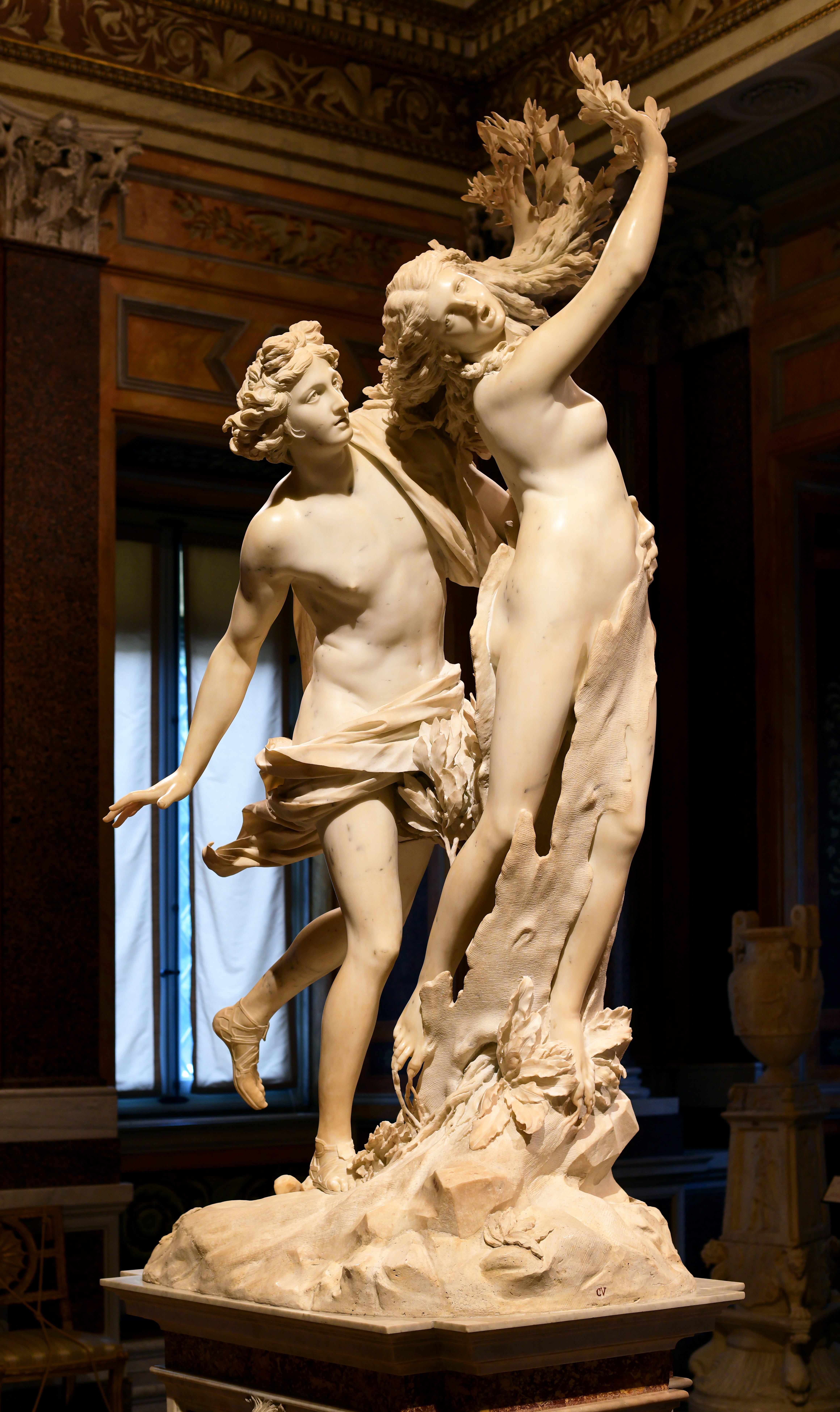
In Ovid’s poem, Apollo cannot give her up even then. “Since you cannot be my wife,” he tells the tree, “you shall surely be my tree,” promising to wear her leaves in his hair forever, and the branches, “newly made, nodded,” as if in answer.
For the ancients, this was how the laurel came to belong to Apollo, whose games at Delphi crowned their winners with its leaves. The tradition survived for centuries: Petrarch was crowned with laurel in Rome in 1341, and we still call Nobel Prize winners “laureates.” It’s one of the things I love most about art, the way a single statue can lead you back to the very place where something we still do today was born…
4. The Veiled Christ
In a small chapel in the heart of Naples, the dead Christ lies beneath a shroud so thin that the shape of his body shows through every fold. Giuseppe Sanmartino finished it in 1753 for Raimondo di Sangro, prince of Sansevero, whose instructions called for “a marble statue sculpted with the greatest realism,” and he carved the body and the veil from a single block.
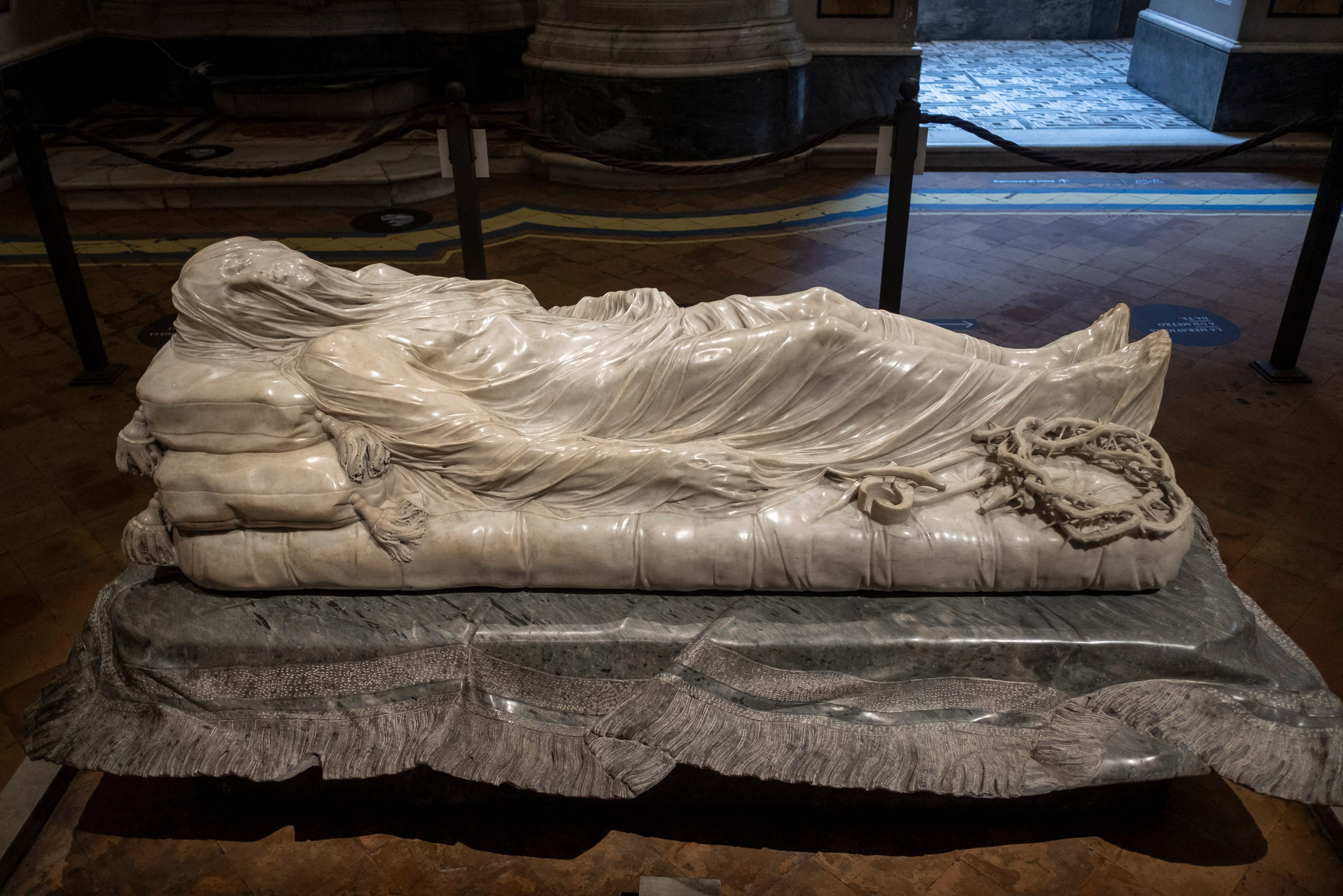
Look closely and you’ll find the swollen vein on Christ’s forehead, and the wounds the nails left in his hands, all visible through the cloth. His ribs seem to sink beneath it, as if the last breath had only just left them. At his feet lie the crown of thorns and a pair of pincers.
The Argentine writer Hector Bianciotti said that standing before it gave him Stendhal syndrome, the dizziness some visitors feel in front of overwhelming beauty, and he described the veil as “slight as gauze on the relief of the veins.” The poet Adonis went even further, telling the newspaper Il Mattino that this depiction of Christ is “more beautiful than Michelangelo’s sculptures.”
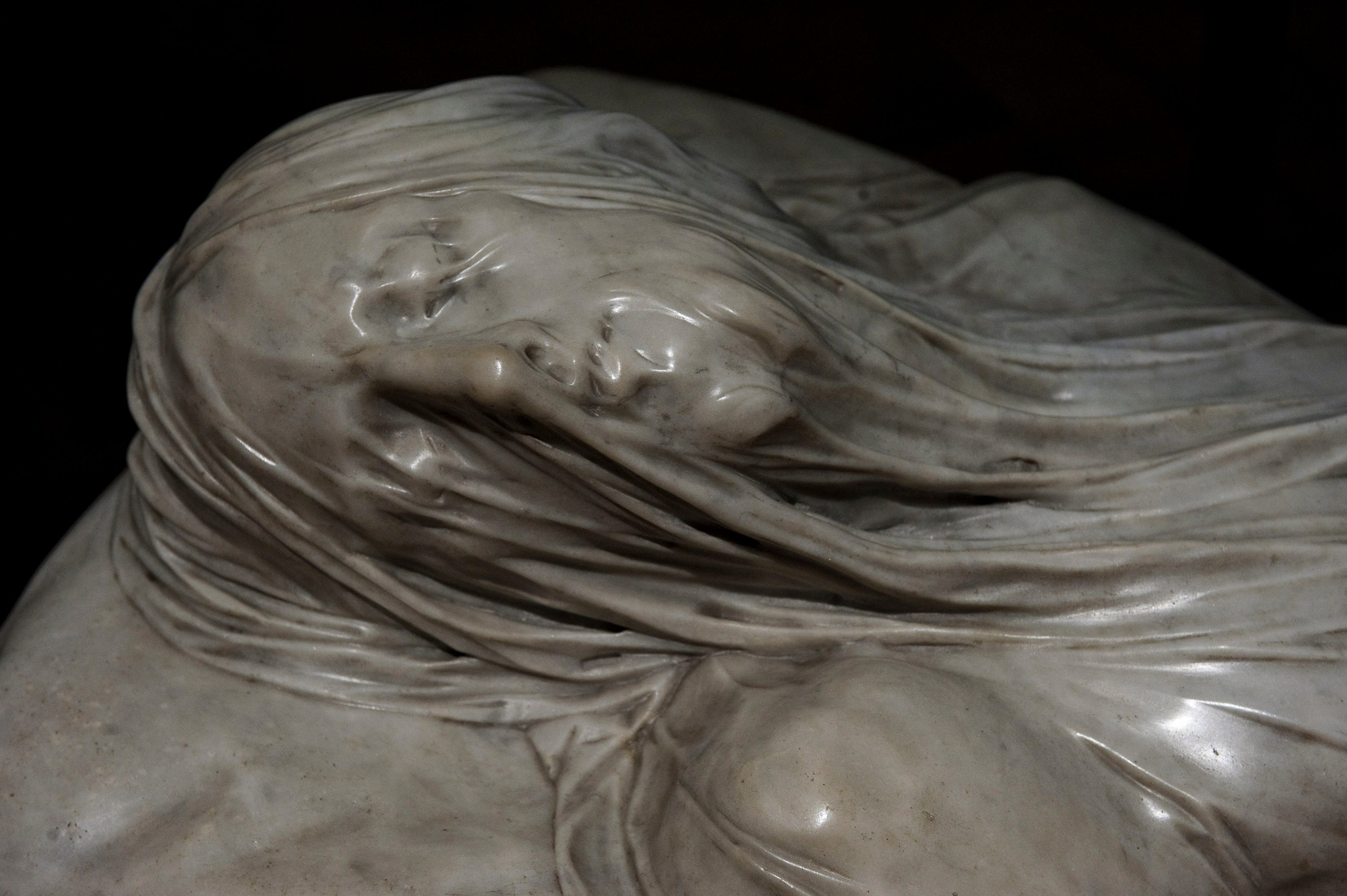
A veil is meant to hide what lies beneath it, yet Sanmartino carved one that reveals everything, down to a vein that, after more than 270 years, still seems to be beating beneath the cloth…
5. David
Long before it became the most famous statue in the world, the David was a block of marble nobody seemed able to tame. In 1464, the officials in charge of Florence Cathedral commissioned the sculptor Agostino di Duccio to carve a young David from it, but he abandoned the work. In 1476 it passed to Antonio Rossellino, and that contract was soon cancelled too. Described as male abbozatum et sculptum, “badly roughed out and carved,” the block lay neglected in the yard of the cathedral workshop, exposed to the weather, for another twenty-five years. The Florentines called it il gigante, the Giant.
On August 16, 1501, it was entrusted to a 26-year-old Michelangelo, a young man taking on a Giant to carve a young man about to take on a giant, and he began work early in the morning of September 13. On a sheet of studies now in the Louvre, beside a drawing of the statue’s arm, he wrote:
David with the sling and I with the bow.
Many scholars believe the bow he meant was the bow drill, the tool he would use to carve David’s hair and the pupils of his eyes.
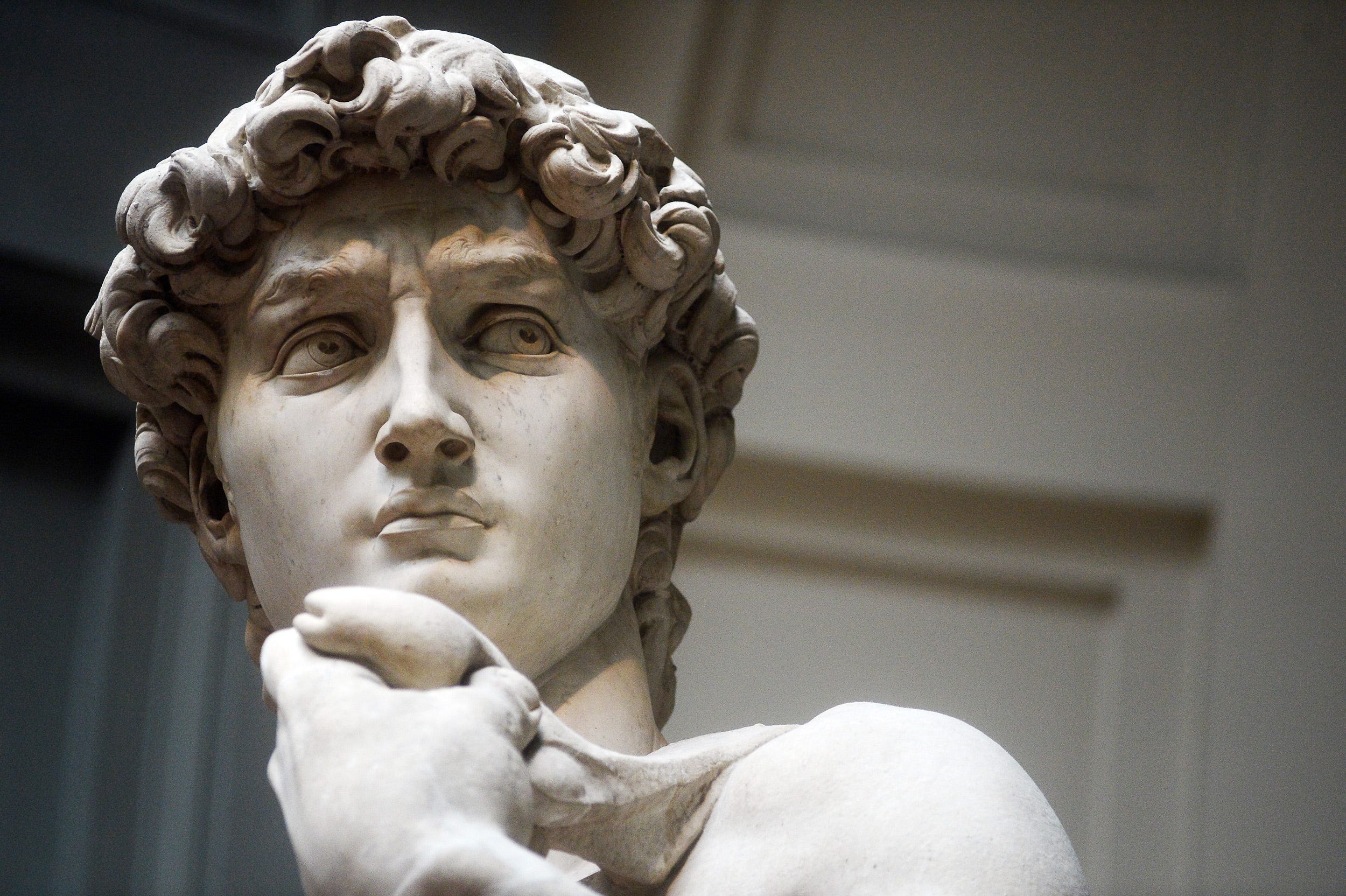
Earlier sculptors such as Donatello and Verrocchio had shown David standing victorious over Goliath’s severed head. Michelangelo chose the moment before the battle, when nothing has been decided yet, and the boy is sizing up his enemy…
Unveiled in 1504 in Piazza della Signoria, in front of the Palazzo Vecchio, the statue soon came to stand for a republic determined to defend its freedom. In 1527, during a riot against the Medici, republicans barricaded inside the palace hurled stones and furniture from the windows, and David’s left arm broke into three pieces. A teenage Giorgio Vasari, who would one day write the lives of the great artists, gathered the fragments so the arm could be restored.
In 1873, after more than three and a half centuries in the open air, the statue was moved indoors to the Galleria dell’Accademia, where it still stands, eyes fixed on a giant no one else can see.
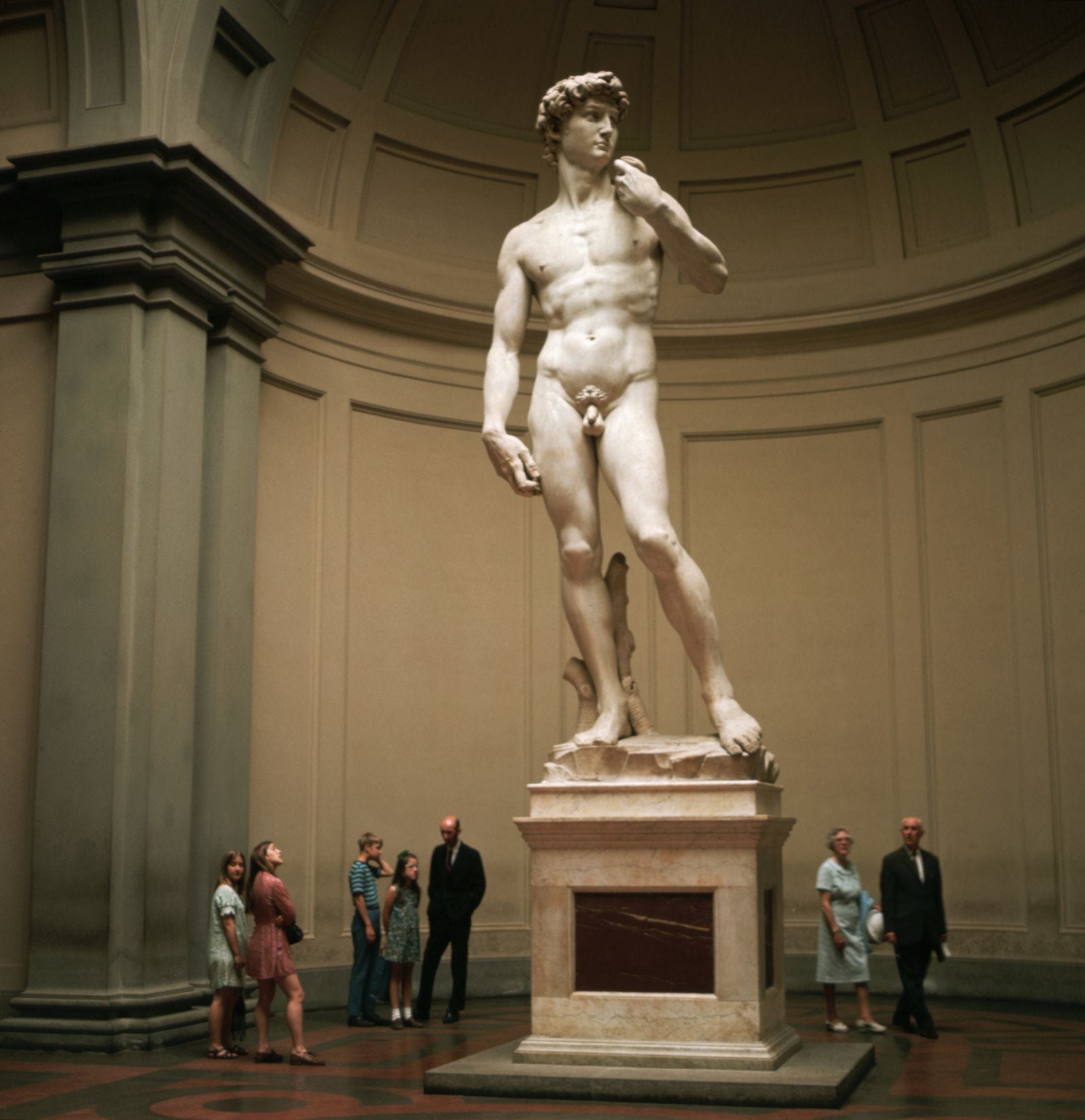
The boy who had rescued those fragments would grow up to write that the David surpassed “all ancient and modern statues, whether Greek or Latin, that have ever existed.”
The older I get, the more these masterpieces seem to change, even though each of them has held the same pose for centuries.
If you see the Pietà at twenty, you’ll probably marvel at the folds of Mary’s robe, and wonder how anyone could carve them. Come back after you’ve held your own child for the first time, or a parent’s hand for the last, and you may find you can barely look at her face.
Ralph Waldo Emerson explained it almost two centuries ago, in a single beautiful line:
Nature always wears the colors of the spirit.
I like to think that’s why the finest marble is white, so that it can wear the colors of every life that pauses in front of it.
I hope I’ll see these works many more times, as many different people as the years will make of me, and I wish you the same. Perhaps that’s the real reason we keep going back to the things we love: to find out who we’ve become…
Thanks for reading. Everything here, the research, the writing, all of it, is made by one person, with no team behind it, and no ads or sponsors influencing a single word. That independence is only possible because of my readers. If these pieces mean something to you, please consider becoming a paid subscriber for a few dollars a month, and unlock the full archive:
Every subscription genuinely makes a difference.
Thank you for helping keep this work alive.
Thank you for this article and so many of your other articles.
Beautifully written with so much information and insight.
“I like to think that’s why the finest marble is white, so that it can wear the colors of every life that pauses in front of it.”
I think that one line captures the essence and beauty of these works. Though they remain unchanged, our perception of them changes as our lives unfold. What we once gaze upon as simply art, becomes a mirror that reflects our own humanity, understanding, and wisdom back at us. What began as art becomes the story of humanity’s raw, perpetual, unyielding search for something greater than self.
Thank you, James, for the opportunity to see and to be moved.