


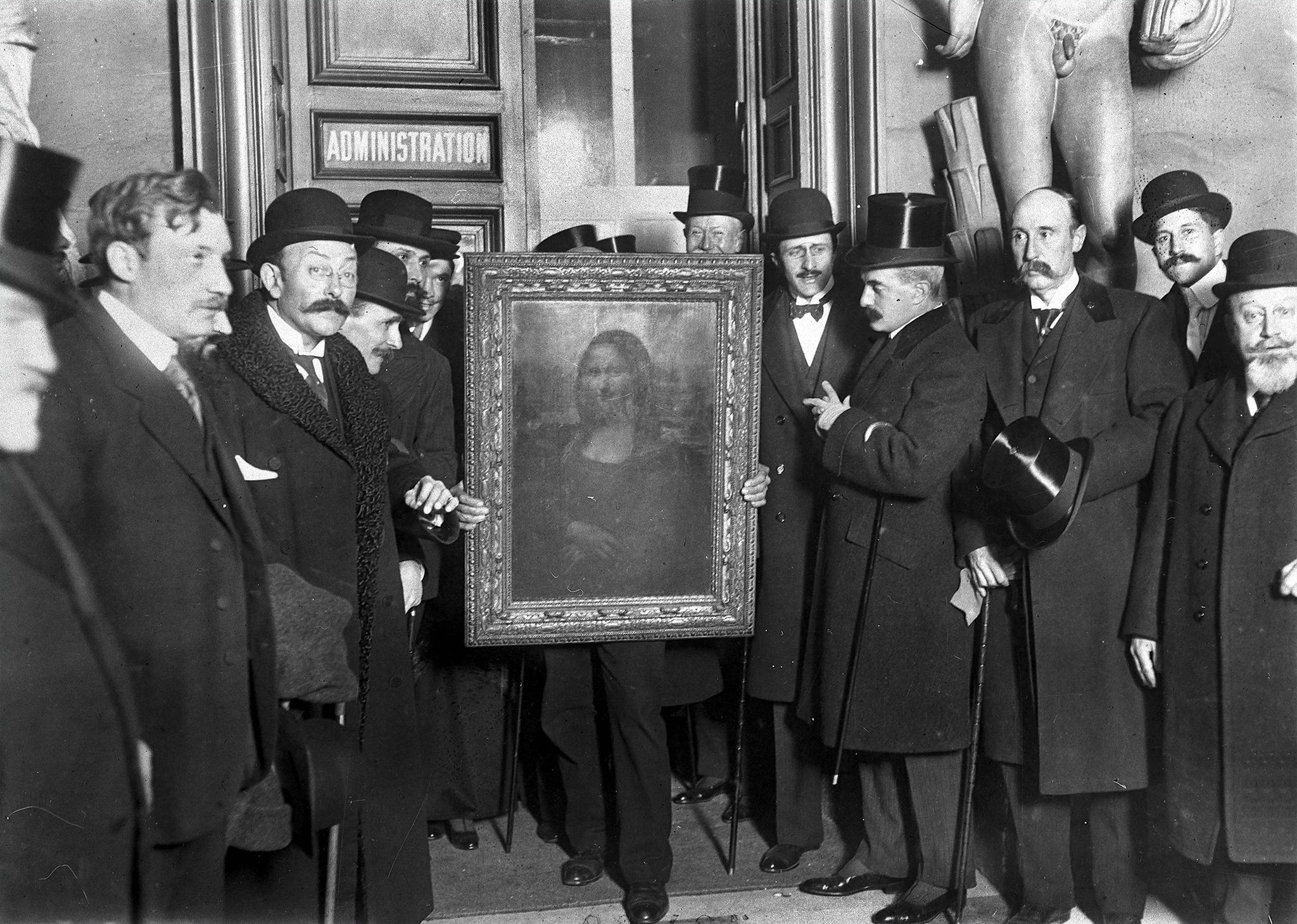
On the morning of August 21, 1911, a man walked into the Louvre, lifted a painting off the wall, tucked it under his coat, and walked out. For more than two years, the Mona Lisa was gone. The museum shut for a week, and when it reopened, people came in the thousands just to stare at the four empty hooks where she had hung.
Grown men wept in front of the bare wall. The investigation got so desperate the police even questioned Picasso. And when she finally turned up in a Florence hotel room in 1913, something strange had happened: the theft had turned her into a worldwide sensation overnight.
She is the most iconic painting on earth partly because she was once lost…
There is a line from John Ruskin for this:
Great nations write their autobiographies in three manuscripts: the book of their deeds, the book of their words, and the book of their art.
When you stand in a museum, you are reading that third book, the one a civilization writes in paint: the record of how people saw the world, and what they felt about being alive in it. So when a painting is stolen, it is not like losing money or jewels, things that can be replaced or made again. It is a page ripped out of that book. And once it is gone, no one can write it back.
We like to think the masterpieces are safe, behind glass and guards, waiting for us whenever we please. But even now, they are nowhere near as safe as we think. In October 2025, in broad daylight, thieves propped a lift against the Louvre, cut through a window, and were gone in under eight minutes with a fortune in French crown jewels. The most famous museum in the world, robbed in the middle of the morning. And the jewels, apart from Empress Eugénie’s crown, which the thieves dropped as they fled, have never been seen again…
The Mona Lisa came home, but most never do.
What follows are 5 of the most beautiful lost paintings in history: some were stolen, and may still be out there somewhere, in a vault or a criminal’s back room, waiting to be found. Others are never coming back. As Ruskin said, to restore what has been destroyed is “as impossible as to raise the dead.” So look closely at each of these. You are looking at something most people will never see again, and, in at least one case, at something no one will ever see again...
REMINDER: Beauty is Truth is entirely reader-funded. There are no ads here, only independent writing devoted to celebrating beauty. And it can only continue with your help.
If my posts have meant something to you, becoming a paid subscriber is the most meaningful way to support this work. With the new annual subscription discount, it costs less than a coffee a month. Join here:
Gift subscriptions to Beauty is Truth are now available too. Beauty is best when it’s shared, so if a friend or family member comes to mind, consider passing a little of it into their inbox:
1. The Storm on the Sea of Galilee (1633)
It is St Patrick’s night in Boston, 1990, and the city is loud and distracted. At 1:24 in the morning, a car pulls up beside the Isabella Stewart Gardner Museum and two men in police uniforms press the buzzer, saying they are responding to a disturbance. The guard breaks protocol and lets them in. Minutes later both night guards are handcuffed and duct-taped in the basement, and one of the thieves says, almost politely, “Gentlemen, this is a robbery.”
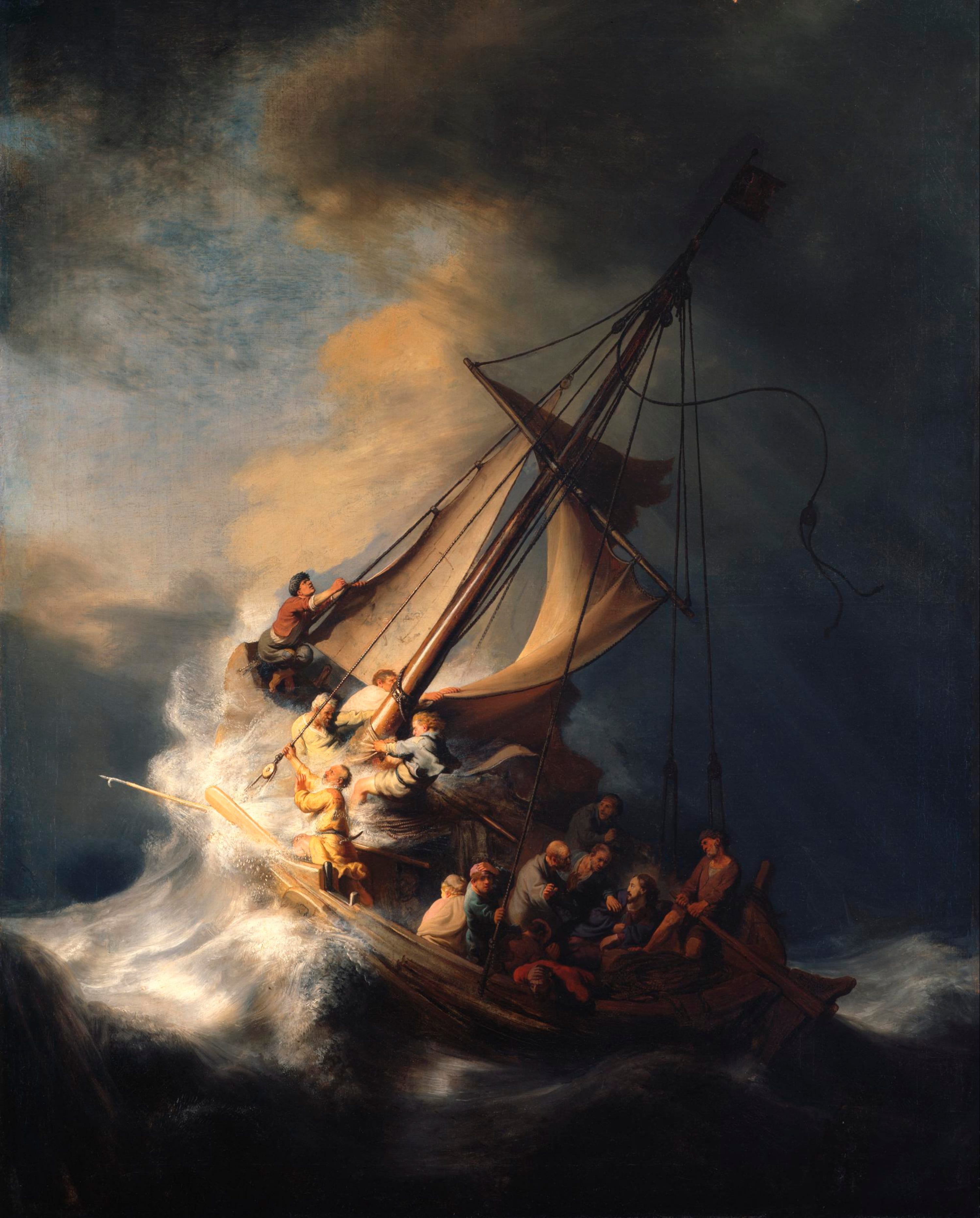
They are inside for eighty-one minutes. They leave with thirteen works of art, and the greatest of them is this one:
It is one of my favorite paintings of all time, and like everyone my age, i have never had the chance to stand in front of it…
A small fishing boat is being torn apart by a black sea. The mast strains, the sail has ripped, and a wave has crashed over the bow, tipping the whole vessel onto its side. Above, the sky is a wall of storm broken by a single shaft of light. The boat is crowded with panicking men: some haul on the ropes, some clutch the rigging, one is being sick over the side, and at the stern, the rest turn to Christ, begging him to save them. It is the moment from the Gospel of Mark, seconds before he stands and tells the wind to stop. Rembrandt painted it in 1633, at twenty-seven, newly arrived in Amsterdam and out to prove what he could do. He never painted the open sea again. It is the only seascape he ever made.
Now do something with me: count the disciples. There should be twelve. Look again, and you’ll find thirteen. The extra man, gripping a rope with one hand and clutching his hat with the other, is the only one who has turned away from the storm. He is not watching the wave, or reaching for Christ. He is staring straight out of the painting, directly at you. That face is Rembrandt’s own. He put himself in the boat, in the middle of the terror, staring out of the canvas across four centuries at whoever happens to be standing in front of it. Which is the cruelty of what happened next: the thieves took a knife and cut the canvas out of its frame, and the rest of us have not laid eyes on it since…
The theft remains the largest property crime in history, and it has never been solved. The FBI has said it believes it knows who did it, and still, thirty-six years on, no-one has been arrested and not one of the thirteen works has come home. And the thought that some collector, some billionaire, some heir to a banking fortune, may be sitting in a private room at this very moment looking at this painting, while the rest of us cannot, is enough to make my blood boil.
In the Dutch Room, where it hung, the Gardner keeps the frame on the wall exactly where it always was, empty, ragged at the edges where the canvas was cut away. The museum has explained why: they hang there, it says, “as symbols of hope awaiting their return.”
So the frame waits, and Rembrandt waits somewhere out there, still gripping his cap, still looking out of the storm at a world that is no longer allowed to look back…
2. The Concert (c. 1664)
They took this one the same night, from the same museum, and it may be the single most valuable object ever stolen in the history of the world.
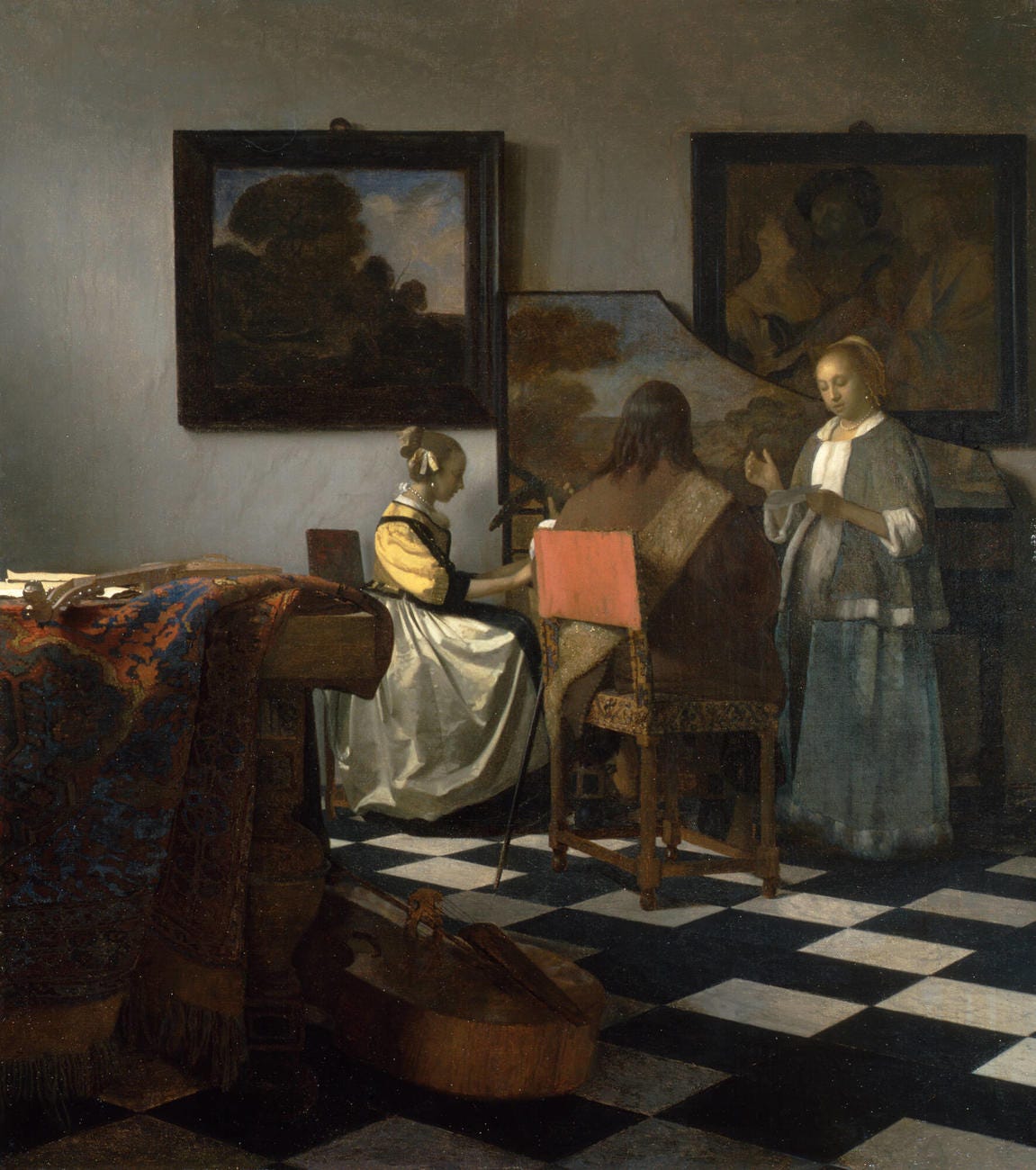
It could not be more different from the Rembrandt beside which it hung. Where that painting is all noise and terror, this one is perfectly still. Three people are making music in a sunlit room: a young woman seated at a harpsichord, a man with his back half-turned to us playing a lute, and a woman standing between them, singing, one hand raised to keep the time. Light comes in from the left, the way it always does with Vermeer, and falls across the tiled floor, the instruments, and the pale wall. Nothing is happening, and everything is. It is an ordinary afternoon of people absorbed in something beautiful together, so hushed that you feel you are intruding just by looking.
To understand why this is the most painful loss of them all, you have to know how few of these exist: Vermeer worked slowly, and died young and in debt, and in his entire life he painted fewer than 50 pictures. Of those, only about thirty-four survive anywhere on earth. Thirty-four artworks, spread across the great museums of the world, are all that remains of one of the most extraordinary painters in the history of art. When The Concert was cut from its frame in Boston, thirty-four Vermeers became thirty-three.
And we know exactly what it is worth: somewhere around a quarter of a billion dollars, more than any stolen object ever recorded. But money was never the point of it. It is a painting about people sharing something beautiful in a room together, and it now sits alone in the dark, wherever it is, its music silent for over thirty years. Its empty frame still hangs in the Dutch Room, waiting. That is the real theft: a moment of shared joy locked away where no one can join it…
3. Nativity with St Francis and St Lawrence (1609)
The first two were stolen by people who seem to have known, at least, what they were holding. This one fell into the hands of men who did not care.
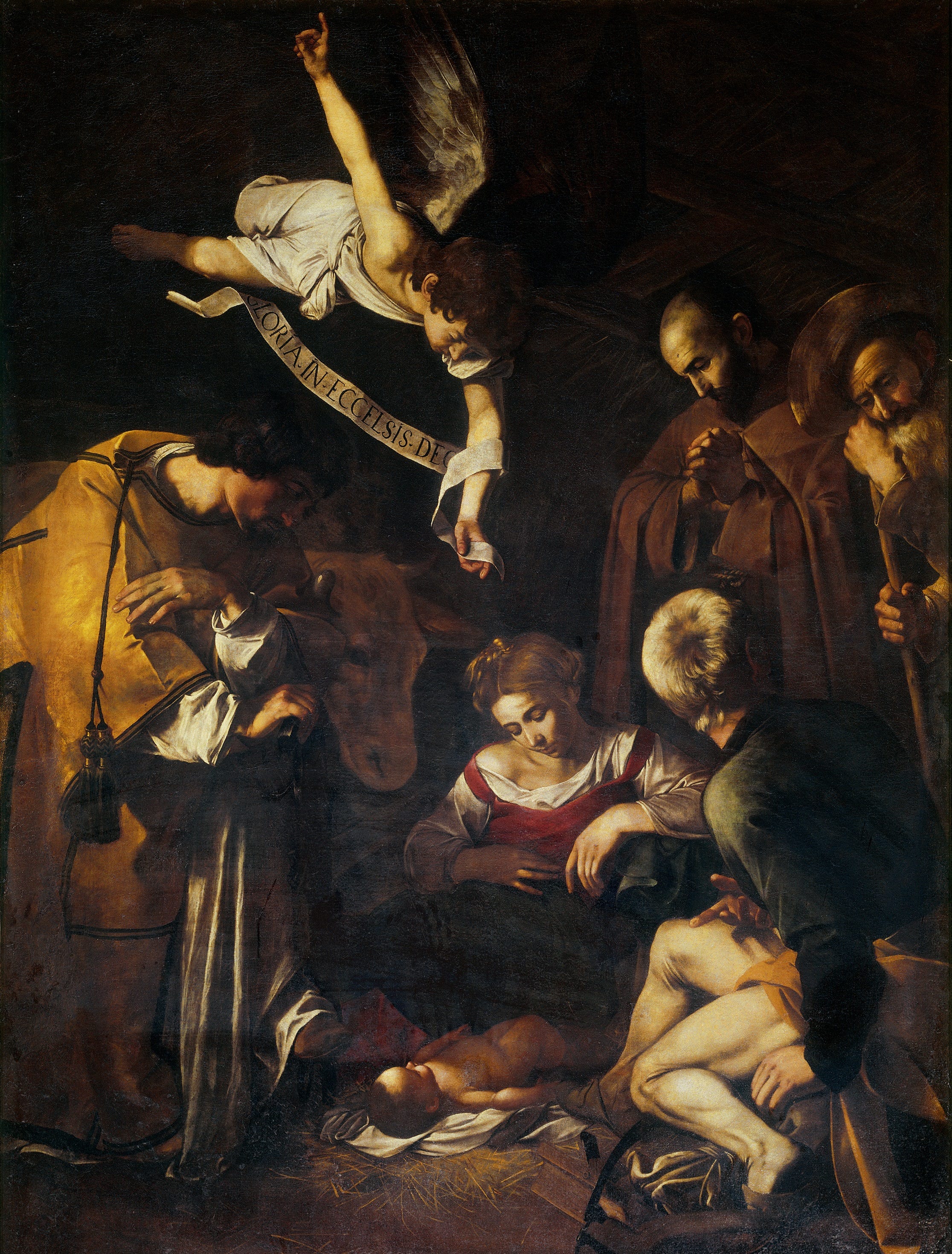
On the morning of the 18th of October, 1969, a housekeeper unlocked the Oratory of San Lorenzo, a small church in the heart of Palermo, and found an empty frame above the altar. In the night, someone had climbed up and cut Caravaggio’s Nativity out of it and carried it off through the dark streets. It was enormous, nearly nine feet tall, and it had hung in that exact spot for more than three hundred and fifty years. It is one of the last things Caravaggio ever painted, made in Sicily in 1609, the year before he died. And it is, by common agreement, one of the most beautiful Nativities in the history of art.
This masterpiece was almost certainly handed straight to the Sicilian Mafia, and what became of it is a catalogue of nightmares, with no way of knowing which is true. It has sat on the FBI’s list of top ten art crimes for decades. Mobsters and informants have each offered a version over the years: that it was hidden in a farm shed and eaten by rats and pigs; that it was cut up to make it easier to sell; that it was buried, and then lost under rubble in an earthquake. One detail is documented, and almost too grim to repeat: the thieves once sliced a fragment off the canvas and mailed it to a priest, like a kidnapper sending a finger, to prove they had it.
Above the altar in Palermo today hangs a replica of the painting, so the church does not have to stare at an empty frame forever. For over fifty years, worshippers have knelt beneath an image of an image, praying in front of the ghost of something that hung there for three centuries, and is now almost certainly gone…
4. Portrait of a Young Man (c. 1513–14)
A young man looks out at us over his shoulder, one hand resting near his chest, wrapped in a heavy fur-trimmed coat, his long hair falling loose. He is beautiful, poised, and utterly assured, the way only the very young can be. Raphael painted him around 1513, near the height of his powers and a few years before he would die at thirty-seven. And here is the part that makes the loss almost unbearable: most scholars believe the young man is Raphael. The features match his one confirmed self-portrait in The School of Athens at the Vatican…
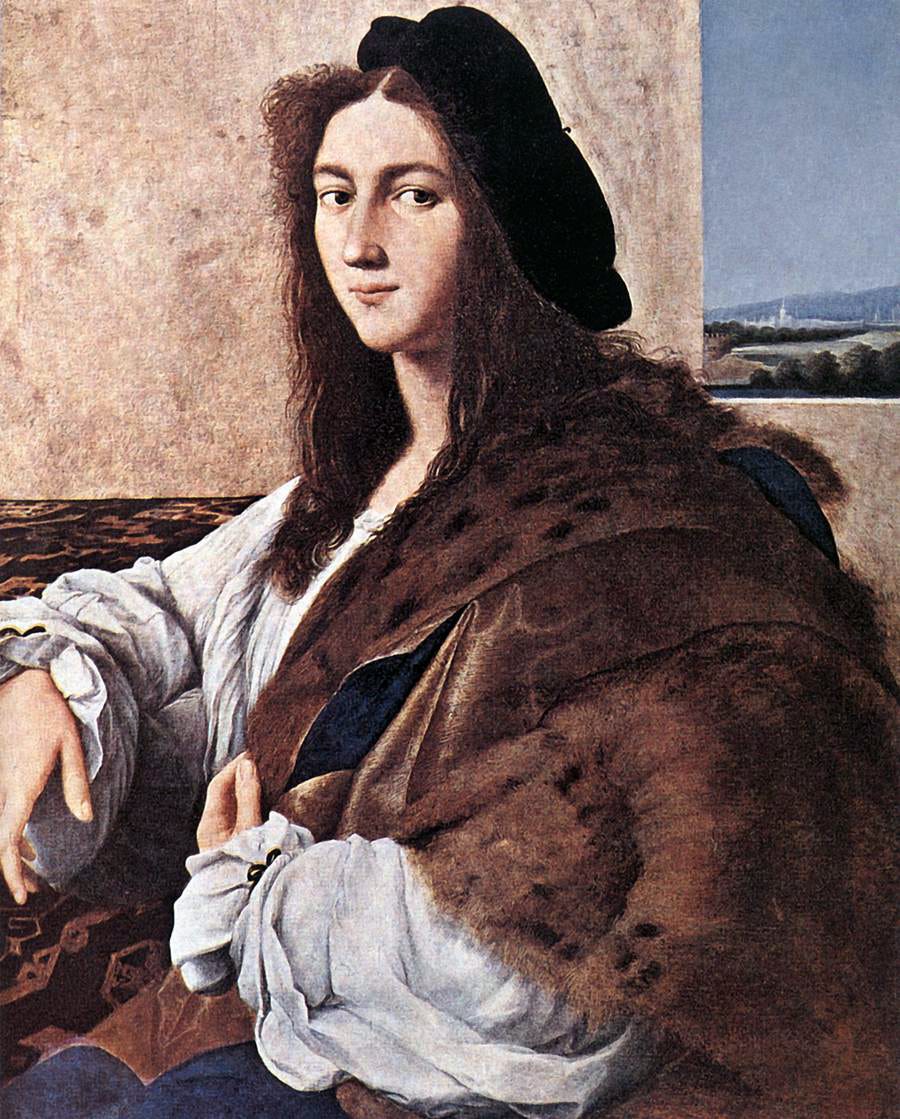
If they are right, then what disappeared was not just a masterpiece by one of the greatest painters who ever lived: it was his face.
For a century and a half it belonged to Poland, the pride of the Czartoryski collection in Kraków, one of the family’s “Great Three” alongside Leonardo’s Lady with an Ermine and a Rembrandt. When Germany invaded in 1939, the family hid all three, walling them up in a country house. The Nazis found them within weeks. The paintings were seized for Hitler’s planned museum at Linz, shuttled between cities, and finally hung on the walls of Hans Frank, the governor-general of occupied Poland. In January 1945, with the Soviets closing in, Frank fled west and took the paintings with him.
Two of the Great Three came home. The Leonardo hangs in Kraków today, and so does the Rembrandt. The Raphael was not in Frank’s possession when the Americans arrested him, and it has never been seen again. It is now generally considered the most important painting still missing from the Second World War, one of roughly a hundred thousand works looted in those years that were never recovered.
Every few years a rumor surfaces, and every time it leads nowhere. The Poles have never stopped looking, and the Czartoryski heir once said the thing that keeps the hunt alive:
There is no evidence to suggest it was destroyed.
So the search goes on, and a space is kept ready, for the day a young man last seen in 1945 finally comes home…
5. The Painter on the Road to Tarascon (1888)
Every painting so far comes with a flicker of hope. This one does not…
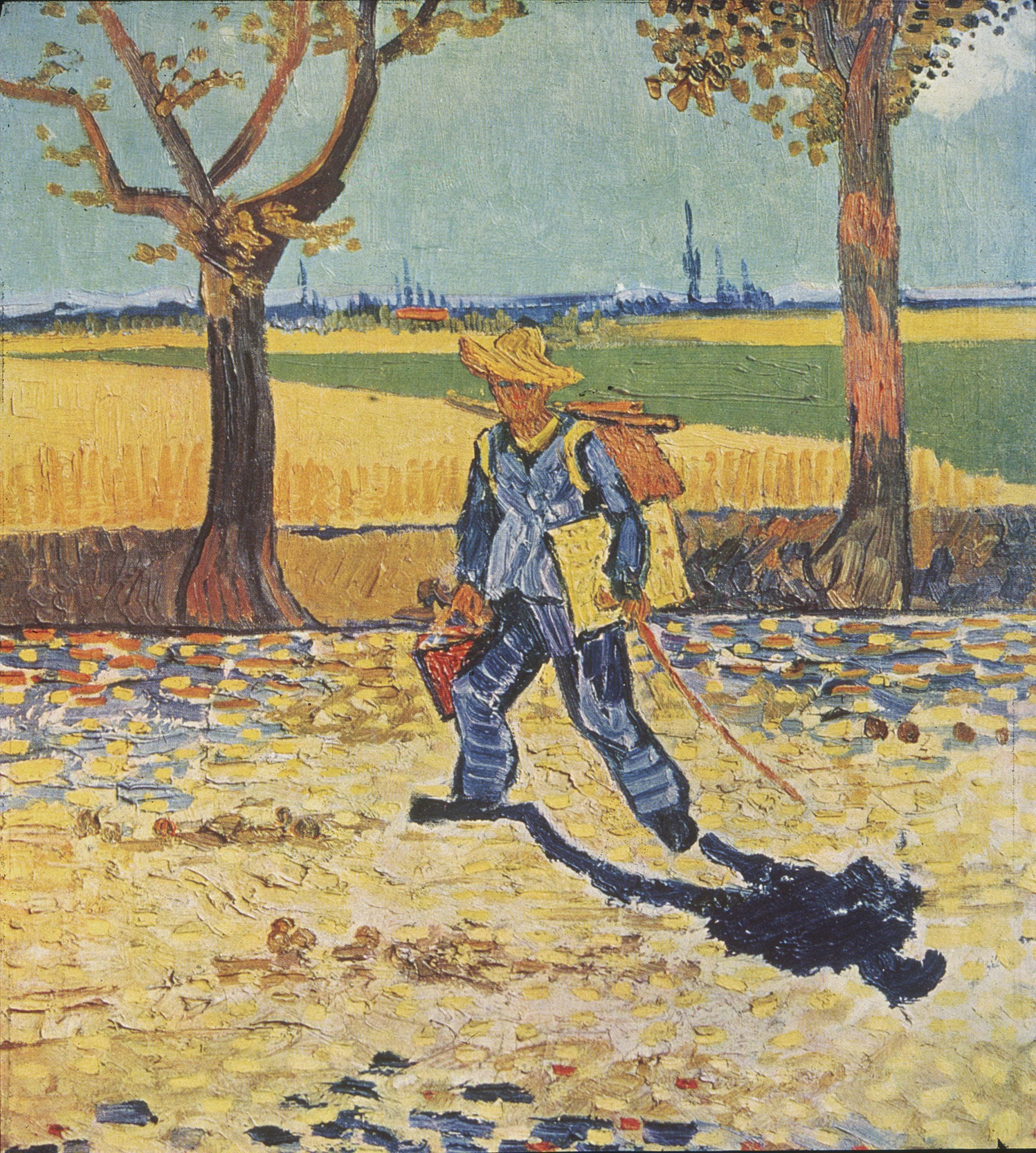
A man is walking to work. He is on a dirt road outside Arles in the full blaze of a Provencal summer, wearing a straw hat and a blue smock, and strapped to his back and clutched under his arms are the tools of his trade: an easel, brushes, and a fresh canvas. He is going out to paint, and he has a long way to walk. Van Gogh made it in August 1888, and mentioned it to Theo as one of a batch of studies he was shipping north:
A quick sketch I made of myself laden with boxes, sticks, a canvas, on the sunny Tarascon road.
It’s the only self-portrait he ever painted of his whole body, the only picture we have of the man on his feet, off to do the thing he lived for.
In 1912 a museum in Magdeburg bought it, one of the first Van Goghs anywhere to enter a public collection, and someone there loved it enough to do something unusual: in the 1930s they had it photographed in color, an expensive and uncommon thing to do at the time. That decision is the only reason you can see it now.
When the war came, the museum hid its collection deep in a salt mine at Stassfurt, thirty kilometers away, to keep it safe from British bombs. But the same mine also held a hidden factory building jet engines for the Luftwaffe, and when American troops reached it on the 12th of April, 1945, the whole place went up. The fire burned for two weeks. When the Monuments Men, the Allied officers who tracked down looted and endangered art, finally reached the mine, they reported that everything inside had been reduced to ashes.
Almost certainly, the Van Gogh was among it. It exists, for us, only as a color photograph, taken on a whim a decade before. A picture of a picture is all we have of it, and almost certainly all we ever will…
Every painting in this article was being looked after: the Vermeer had its alarm, the Caravaggio had its church, the Van Gogh was buried underground for its own protection, and the burial is what killed it. Nothing is guaranteed to last, not the paintings, and not the things you love, and in the end the only protection any of it ever had was that somebody bothered to look while it was still there.
So go and stand in front of something beautiful this month, if you can. In a room, in person, close enough to see the brushstrokes. It costs you an afternoon, and it is the one thing that no thief and no fire can ever take from you: not the painting, which the world may lose, but the moment it took your breath away, which is yours to keep forever…
Thanks for reading. Everything here, the research, the writing, all of it, is made by one person, with no team behind it, and no ads or sponsors influencing a single word. That independence is only possible because of my readers. If these pieces mean something to you, please consider becoming a paid subscriber for a few dollars a month, and unlock the full archive:
Every subscription genuinely makes a difference.
Thank you for helping keep this work alive.
Perhaps the most breathtaking article you’ve written — not only about the missing masterpieces but what we can and should do for ourselves to take in what we can, how we can, when we can. Last week, in Rome, I stood in front of some pieces that, indeed, took my breath away. Last year, as well, in Paris. The moments never fail to move me in ways that something virtual never could. There is nothing like a moment, between you and the creator. Thanks for these articles.
I deeply thank you for this. I was moved to tears.