


The science fiction visionary Arthur C. Clarke once wrote a line that only gets truer with time:
Any sufficiently advanced technology is indistinguishable from magic.
We like to think we are the first people to live in the future. We picture everyone who came before living in a duller, less inventive world, as if they were waiting for us to be born and switch on the lights. It is one of the most persistent illusions we carry, and it is almost entirely wrong.
The irony is hidden in the word we use to describe ourselves. “Modern” comes from the Latin modernus, itself derived from modo, meaning “just now,” “a moment ago.” Every generation that ever lived has called itself modern and looked back on its grandparents as ancient history. The Romans felt modern. The Victorians felt modern. We are not the final destination all of history was walking toward. We are only the latest to mistake ourselves for it.
And the people we imagine as primitive were reaching for the very same stars we reach for now, and in more cases than we would ever guess, they arrived first.
What follows are 10 things from the past that look very much like magic, and that you will struggle to believe are real. We will begin at the turn of the twentieth century, and travel backward, further and further, until we reach a machine built almost two thousand years ago that does something you would swear could not possibly be that old…
REMINDER: this is a teaser for my subscriber-only articles.
Beauty is Truth is a reader-funded publication. There are no ads here, only independent writing devoted to celebrating the beauty of the past.
If you’ve been thinking about supporting my work, becoming a paid subscriber is the most meaningful way to do it:
It now costs less than a coffee a month with the new annual discount, and it’s what makes all of this possible. Gift subscriptions to Beauty is Truth are now available too:
1. We’ve Been Here Before
Let’s begin with something you drive past every day. We tend to think of the electric car as the ultimate symbol of the modern age, a twenty-first-century answer to a twenty-first-century problem. So it comes as a genuine shock to learn that in the year 1900, roughly a third of all the cars on American roads were electric…
By 1899, around ninety percent of New York City’s taxi cabs ran on batteries, a silent fleet humming through the streets while horses still pulled most of the traffic around them. London had its own electric cabs, nicknamed “Hummingbirds” for the sound they made:
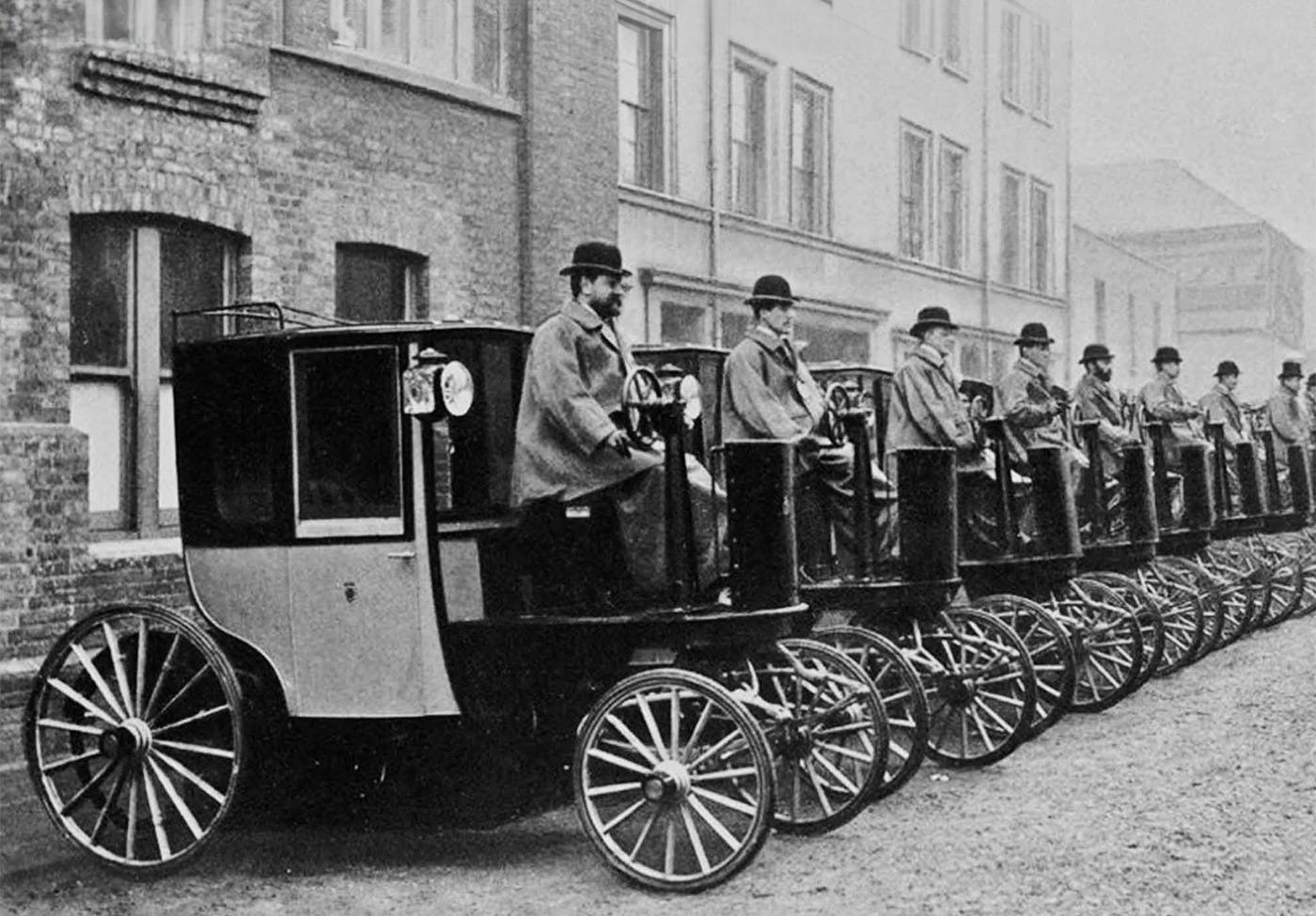
Drivers loved them for the same reasons we do now: they were quiet, they were clean, they produced no smoke or fumes, and they didn’t require the violent, wrist-breaking hand-crank that gasoline cars of the era demanded just to start.
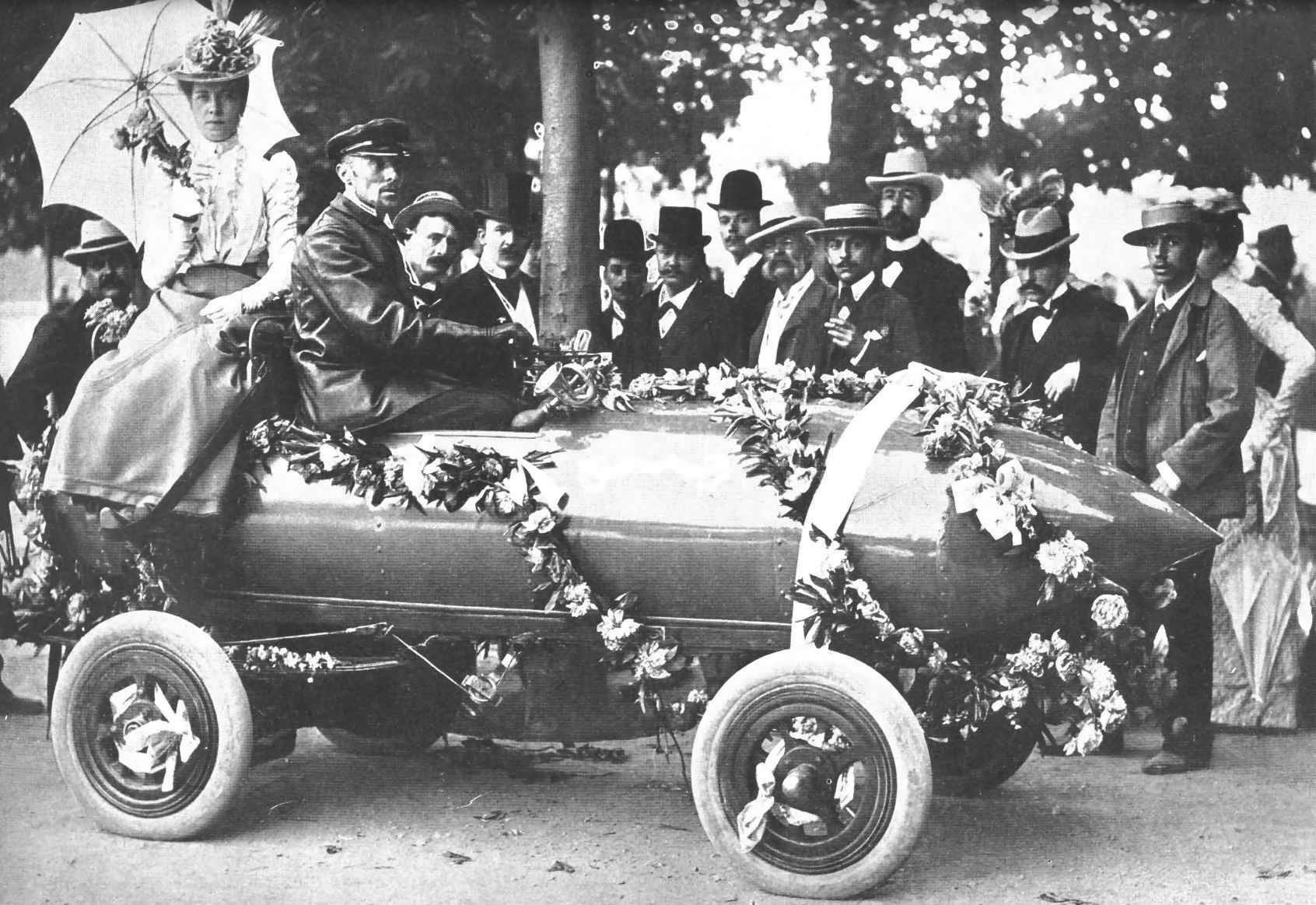
They were not slow, either. In 1899, an electric car called La Jamais Contente became the first vehicle in history to break sixty miles per hour.
Some models could travel a hundred miles on a single charge, a range many affordable EVs only matched again quite recently. There were even battery-swap stations for electric taxis, where a depleted battery could be exchanged for a fresh one in minutes, an idea being marketed as revolutionary by car companies today.
Then gasoline won…
The discovery of cheap oil, the arrival of Henry Ford’s mass-produced Model T, and the invention of the electric starter motor (which killed the dreaded hand-crank that had been gasoline’s biggest weakness) sent the electric car into a hundred-year sleep.
But make no mistake: the “car of the future” is one of the oldest cars there is.
2. The Invention Everyone Thought Was Witchcraft
In the late 1800s, a crowd gathered to watch a demonstration that convinced them they were witnessing magic, or telepathy, because the truth was so far ahead of its time that their minds had no box to put it in.
What they were really looking at would not exist in most people’s lives for another hundred years…