


Nobody sees a flower – really – it is so small – we haven’t time – and to see takes time, like to have a friend takes time.
That’s how Georgia O’Keeffe explained why she painted her flowers so big. If she made them large enough, she thought, even people in a hurry would have no choice but to stop.
Decades later, it seems we still haven’t found the time. In 2017, researchers at the Art Institute of Chicago watched visitors move through the galleries and timed how long each person stood in front of a work of art. The average was 28.63 seconds...
I’m as guilty as anyone, or at least I was until I heard the late Philippe Daverio, a French-born Italian art historian, describe how most people visit museums: they look at four hundred works in two hours, then limp to the nearest bar on swollen feet, order a drink to forget the whole experience and swear “never again.”
His advice was to treat a museum like a great restaurant. Nobody orders every dish on the menu, just as nobody walks into a library to read every book. You choose a few and savor them. A painter might spend years on a single canvas, he pointed out, so who are we to give it less than half a minute?
Stay with an artwork long enough, and its details begin to surface. The word detail comes from the Old French detaillier, “to cut in pieces.” A detail is a small piece cut from the whole, and in the greatest paintings, those small pieces are often where the most was hidden.
The 5 paintings below are known all over the world, yet each of them holds something that most people walk right past in their 28 seconds. Let’s give them a little longer, and follow the advice Henry James gave to writers in 1884:
Try to be one of the people on whom nothing is lost!
REMINDER: this is a teaser for my subscriber-only articles.
Beauty is Truth is entirely reader-funded. There are no ads here, just independent writing devoted to celebrating beauty. And it can only continue with your help.
If my posts have meant something to you, becoming a paid subscriber is the most meaningful way to support this work. With the new annual subscription discount, it costs less than a coffee a month. Join here:
Gift subscriptions to Beauty is Truth are now available too. Beauty is best when it’s shared, so if a friend or family member comes to mind, consider passing a little of it into their inbox:
1. The Shape Around God
You know this image even if you’ve never set foot in Rome: God and Adam reaching toward each other, their fingers almost touching. Five centuries of reproductions have turned it into an emblem of creation itself, and the more iconic an image becomes, the less of it we see…
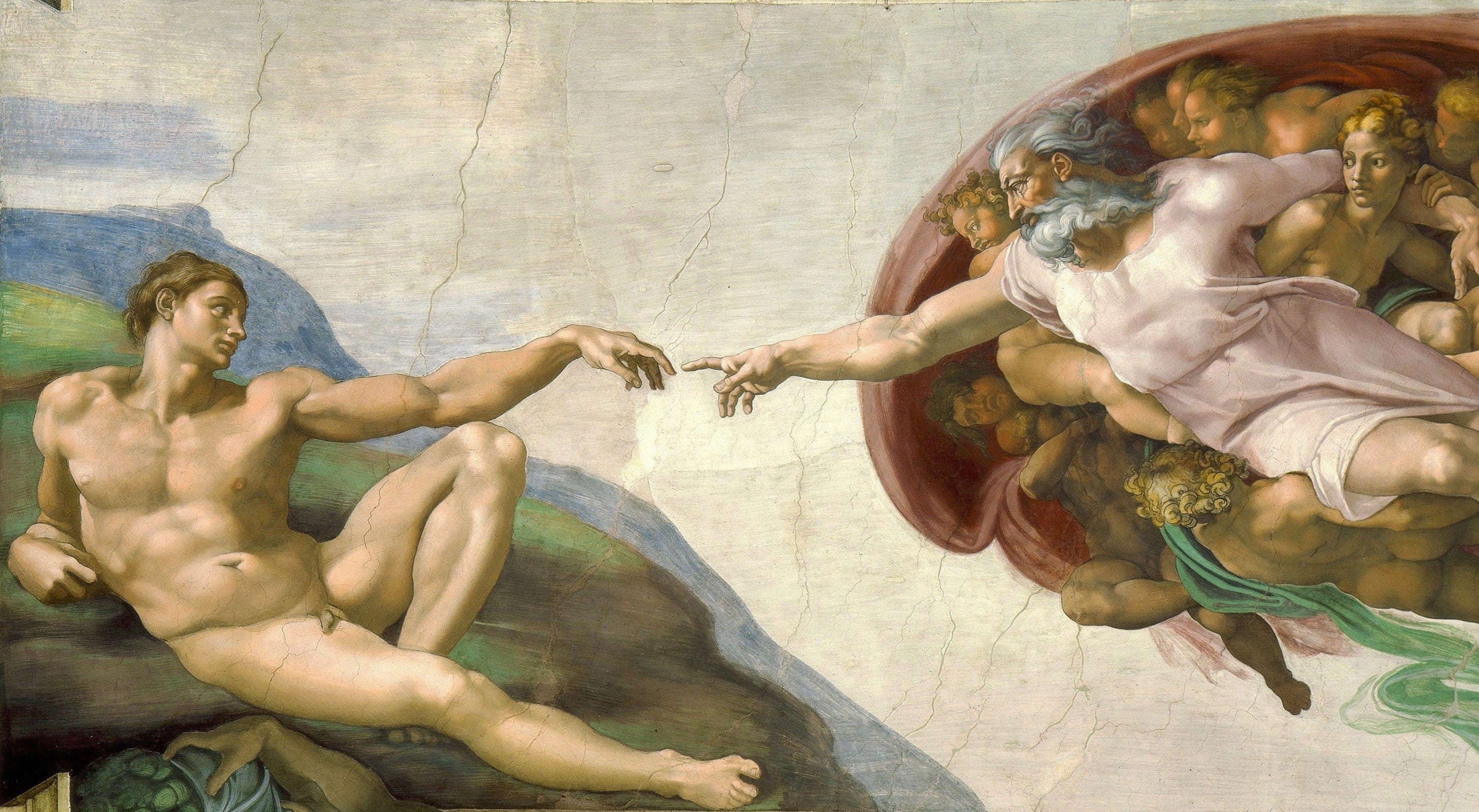
Even the story behind it is easy to overlook, starting with the fact that the man who painted it didn’t consider himself a painter. Michelangelo was a sculptor, and he was thirty-three when Pope Julius II sent him up the scaffolding of the Sistine Chapel in 1508. He spent four years up there with his head tipped back, and in a poem to a friend, complete with a caricature of himself at work, he grumbled about the whole ordeal before signing off with a confession: “né io pittore,” “nor am I a painter.”
Out of all that reluctance came one of the greatest works of art of all time, and its most celebrated scene is hiding three things in plain sight...
You may already have heard of the first one. God rushes toward Adam wrapped in a billowing red cloak, carried by angels, and in 1990 an American physician named Frank Meshberger argued in the Journal of the American Medical Association that its outline matches an anatomically accurate human brain, down to the brainstem and the pituitary gland:

It may sound like a coincidence until you remember who painted it: according to his early biographers, the teenage Michelangelo was allowed to study corpses in a private room at the church of Santo Spirito in Florence. Decades later, he wrote in a letter that one paints “col cervello et non con le mani,” with the brain and not with the hands.
The second is in Adam’s own body. In 2019, the Brazilian researcher Deivis de Campos argued that the outline of Adam’s left side, almost from shoulder to hip, forms the shape of a rib. In Genesis, Eve is made from one of Adam’s ribs, and the left has long been associated with the feminine. Campos reads the rib as a reference to Eve, and to a religious tradition holding that man and woman were created at the same time, side by side, rather than one after the other. If he’s right, it was a daring move. According to Campos, Michelangelo radically disagreed with many Catholic traditions, and the rib may have been his way of saying so on the ceiling of the pope’s own chapel. It’s so subtle that only someone who knew the human body as well as Michelangelo would ever think to look for it.
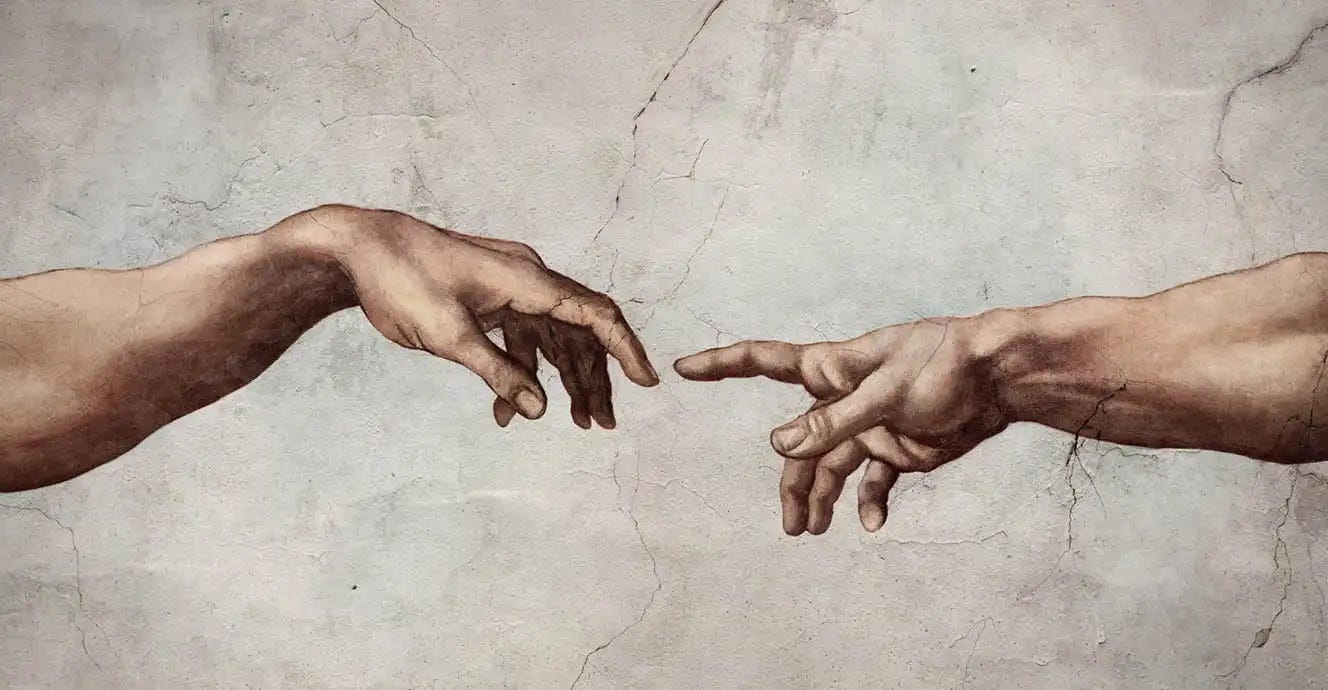
The third is the one almost everyone misses, and it may be the point of the entire fresco. Follow the two hands toward the center, all the way to the fingertips. God’s index finger is stretched as far as it can go, while Adam’s droops, its last joint softly bent. Their fingers never touch. God has crossed the sky to come this close, and the rest is left to Adam: he can lift that finger and close the gap, or choose not to.
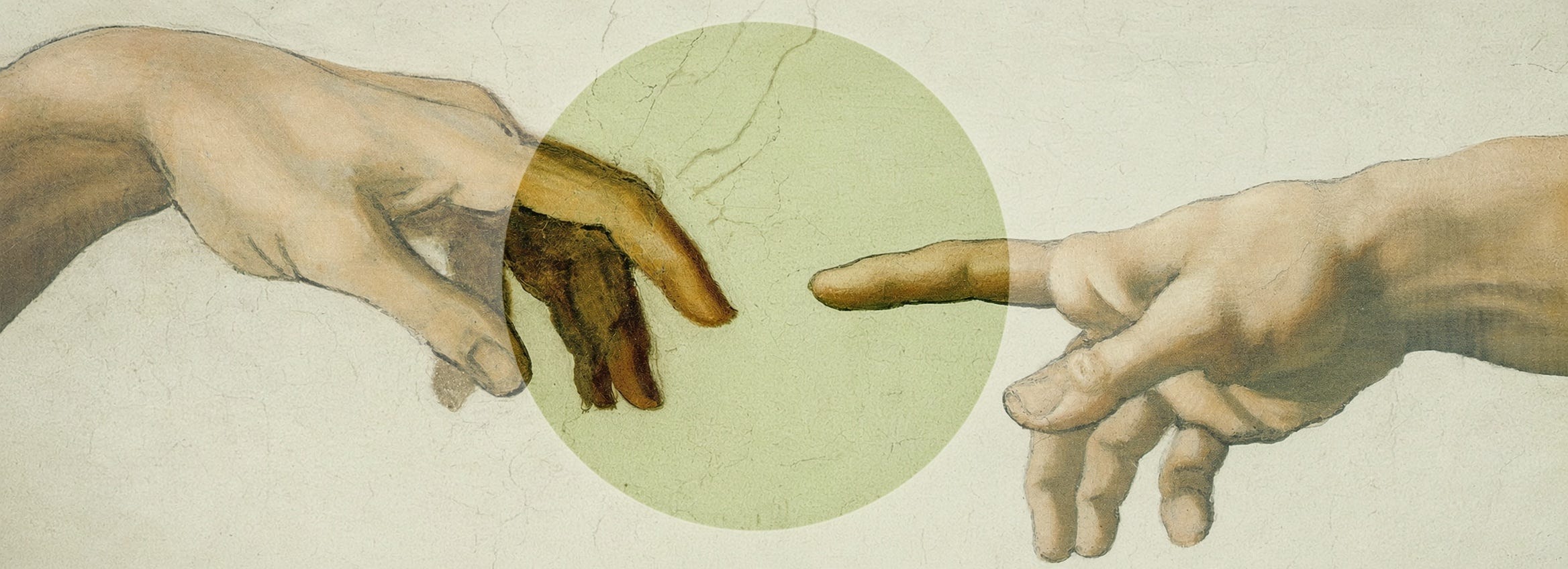
Many read the space between them as a statement about free will: God is always there, but the decision to seek Him belongs to us…
2. The Wall Behind Her
A young woman stands by an open window, so absorbed in the letter in her hands that the room around her seems to dissolve. Her reflection floats faintly in the glass. Behind her there’s nothing but a bare, pale wall, and for centuries, that empty wall is all anyone saw.
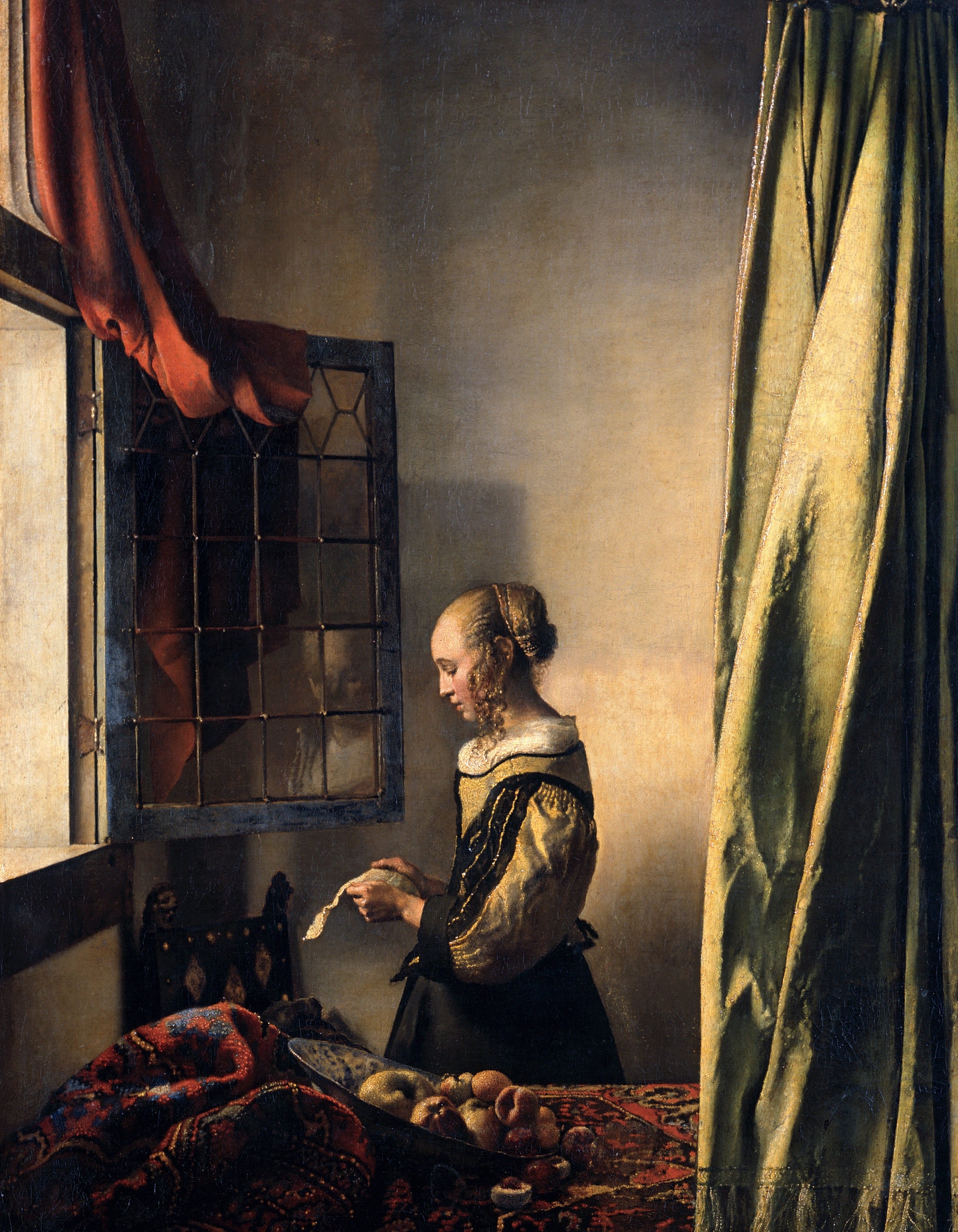
Then, in 2017, conservators in Dresden began cleaning the painting and noticed that one patch of that wall didn’t react like the rest. What they found underneath changes the meaning of the letter she’s holding…