


Most of us have felt it without ever knowing it had a name. Psychologists call it anticipatory nostalgia: the act of missing something before it’s gone, mourning the present while you are still standing inside it. We usually feel it about our own lives. But it can also strike when you look at photographs of a world that vanished long ago, and suddenly realize that your own world is doing the same thing, right now, without asking your permission.
Most photographs from the 1970s share a particular quality of light: a warmth, a softness, a faint golden cast. Spend long enough with them and they stop feeling like history and start feeling like memory. If you lived through those years, they bring back something you recognize. If you did not, they make you miss it anyway: a way of being together that we have lost somewhere along the way. People smiled differently. They seem freer, unguarded in a way we rarely are now. And they always looked at one another, because there was nothing else asking to be looked at…
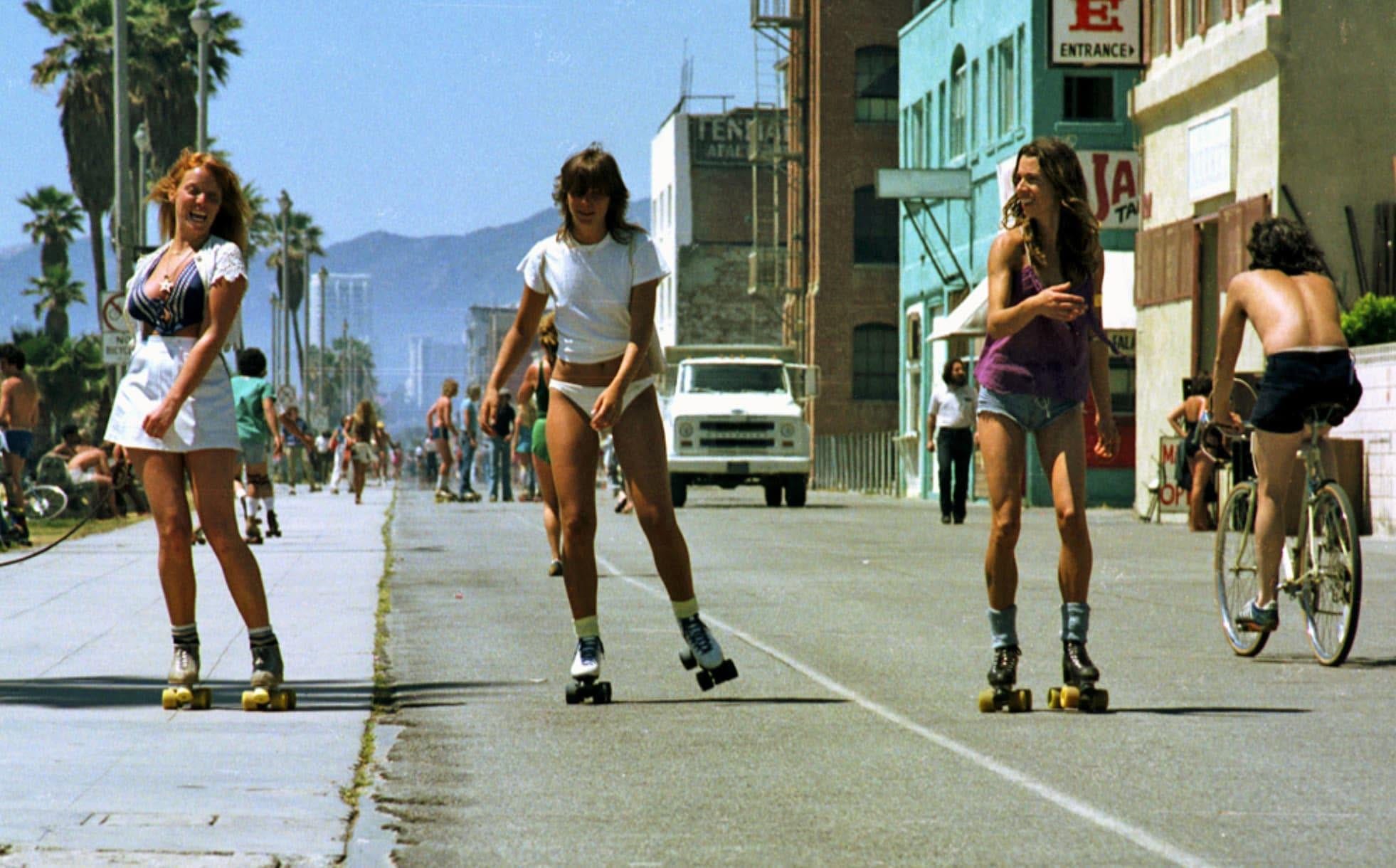
What they had, and what we have mostly lost, is something I stumbled on this week and have not stopped thinking about: unstructured time. For almost all of human history, boredom was not a problem to be solved but a doorway. It pushed the brain into what scientists now call the default mode network, the kind of background processing where we consolidate memories, imagine other people’s lives, dream up ideas, and slowly assemble a sense of who we are. Staring out a window, waiting for a bus, sitting at the table after dinner with nothing to do, the mind was doing some of its most important work. Boredom, it turns out, was the engine of the inner life.
The 1970s were full of it. Children were released into that emptiness every day after school and from dawn to dusk all summer, and researchers now believe the young need at least as much of that unstructured time as the organized kind, if not far more. But it is almost the first thing we have engineered out of modern life. Today, the moment we are left alone with our own thoughts, we reach for a screen, afraid, perhaps, of meeting the person waiting for us in the silence…
That silence was easier to find back then, because the whole world moved more slowly. A long-distance call cost real money, so people still wrote letters and waited weeks for an answer. A photograph was an act of faith: you pressed the shutter and would not see the result for days, so you only photographed what mattered. No one documented their breakfast. No one performed their life for an audience that was not in the room.
Then it all changed, the way these things always do: not with a single moment you could point to, but slowly, invisibly, until one day the world in these photographs was simply gone. Joan Didion once wrote that “it is easy to see the beginnings of things, and harder to see the ends.” That is the tragedy of any era. No one inside it can feel it ending. And I have come to believe we are living through another of those turnings right now, in real time, without noticing it.
So look closely at the images below. We cannot go back. But give them your attention and they begin to show you how much can change in a single lifetime, and how the things we trade away are so rarely the things we ever meant to lose.
What follows are 10 photographs from the 1970s, and of what it felt like to be alive before everything changed…
REMINDER: this is a teaser for my subscriber-only articles.
Beauty is Truth is a reader-funded publication. There are no ads here, only independent writing devoted to celebrating beauty.
If you’ve been thinking about supporting my work, becoming a paid subscriber is the most meaningful way to do it:
With the new annual subscription discount, it costs less than a coffee a month — and it’s what keeps all of this going. Gift subscriptions to Beauty is Truth are now available too:
1. The Crookedest Street in the World
This is Lombard Street in San Francisco, in 1975. The famous switchback section, the one that draws around two million visitors a year today, captured in a single perfect frame of afternoon light…
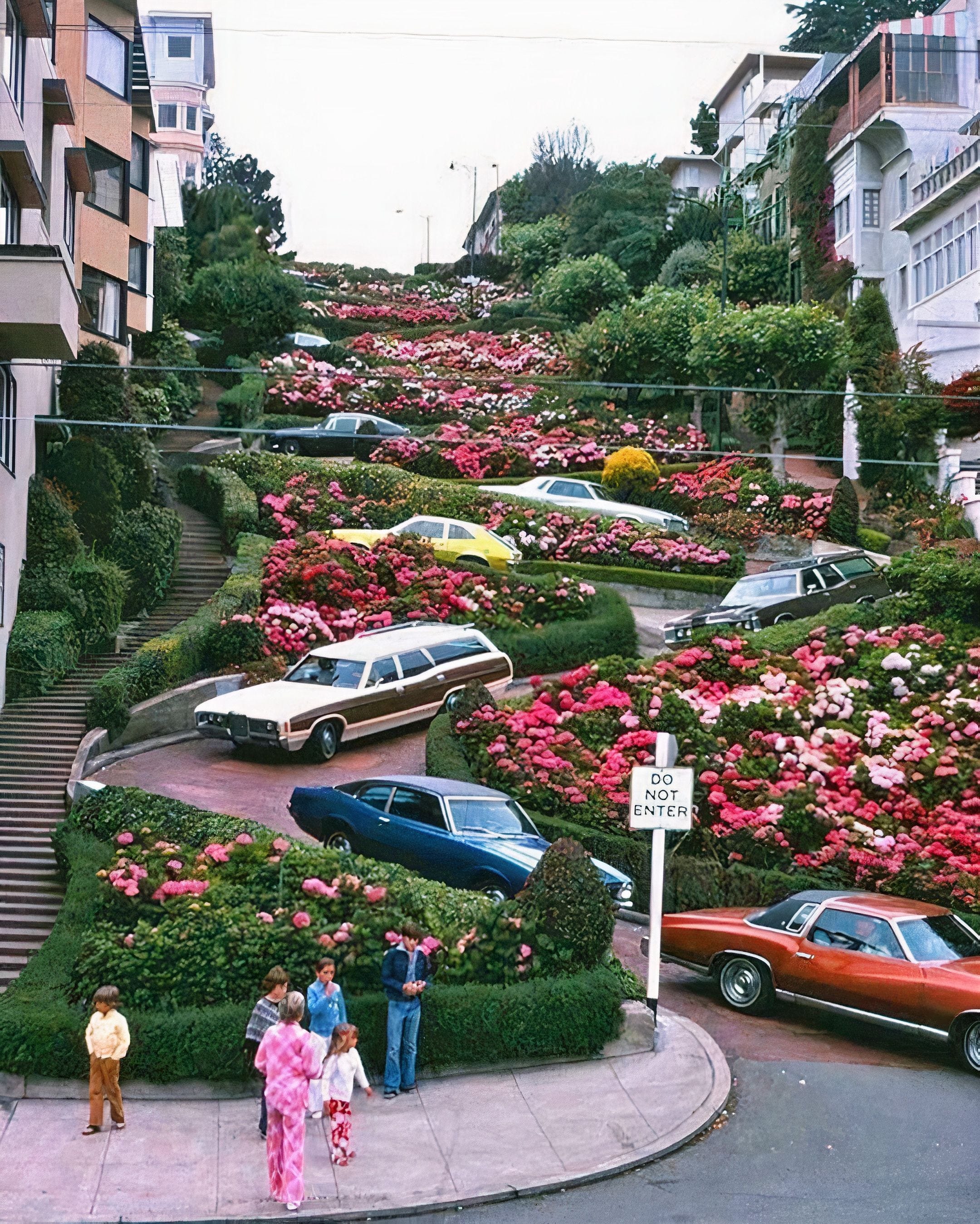
What makes the photograph remarkable is how it was taken. There were no drones in 1975, no phones held overhead, no easy way to get above the scene at all. So the photographer, Mike Fitzpatrick, simply climbed a telephone pole. “I was in my early 20s then and quite fit,” he later recalled. “I don’t remember how high I climbed, but probably about 10 feet.” He shot it on an Argus 35mm camera, on a color slide he still owns to this day.
And here is the small, lovely detail that makes the whole era come alive. While he was up there, the other tourists did not film him to post on social media about the strange man on the pole. They handed their cameras up to him. As Fitzpatrick remembered it, they “insisted on handing their cameras up for me to take photos for them too.” Strangers, trusting a stranger balanced on a pole with the only copy of their vacation, because there was no other way to get the shot, and because that is simply what you did.
He went back in 2008, in his mid-fifties, and he took another picture of the same spot:
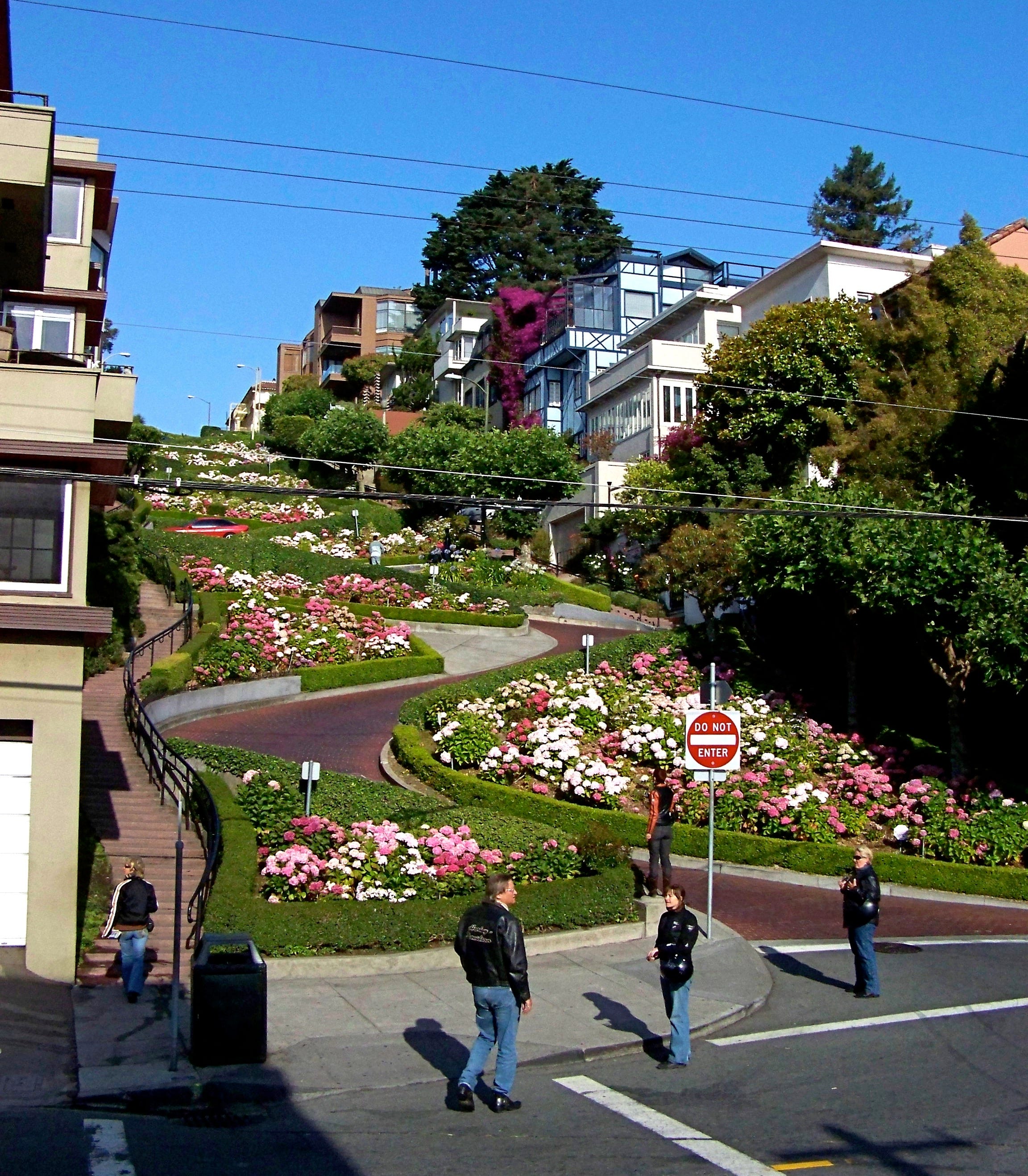
This time he did not climb the pole. He stood on a trash can and held the camera as high as he could. And in some ways, the street itself has barely changed at all. It is everything else that has…
2. These Need to Be Brought Back
If you flipped through home magazines in the 1970s, you kept meeting the same strange and wonderful feature: the living room floor dropped away into a sunken, carpeted hollow, ringed with one continuous sofa, with everyone settled down inside it facing one another. They called it the conversation pit.
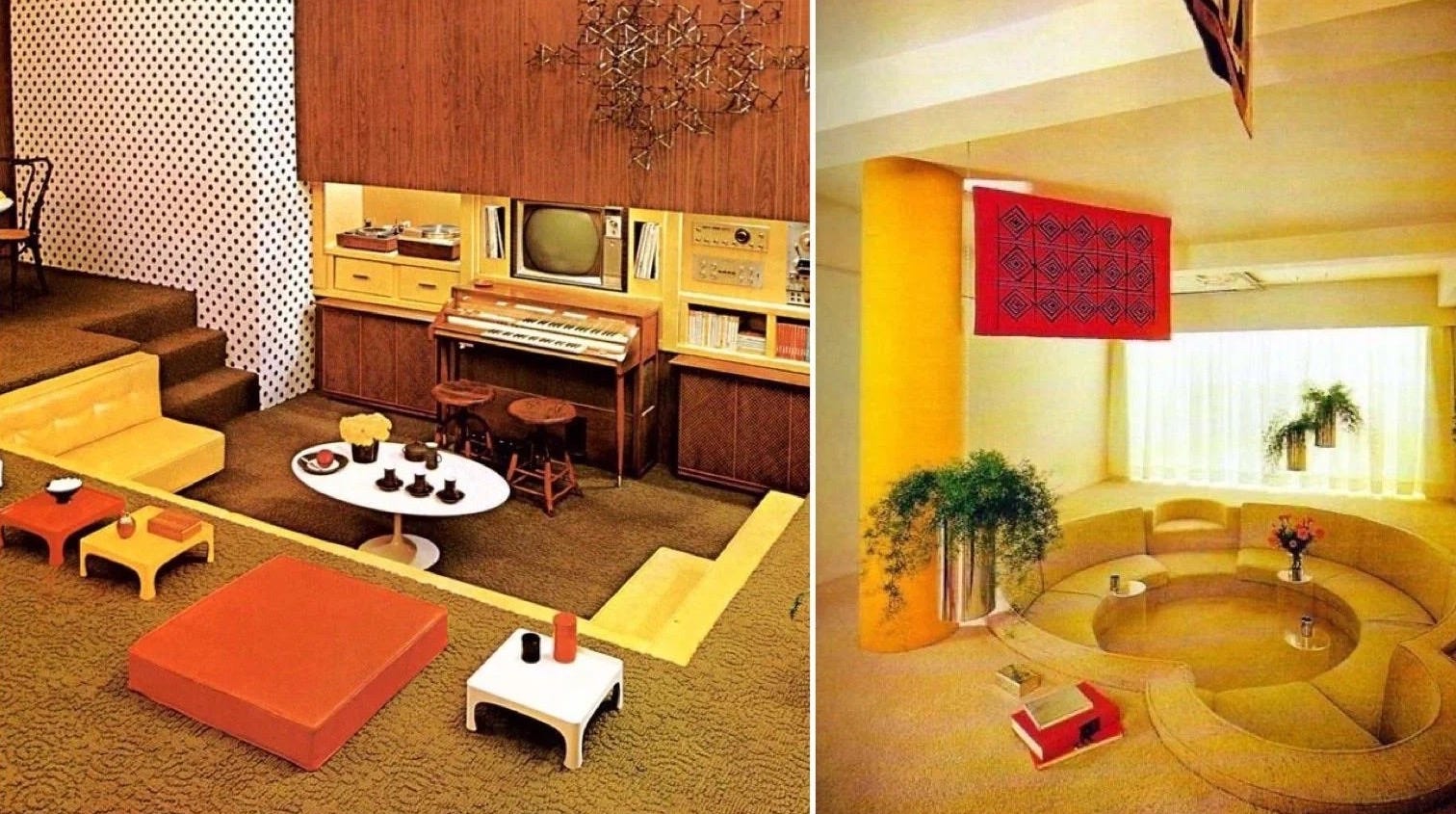
The idea had been around since a 1952 house designed by the architect Eero Saarinen, but it was in the 1970s that it reached the peak of its popularity, turning up in homes across the country in deep oranges, browns, and golds. Saarinen had a particular reason for sinking the seating into the floor. He wanted to get rid of what he called the “slum of legs” — the scatter of table and chair legs that cluttered an ordinary room — and replace it with a single, clean, communal space where people simply sank down together.
And that is the part worth pausing on. The whole purpose of the room, its only purpose, was to bring people physically closer and turn them toward each other. Not toward a television. Not toward a fireplace. Toward each other’s faces. The name said it plainly: a pit built for conversation. You climbed down into it, and once you were down there, the only thing left to do was talk, and listen, and be with whoever was down there with you.
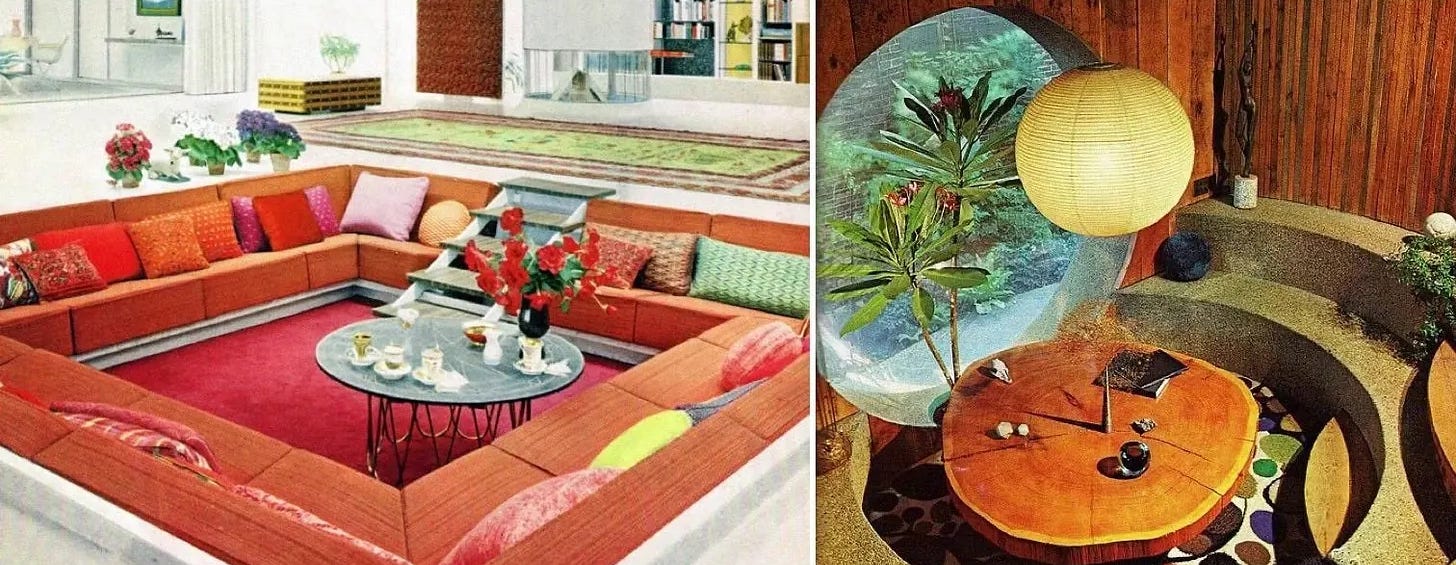
It is hard to imagine a piece of architecture less suited to the way we live now. We have spent the last few decades redesigning our homes around the screen: the seats angled toward the television, then toward our own separate glowing rectangles. The conversation pit belonged to a world that still built its rooms, quite literally, around the radical idea that the best thing in any house was the other people in it. As Winston Churchill once put it:
We shape our buildings; thereafter they shape us.
3. When the World Had Color
Look at a street scene from the 1970s and the first thing that hits you, before the clothes or the hairstyles, is the color. The cars are orange, avocado green, mustard yellow, turquoise, deep plum. In 1970, you could order a Dodge in shades the company gave names like Plum Crazy, Go Mango, Lemon Twist, and Lime Light.
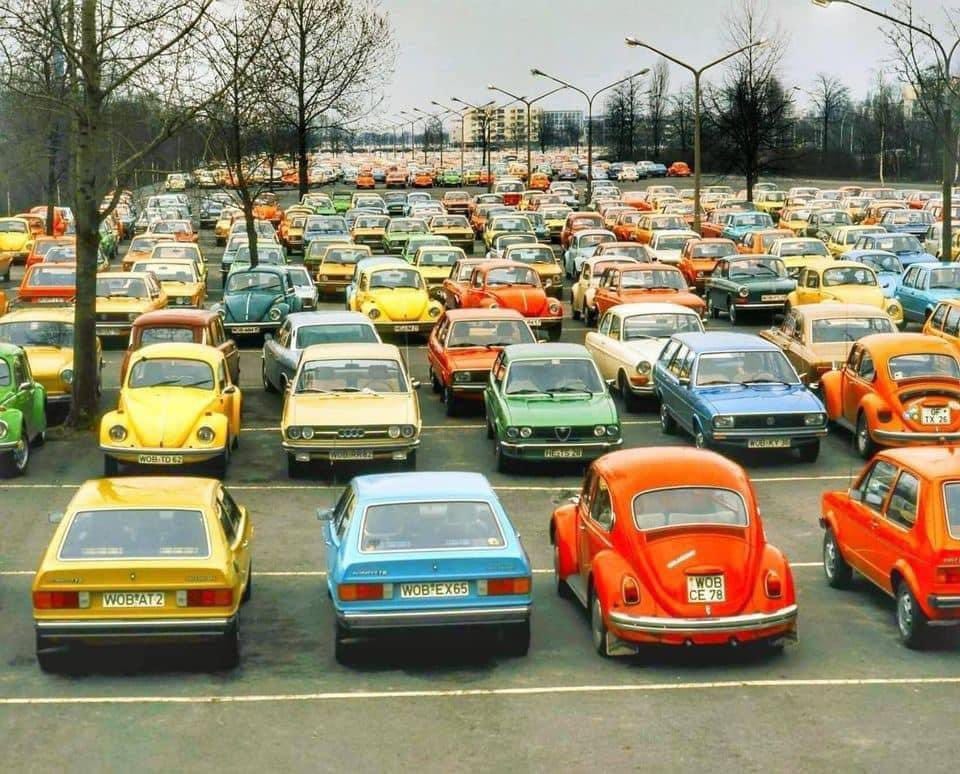
Now compare it to the parking lot outside your window. According to BASF and Axalta, the two largest automotive paint manufacturers in the world, around 80% of new cars today are finished in white, black, gray, or silver. The single most popular car color on earth, white, has held the top spot every year since 2011.
The bold, saturated hues that once filled the roads have nearly disappeared, surviving as rare options on a handful of sporty trims.

And it is not only cars. The same thing is happening almost everywhere. Phones and laptops in “space gray” and “midnight.” Furniture in greige and taupe. The logos of the world’s biggest companies, once bright and distinct, flattening into the same minimal sans-serif gray.
We have built a world that is easier to mass-produce, easier to resell, easier to make inoffensive to everyone, everywhere, all at once. And in the process we have slowly drained the color out of it. The 1970s still carried the spirit of a culture that was not afraid of color, that let a thing be loud, and strange, and unmistakably itself…
4. You Would Never Guess Where This Is
A woman in a sleeveless 70s dress leans over a birthday cake, smiling, in a room that looks like it could be almost anywhere in the Western world. It isn’t. It isn’t even close.
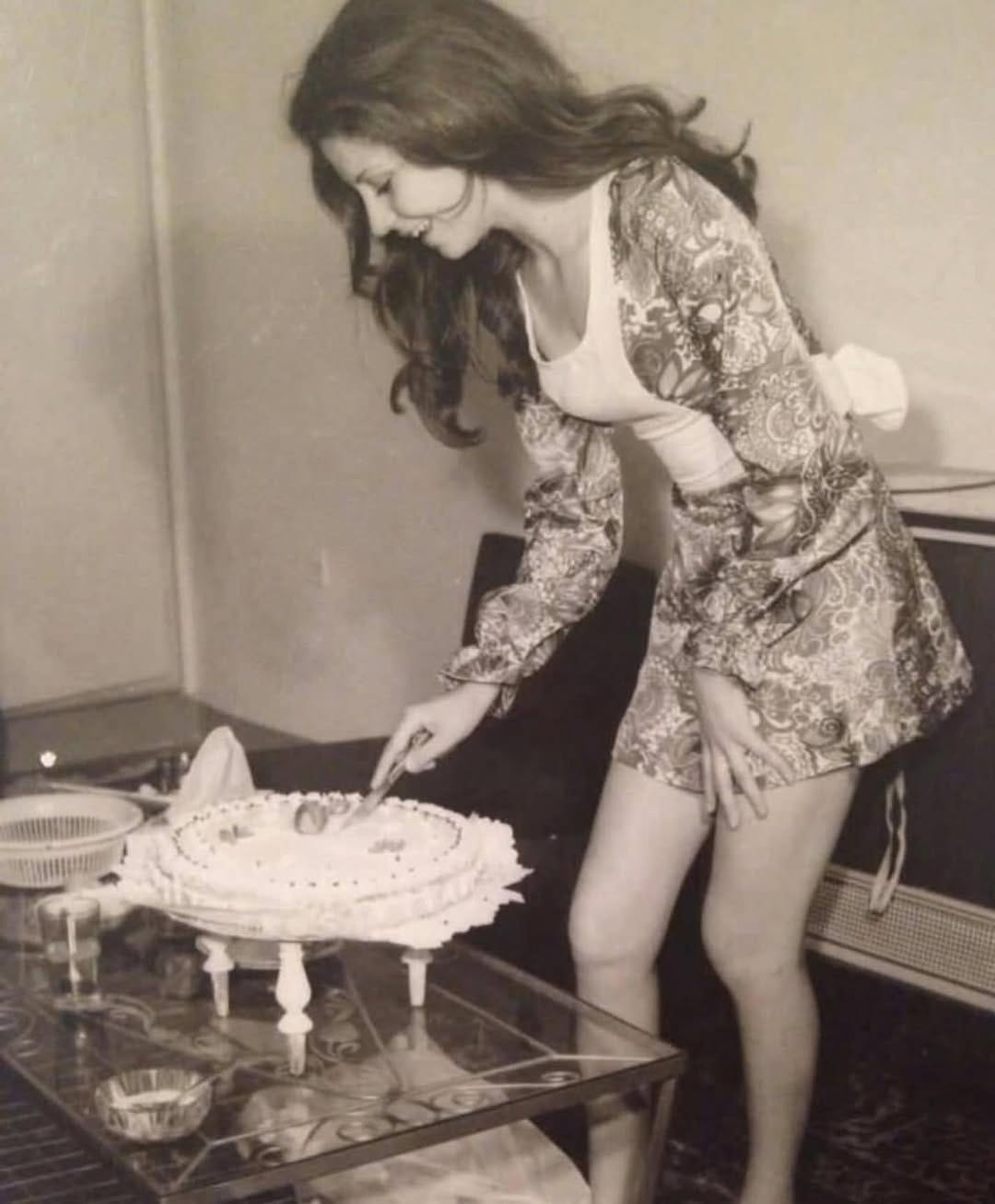
And the country where this was actually taken is the last place on earth you would guess…