


In 1899, the art dealer Ambroise Vollard sat for Paul Cézanne on a stool perched on a platform, and by his own count he came back 115 times. When he moved, Cézanne scolded him that he had to sit “like an apple,” and asked him, “Does an apple move?” After all that, the painter left the portrait unfinished and told him he was “not displeased with the shirtfront.”
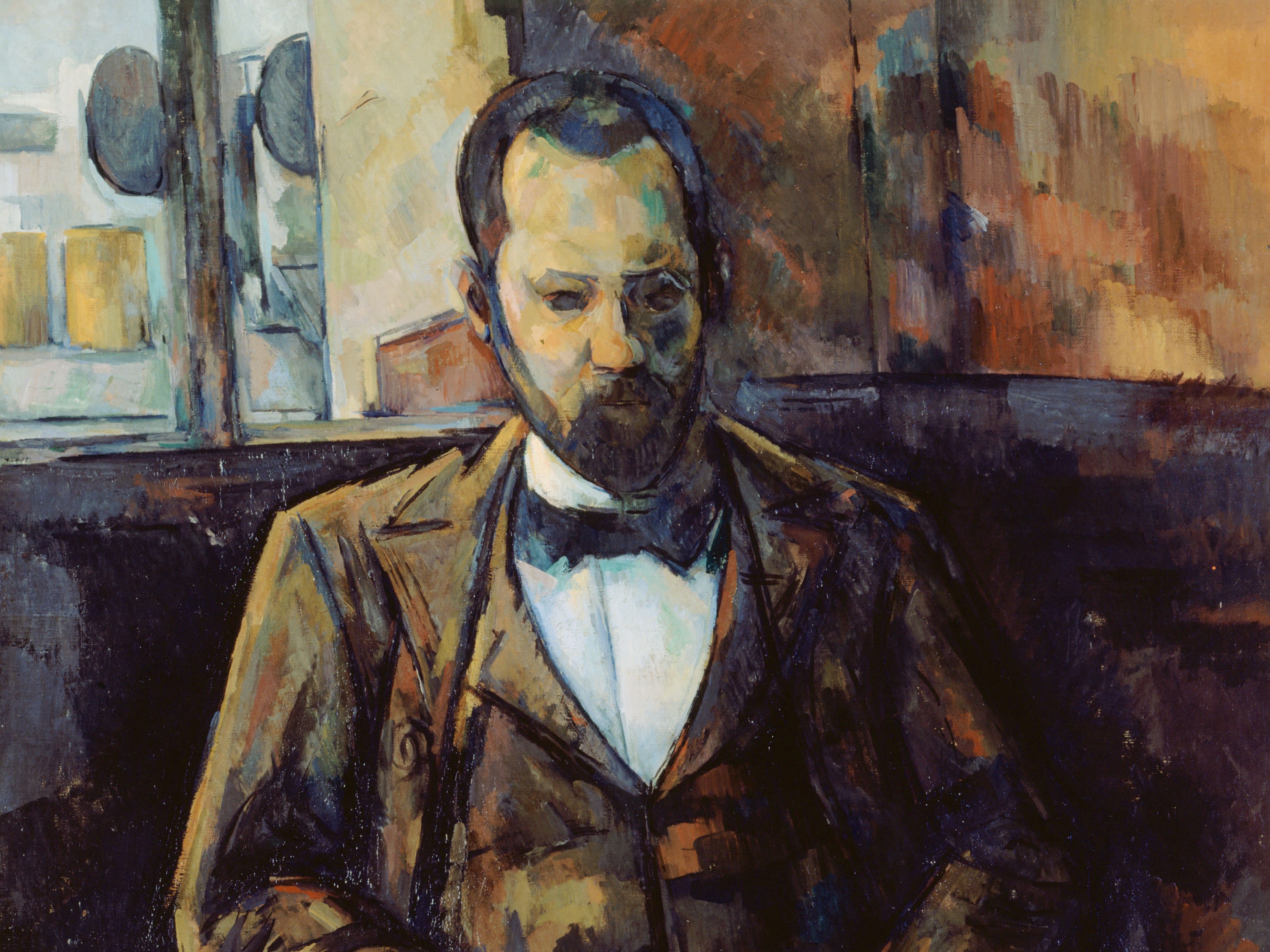
I’ve always loved this story, partly because it’s funny and partly because it gives away something we would rather not admit. We tend to look at the people in great paintings the way Cézanne looked at Vollard, as shapes and colors in the light, and we almost never wonder about the person who climbed down from the stool and went back out into the world…
Most of us know what it’s like to hold a face for other people, smiling through a long dinner while our minds are somewhere else, and the people who sat for the most famous paintings in history did the same for hours while someone studied every inch of them. Their faces became some of the best known on earth, while the loves and losses they carried in and out of those rooms were left out of the picture.
This article brings those lives back into the frame, and some of them turn out to be far stranger and braver than their faces would ever let you guess…
Shakespeare wrote the perfect warning for anyone who stands in front of a portrait, and he gave it to King Duncan in Macbeth, a moment before the man who will murder him walks through the door:
There’s no art to find the mind’s construction in the face.
REMINDER: this is a teaser for my subscriber-only articles.
Beauty is Truth is entirely reader-funded. There are no ads here, just independent writing devoted to celebrating beauty. And it can only continue with your help.
If my posts have meant something to you, becoming a paid subscriber is the most meaningful way to support this work. With the new annual subscription discount, it costs less than a coffee a month. Join here:
Gift subscriptions to Beauty is Truth are now available too. Beauty is best when it’s shared, so if a friend or family member comes to mind, consider passing a little of it into their inbox:
1. The Woman in the Margin
In 2005, a librarian at Heidelberg University Library named Armin Schlechter was cataloging early printed books for an exhibition when he noticed a few lines of handwriting in the margin of a volume of Cicero’s letters printed in 1477. They had been written in October 1503 by the book’s owner, Agostino Vespucci, a clerk in the Florentine chancery who worked alongside Machiavelli, and they mention a portrait that Leonardo da Vinci was painting at that very moment, of a woman named Lisa del Giocondo.
You’ve known her all your life, because Lisa del Giocondo is the woman in the Mona Lisa, and when Heidelberg University announced the find in 2008, it said those few lines had removed all doubt about who she was…
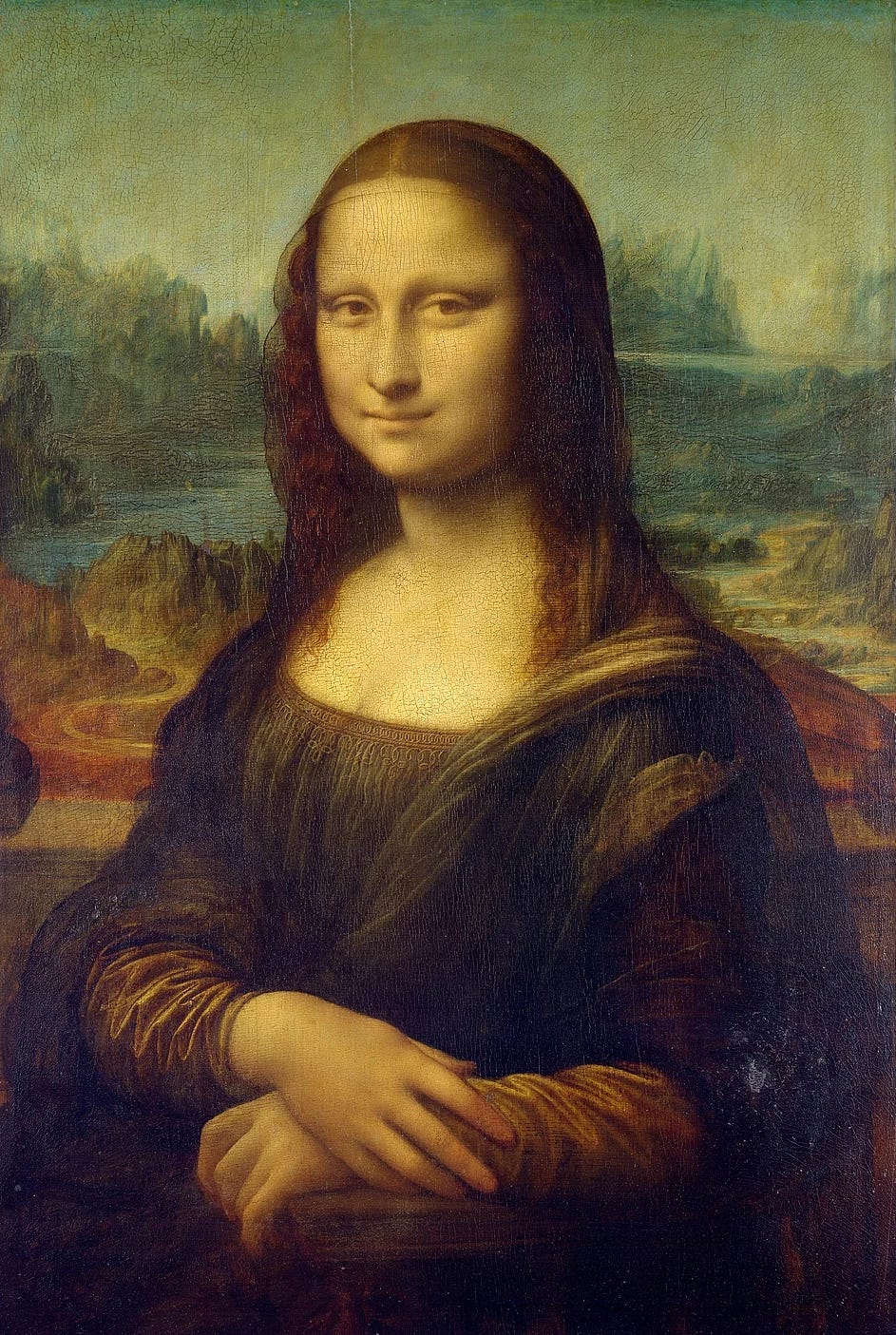
She sits with her right hand laid over her left, before a winding landscape of water and roads. The varnish has darkened so much over five centuries that her dress has been described as everything from black to brown, but the Louvre believes it was most likely dark green, with detachable yellow sleeves. In 2006, French and Canadian scientists who scanned the panel revealed that the dress itself was covered by a second veil of very fine gauze, almost invisible beneath the varnish, of a kind Italian women wore when they were expecting a child or had just given birth, although the Louvre still treats its purpose as an open question.
The detail would fit her life at the time, because she had recently given birth to a son, Andrea, and in March 1503 her husband bought a new house on Via della Stufa, so the portrait was most likely meant to celebrate both.
She came from an old family of Chianti landowners who had fallen on hard times, and at fifteen she married Francesco del Giocondo, a silk merchant of twenty-nine who had already lost his first wife. His surname would one day give the painting its Italian title, La Gioconda, which doubles as a pun, since giocondo means jovial. By the time Leonardo began, she was twenty-four, with children of her own and a stepson she was raising.
What makes Vespucci’s note so delightful is the sentence it sits beside, a passage in which Cicero recalls how the Greek painter Apelles perfected the head and bust of his Venus and left the rest of her body only roughly sketched. In the margin, Vespucci wrote that Leonardo works the same way in all his paintings:
As with the head of Lisa del Giocondo.
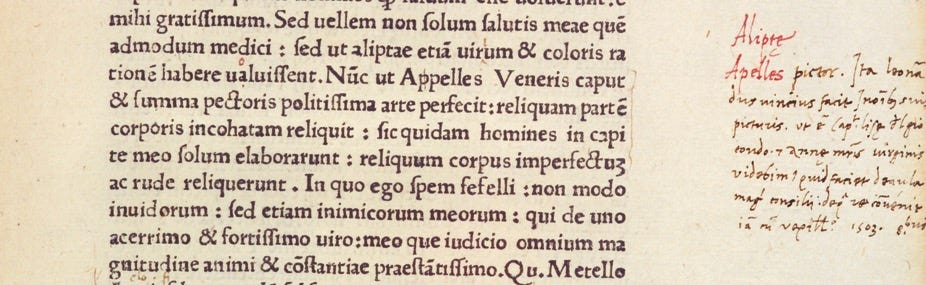
In other words, by the fall of 1503 her face was taking shape, and the rest of her would have to wait. That proved truer than Vespucci could have imagined, because Leonardo never handed the portrait over: he kept working on it for years and took it with him to France, where King Francis I most likely acquired it in 1518, the year before Leonardo died.
Lisa grew old in Florence without ever owning her portrait, and when her husband died in 1538, his will called her his “beloved wife” and said she had “always acted with a noble spirit and as a faithful wife.” He asked their daughter Marietta, who had become a nun under the name Suor Ludovica, to look after her. Lisa spent her last years in Marietta’s convent of Sant’Orsola, where she died on July 15, 1542, at sixty-three.
Today, some twenty thousand people a day crowd into one room of the Louvre to see her, and hers may be the most famous face on earth, yet few of them could tell you anything about her life, even though they say her name every time they say Mona Lisa, which simply means “my lady Lisa”…
2. America's Favorite Family Dinner
Eighty-four years ago today, on Thanksgiving 1942, Norman Rockwell spent the holiday painting a roast turkey in his house in Arlington, Vermont. That turkey became the centerpiece of Freedom from Want, one of four paintings he made to illustrate Franklin D. Roosevelt’s Four Freedoms, and the one commonly known as “the Thanksgiving painting.”

It looks like three generations of one happy family, but almost nothing at this table is what it seems, and once you know who these people were, and how each of them got there, it becomes the perfect painting for today…