


Eramnesia — a modern neologism formed from the Latin era, meaning a distinct period of time, and the Ancient Greek amnesia, meaning a disconnection from memory — describes a feeling of nostalgia for having been born in the “wrong” age, or a longing to have lived in another time.
Nostalgia, it turns out, needs no memory to make its case.
You do not need to have lived through the 1980s to feel something when you look at photographs from those years. The handwritten notes left on kitchen tables. The weight of a phone receiver. The particular quality of light in a world that had not yet been flattened by screens. Even for those who weren’t alive then, something in these images evokes a sense of loss — a way of being in the world that has vanished and will not return. For the people who actually lived through it, that sense of loss is even deeper…
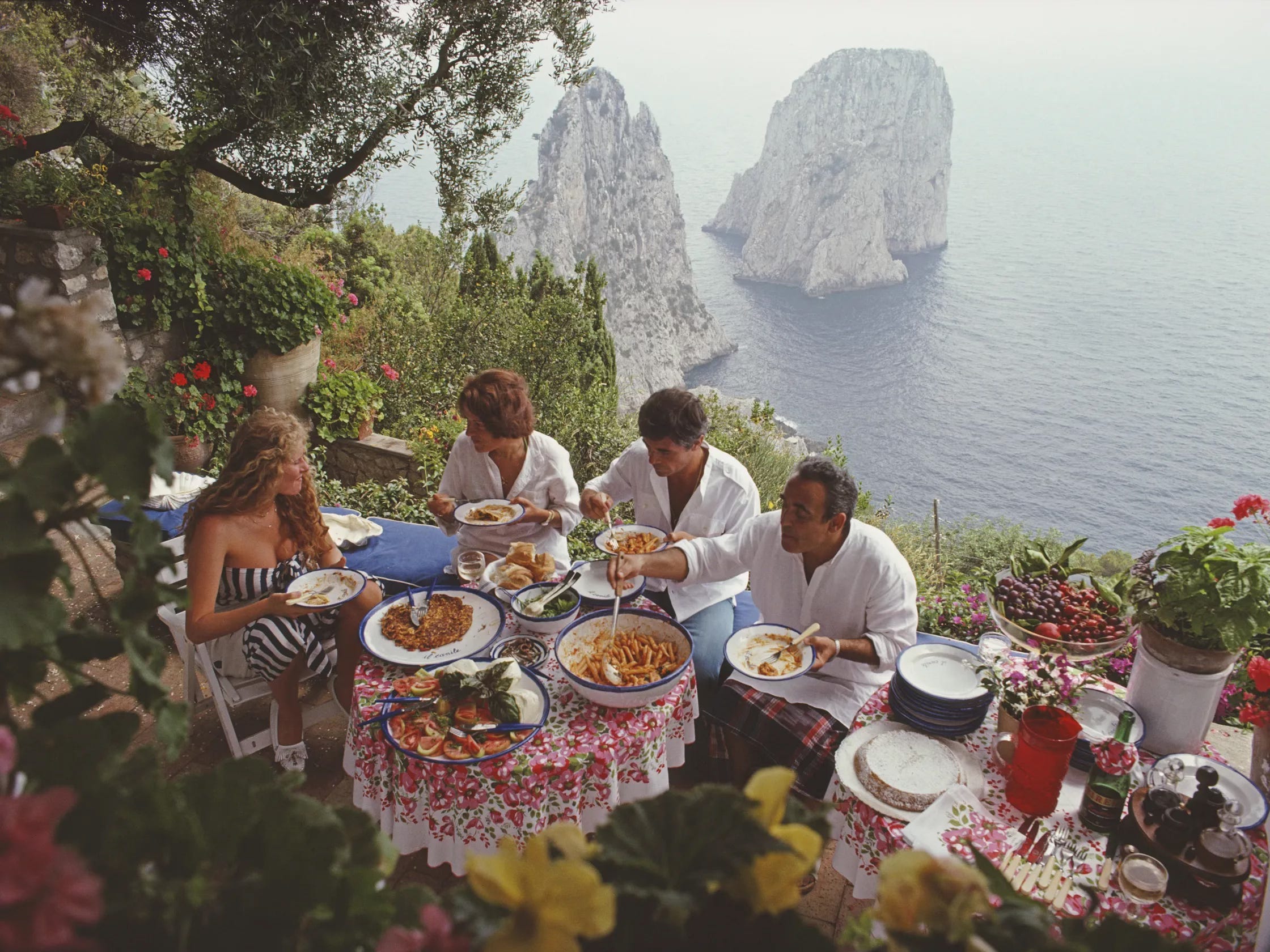
The year 1980 feels, in many ways, like another civilization. Think about it: music came on vinyl and cassette tape, photographs took a week to come back from the drugstore, and the news arrived twice a day through the morning paper and the evening broadcast. Life moved slowly enough to be boring, and boredom, back then, was where imagination lived.
And if you left the house without telling anyone where you were going, you were simply gone until you came back. The experience of being completely present in one place — with no notification, no expectation of response, no awareness of anything happening anywhere else — was the default condition of every person alive.
No one lives that way now. According to Pew Research Center data, 95% of American adults use the internet, and 41% say they are online almost constantly. That shift happened in roughly one human generation. Nobody voted for it. Nobody sat down and decided that this was the trade they wanted to make. It just happened, the way most irreversible things do — gradually, and then all at once. And if that sounds familiar, it should. It is happening again right now, with AI, as you read this.
Whether we have gained more than we have lost is the question each generation now has to answer for itself.
What follows are 10 photographs that do not try to answer it. They simply show you what it looked like before everything changed…
REMINDER: this is a teaser for my subscriber-only articles.
Beauty is Truth is a reader-funded publication. There are no ads here, only independent writing devoted to celebrating beauty.
If you’ve been thinking about supporting my work, becoming a paid subscriber is the most meaningful way to do it:
With the new annual subscription discount, it costs less than a coffee a month — and it’s what keeps all of this going. Gift subscriptions to Beauty is Truth are now available too:
1. The Death of the Third Place
This is a McDonald’s in the 1980s.
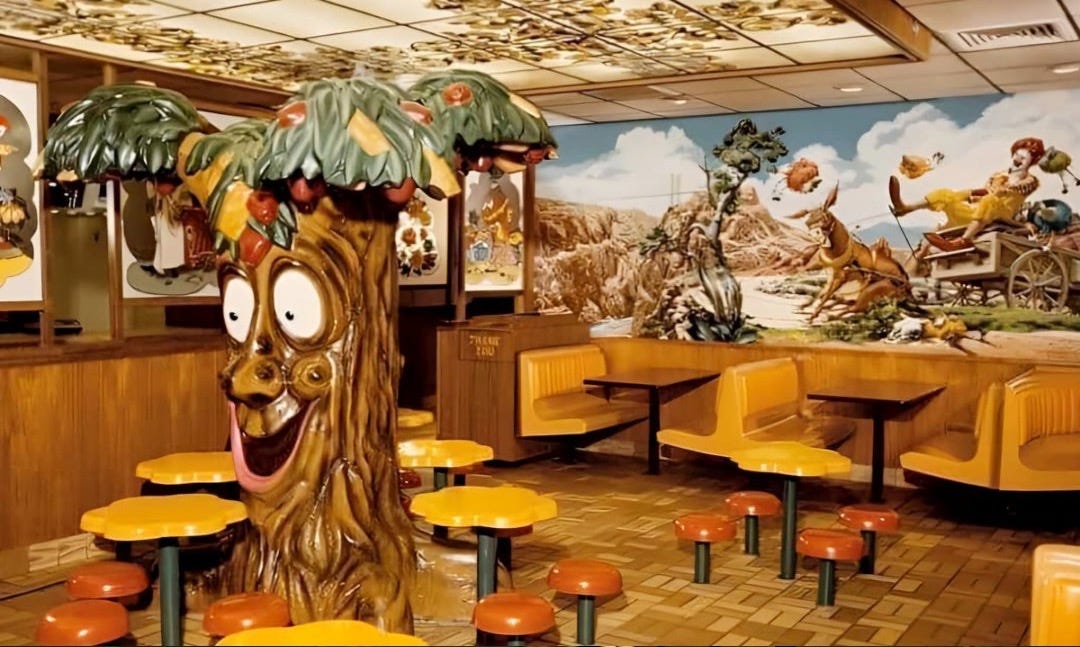
It was designed, however commercially, to be a place with personality and color, with a talking tree in the center that children would remember for the rest of their lives.
And this is a McDonald’s today.
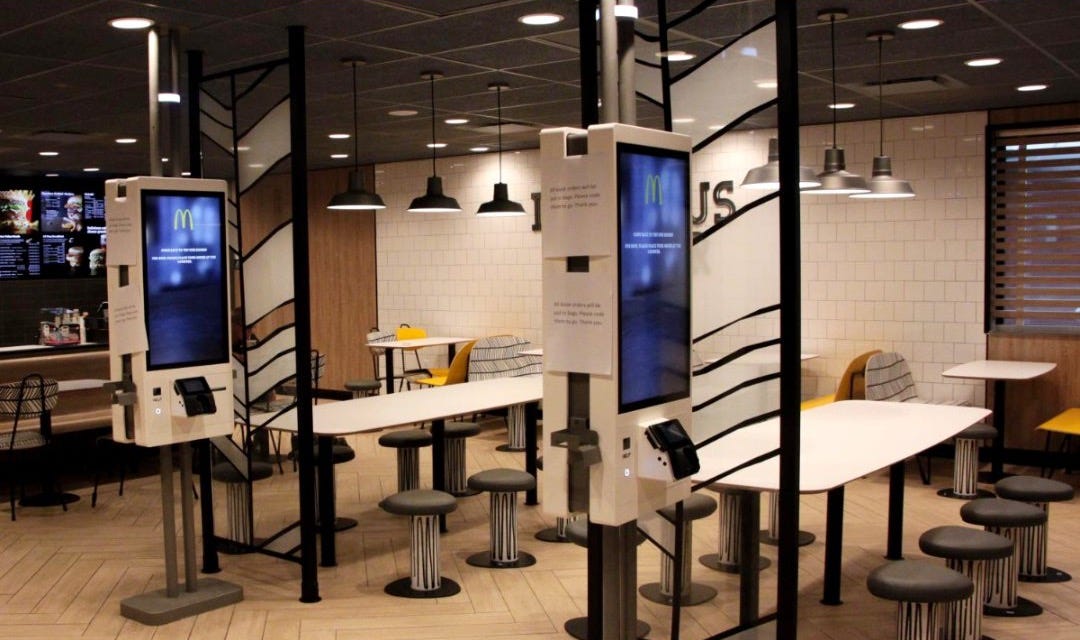
The difference is not just aesthetic. This looks designed to be nowhere in particular. Clean, efficient, interchangeable with any other spot in any other city in any other country. Gone from memory before the door closes behind you.
This is what sociologist Ray Oldenburg called the “third place” — a setting that is neither home nor work, but somewhere in between. A space where people gathered not because they had to, but because it was somewhere worth being. The 1980s were full of them because the culture of the time still believed, instinctively, that a building should have a personality. That it should give you something beyond the transaction it was built around. Minimalism did not just change how things looked. It changed how these places felt…
2. Before Screens, There Was This
This picture was taken on the Ashfield Valley estate in Rochdale, England, in the early 1980s. The photographer is unknown. The children are unknown. What they are doing — jumping from third-floor windows onto a pile of mattresses they dragged there themselves — is, depending on your generation, either completely recognizable or completely incomprehensible.
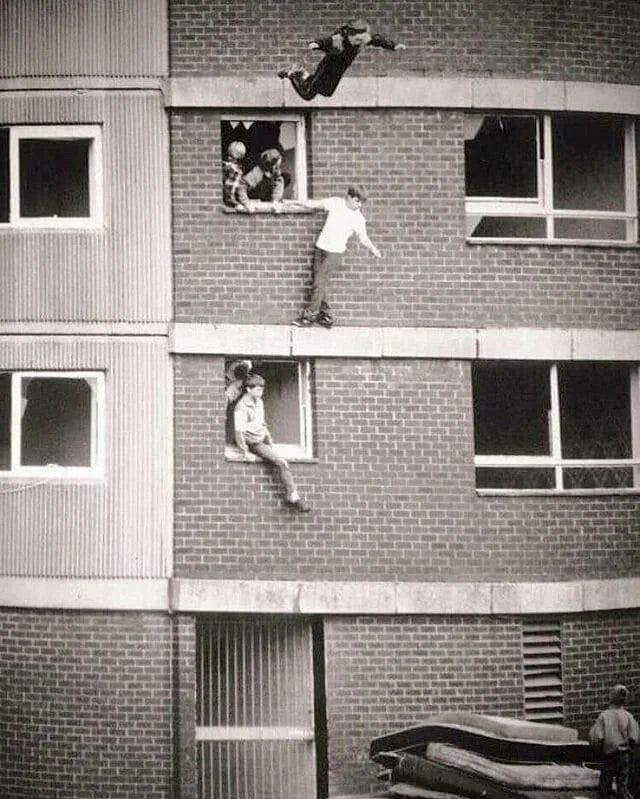
This was childhood before the screen. Genuinely, physically free in a way that is now almost impossible to replicate. No supervision, no adult in sight. Just boredom transformed into invention, and the particular fearlessness that children possess before the world teaches them otherwise. As Robin Williams once said:
You’re only given a little spark of madness. And if you lose that, you’re nothing.
The 1980s were the last decade in which children were mostly unsupervised. You left in the morning and came back when it got dark. What happened in between was yours. And what happened, apparently, was this: you looked at a third-floor window and a pile of old mattresses and saw, without hesitation, a perfect afternoon.
There is something deeply human in that. The capacity to find joy in almost nothing — in gravity, courage, and a few square feet of landing — is not a small thing. It is friendship in its purest form, before it ever had to be scheduled. And looking at this photograph, it is impossible not to smile. And to hope, a little, that somewhere out there, children are still finding their way to the mattresses, whatever that may mean for them…
3. Glass Bottles at the Grocery Store
I know my younger readers will find this hard to believe. But this is what a grocery store looked like back then. Every soft drink bottle on the shelf was glass. No plastic in sight.
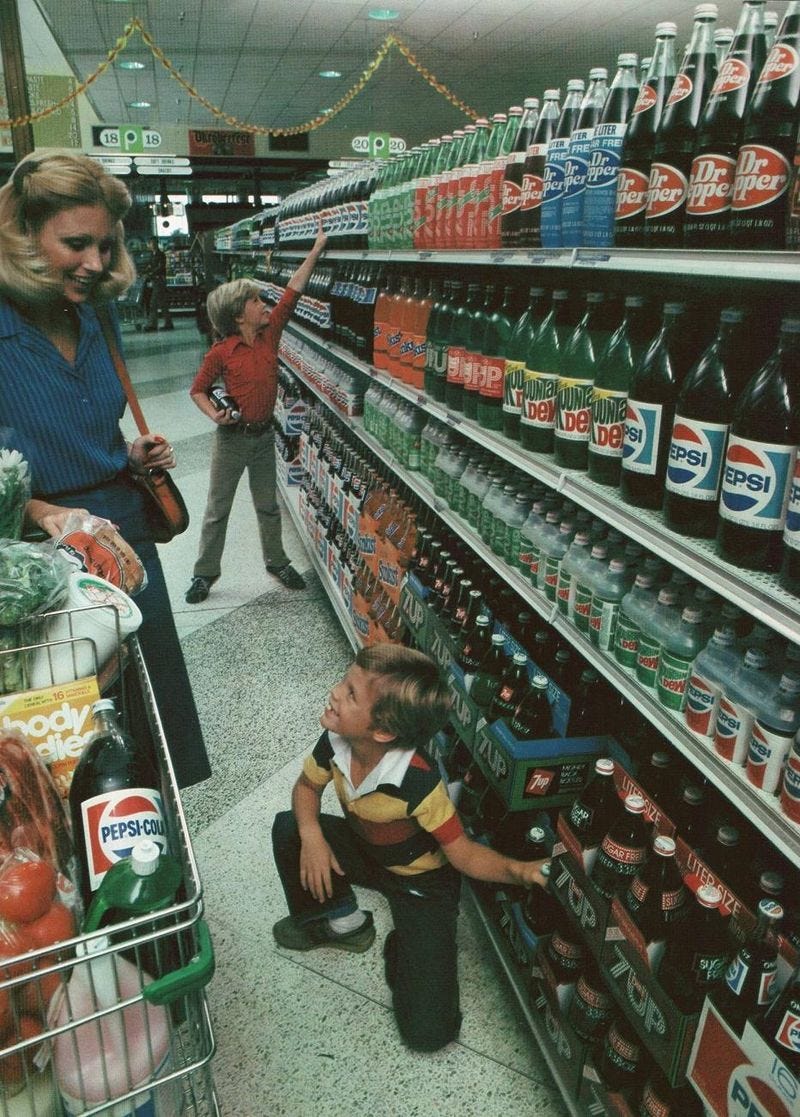
And that’s not the only thing that’s changed... In 1980, a single bottle of Coca-Cola cost about $0.30.
Overall inflation between 1980 and 2026 was approximately 300%, according to Bureau of Labor Statistics data. The median American home, adjusted for that inflation, should cost around $200,000 today. It costs around $400,000. University tuition costs have more than tripled in real terms and the modern household now pays around $280 per month for internet, phone, and streaming — expenses that were essentially nonexistent in 1980.
The result is a paradox: modern life is cheaper for everything that used to feel like a luxury, and more expensive for everything that used to feel like a given.
4. Wheatfield — A Confrontation
This is a real photograph.
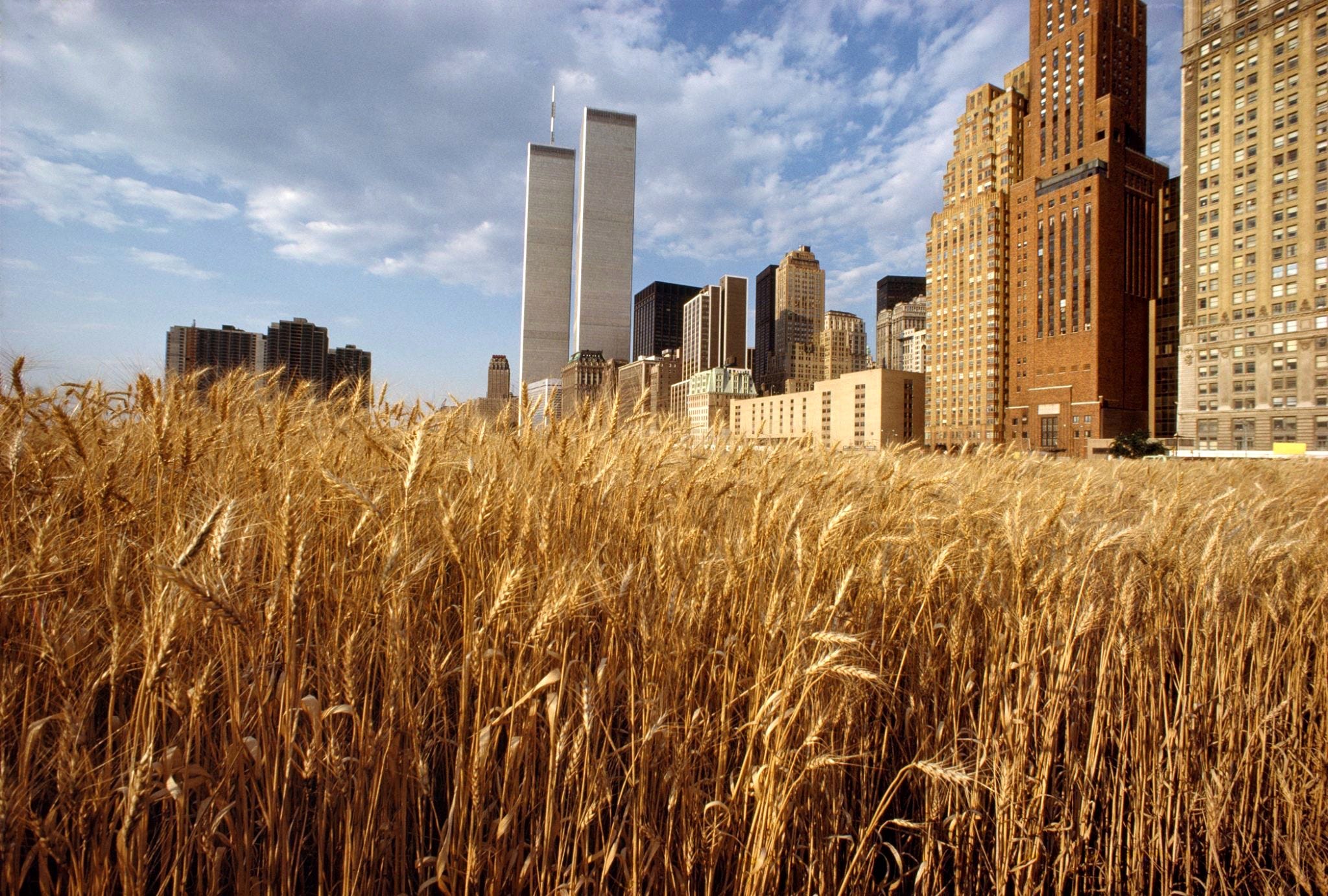
In 1982, a woman planted a field of wheat two blocks from Wall Street, in the shadow of the World Trade Center, on land valued at $4.5 billion. She described it as “an intrusion of the country into the metropolis, the world’s richest real estate.”
The reason she did it is arguably more powerful than the image itself…