


In A Calendar of Wisdom, Leo Tolstoy wrote:
Perfection is impossible without humility. Why should I strive for perfection, if I am already good enough?
There is a particular kind of humility that only the past can teach you.
We live in an age of extraordinary capability. We can sequence DNA in hours, build structures that touch the clouds, and — as researchers recently demonstrated — grow a cluster of human brain cells in a laboratory and teach it to play a video game. And yet there are objects sitting in museums that continue to puzzle scholars, and works of art in dimly lit chapels that, by any honest assessment, no sculptor has ever been able to reproduce…
The further back we look, the stranger it gets. Some ancient statues were carved from stone so hard that today we rely on diamond-tipped machinery to cut it — yet they are polished to a mirror finish, incredibly precise, and stunning beyond belief. And then there are the artworks from more recent years that astonish for entirely different reasons: sculptors so skilled that they managed to transform solid marble into what looks like transparent fabric so convincingly that their contemporaries had no explanation for it other than sorcery.
What follows are 5 sculptures that have been stopping people in their tracks for centuries. Not because they are old, not because they are famous, but because standing in front of them — or even in front of a photograph of them — does something that very few things in the world can do: it makes you feel that you are in the presence of the impossible. And yet there they are. Undeniably, perfectly, impossibly real…
REMINDER: Beauty is Truth is a reader-funded publication. There are no ads here, only independent writing devoted to celebrating beauty — and it can only continue with your help.
If you’ve been thinking about supporting my work, becoming a paid subscriber is the most meaningful way to do it:
With the new annual subscription discount, it costs less than a coffee a month — and it’s what keeps all of this going. Gift subscriptions to Beauty is Truth are now available too:
1. Veiled Christ
Sculpture, at its highest, is alchemy — and I say this every chance I get. The transformation of cold stone into something that appears to breathe. As Alexander Pope once wrote:
Then marble, soften’d into life, grew warm.
No work in history has made this feel more literally true than this one…
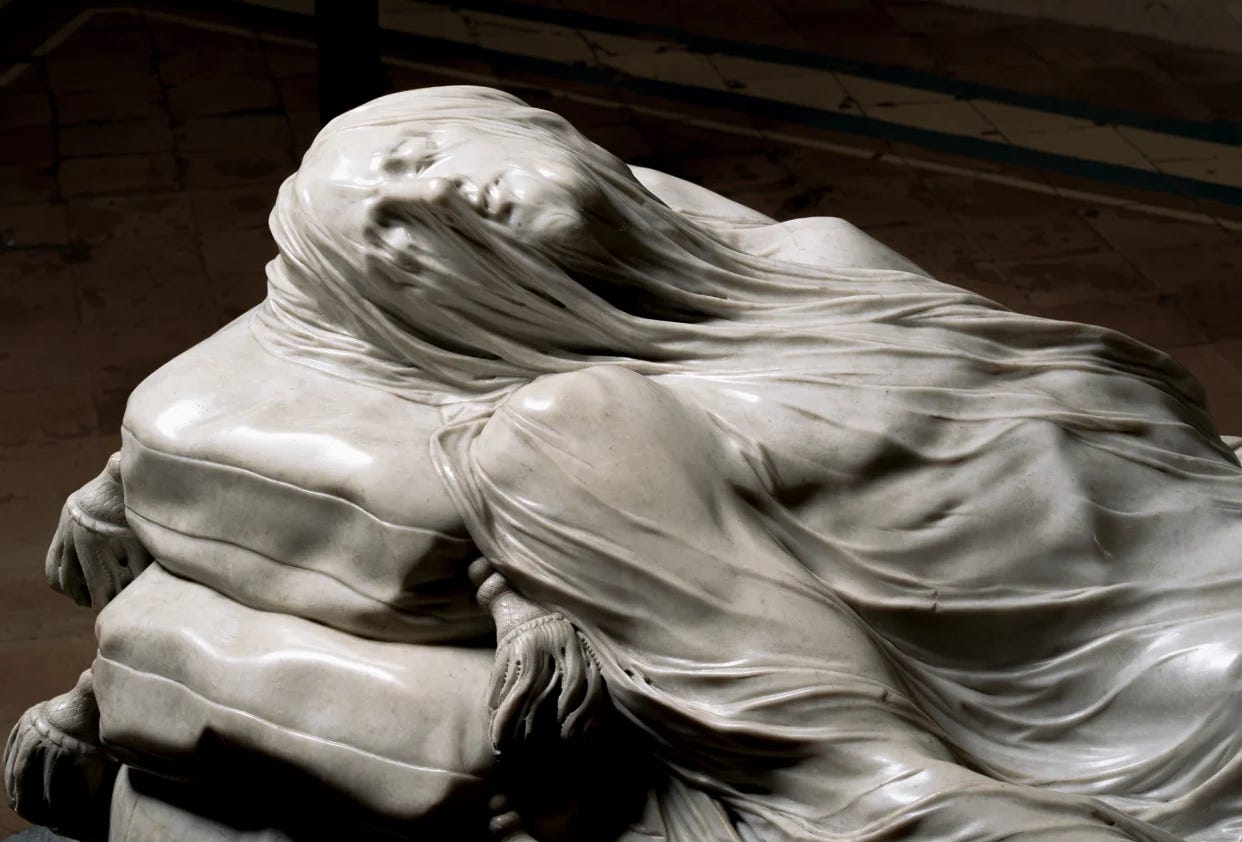
Giuseppe Sanmartino completed the Veiled Christ in 1753 from a single block of white marble, as the centrepiece of the Cappella Sansevero in Naples.
What he produced was so astonishing that his contemporaries refused to believe it was possible. The veil that drapes over the body of Christ is rendered with such impossible precision — every fold, every shadow, every place where fabric clings to skin — that a legend formed almost immediately: that the commissioner, the nobleman and alchemist Raimondo di Sangro, had laid a real cloth over the statue and transformed it into marble through a secret chemical process.
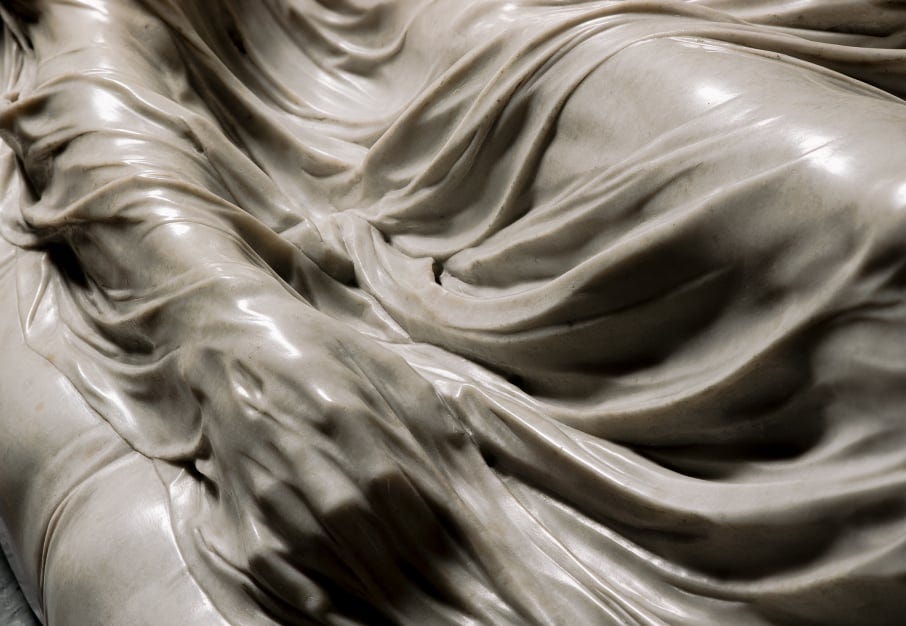
However, letters written at the time confirm that the veil was carved from the same single block of marble as the figure beneath it. Sanmartino cut it by hand, with a chisel, from stone. And in the two and a half centuries since, no sculptor anywhere in the world has come close to doing it again.
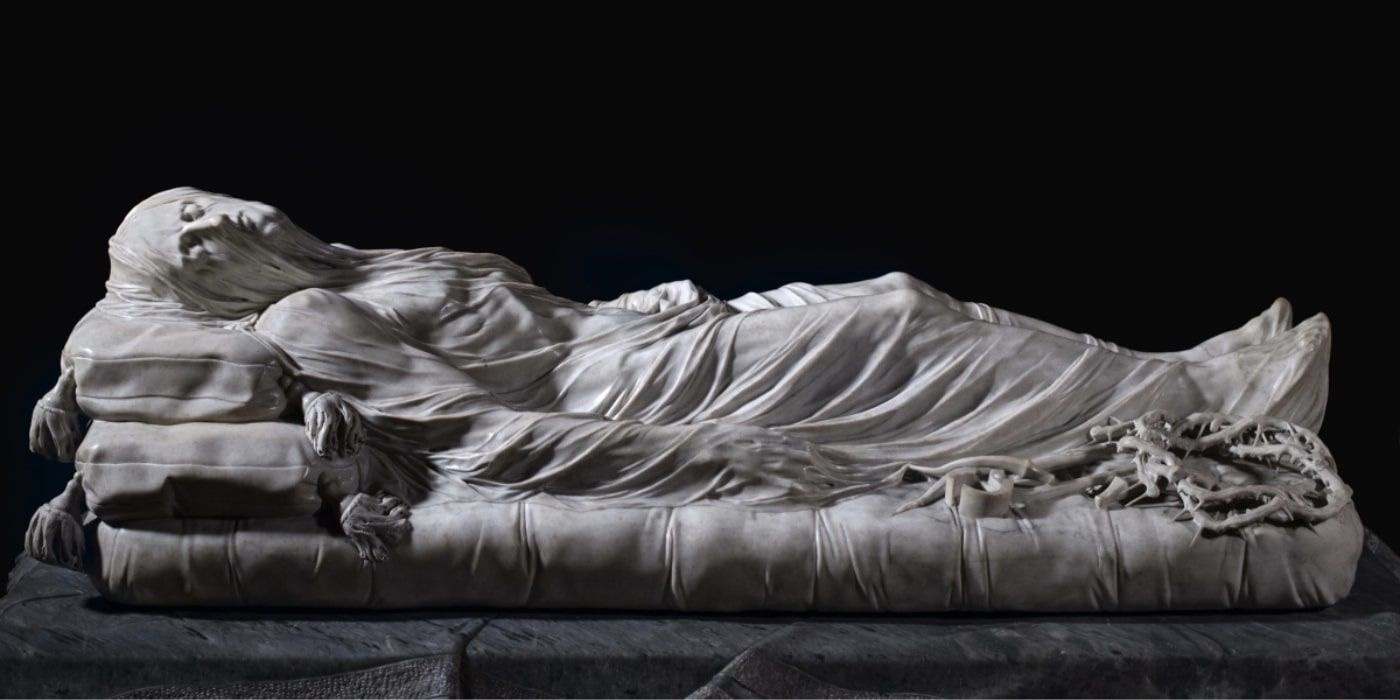
Antonio Canova — himself considered one of the greatest sculptors who ever lived — was so overwhelmed upon seeing it that he declared he would gladly sacrifice ten years of his life to have created something of such perfection…
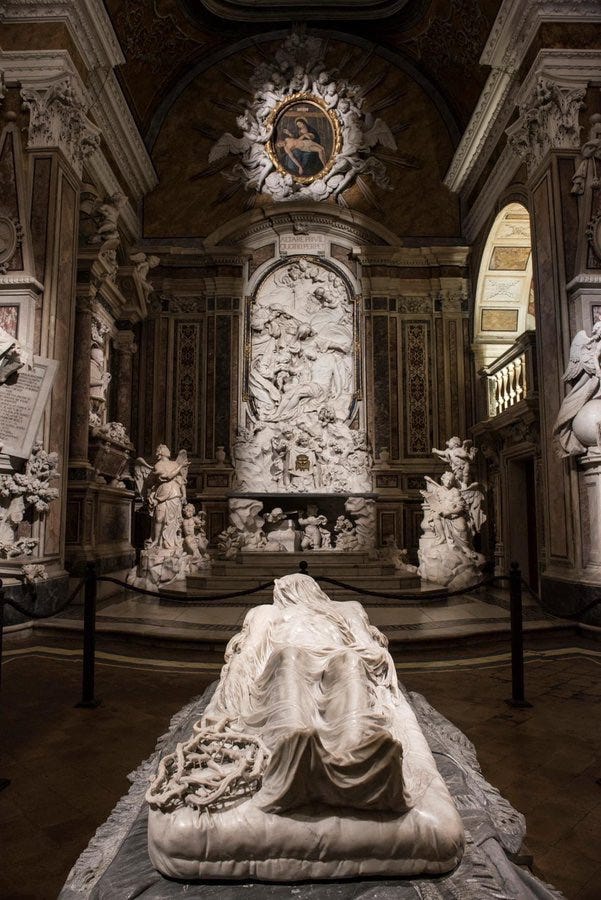
The Veiled Christ has not moved from Naples in over 250 years. To see it, you must go there in person. I have, and I can tell you that the photographs — however good — do not prepare you for the moment you actually stand in front of it.
2. Khafre Enthroned
Marble sits at 3 to 4 on the Mohs scale of hardness. The sculpture below is made of anorthosite gneiss, a significantly harder material that measures between 6 and 7 on the same scale. It was carved over 4,500 years ago by ancient Egyptians whose primary cutting metals, according to archaeologists, were arsenical copper alloys, which rate around 3 on the Mohs scale…
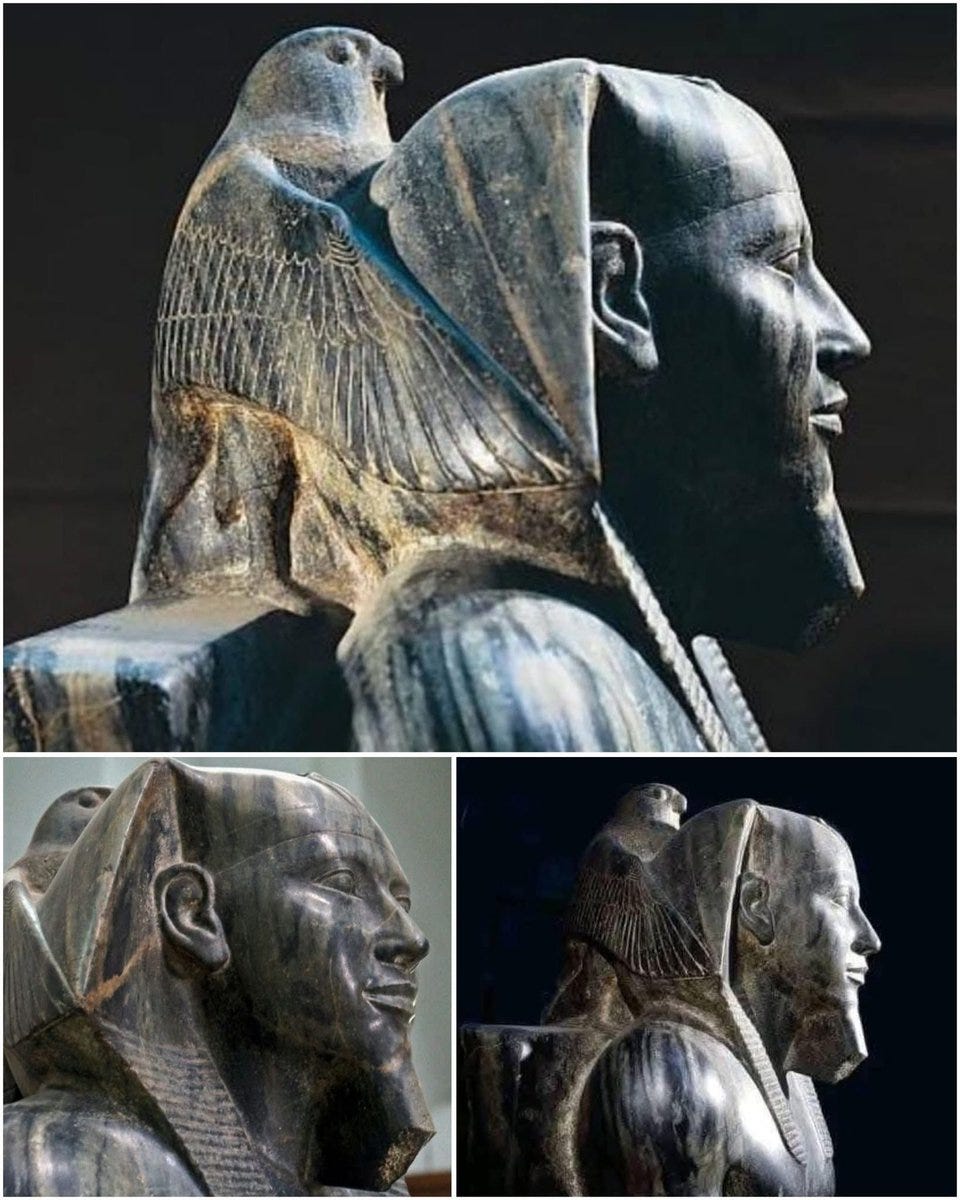
This is Khafre Enthroned, a statue of the pharaoh Khafre of the Fourth Dynasty, carved from one of the hardest and most unforgiving materials in the ancient world. For hard stone, Egyptian sculptors relied on tools of yet harder stone and the use of abrasive sand to shape them. This is the conventional explanation that archaeologists have settled on. And yet there is significant disagreement among scholars about the forms and materials of the tools themselves, how they were used by ancient stoneworkers, and how these factors relate to the broad range of surface textures we observe.
Every professional sculptor and engineer I have ever shown this to responds the same way: with a long pause, and a look of genuine bewilderment. Because the precision of this masterpiece and the hardness of the material, they tell me, are simply not easy to account for using the tools described.
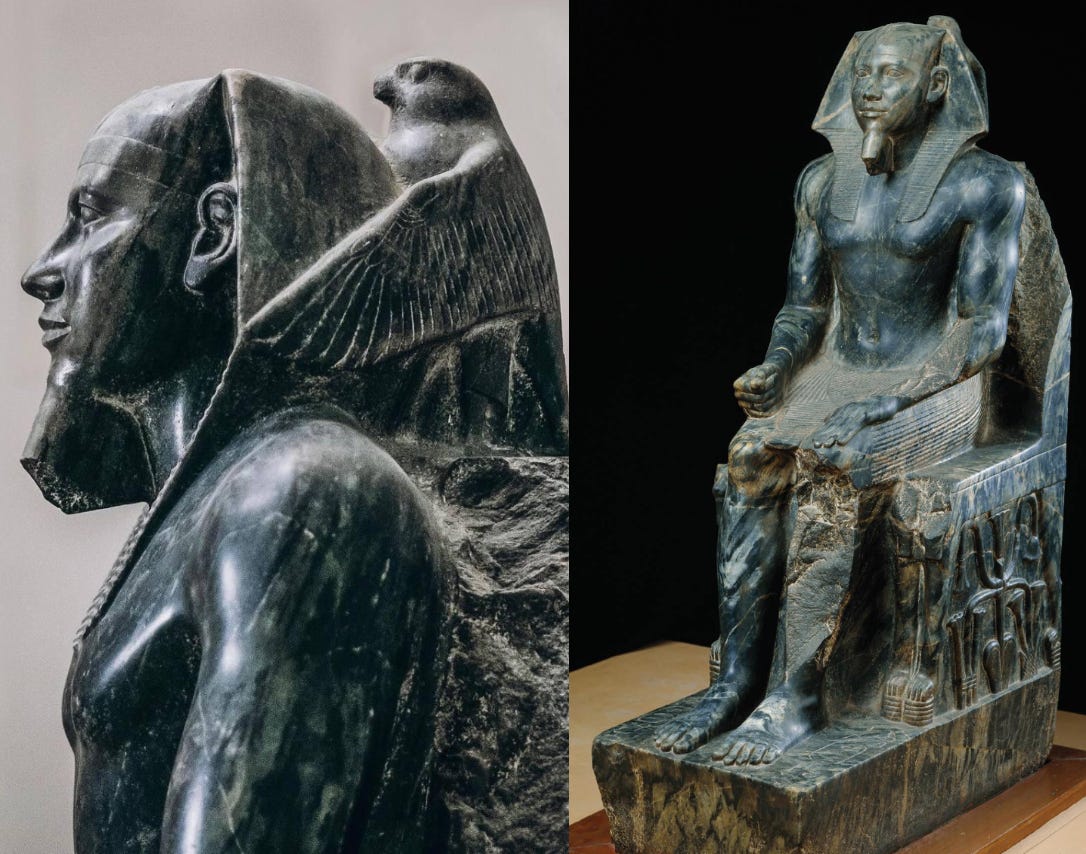
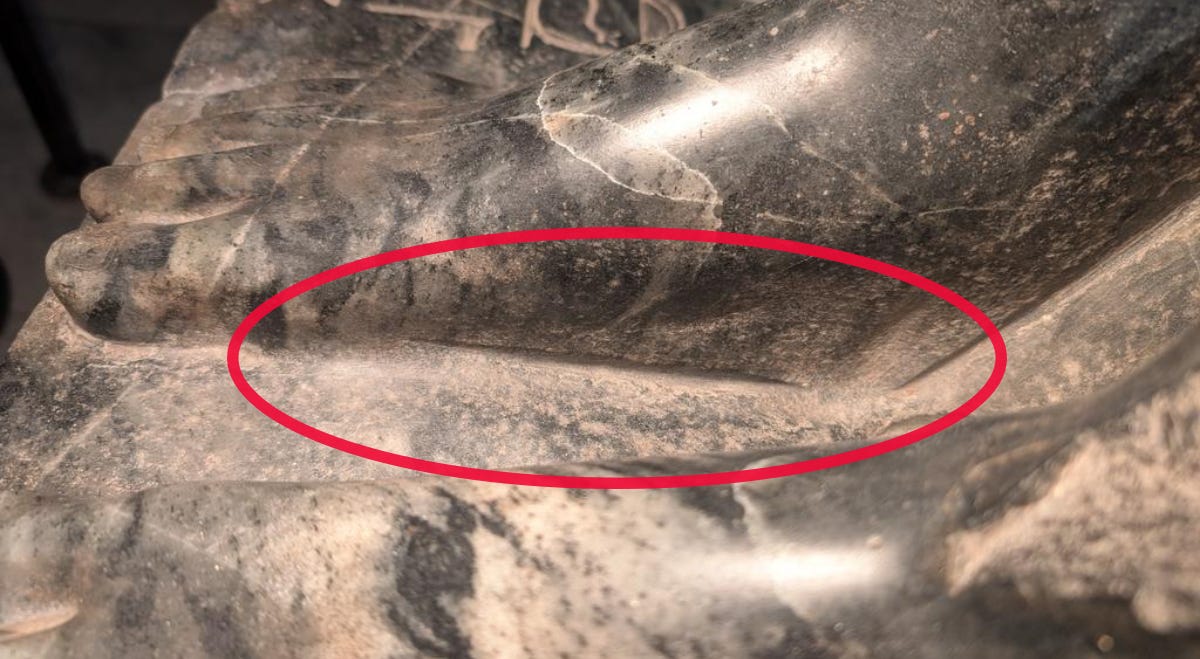
And then there are the marks in the stone that suggest a tool slipped or cut too deep — the kind of error that, with abrasive sand and stone hammers, would require sustained, concentrated effort to produce accidentally. They raise questions that the conventional explanation has not yet fully answered:
Look closely at the falcon. The god Horus, wings spread behind Khafre’s head, is carved with a spatial understanding of three-dimensional geometry and negative space that we would consider sophisticated today.
And here is the detail that stops me every time: viewed from the front, the falcon is almost entirely invisible. It reveals itself only from the side.
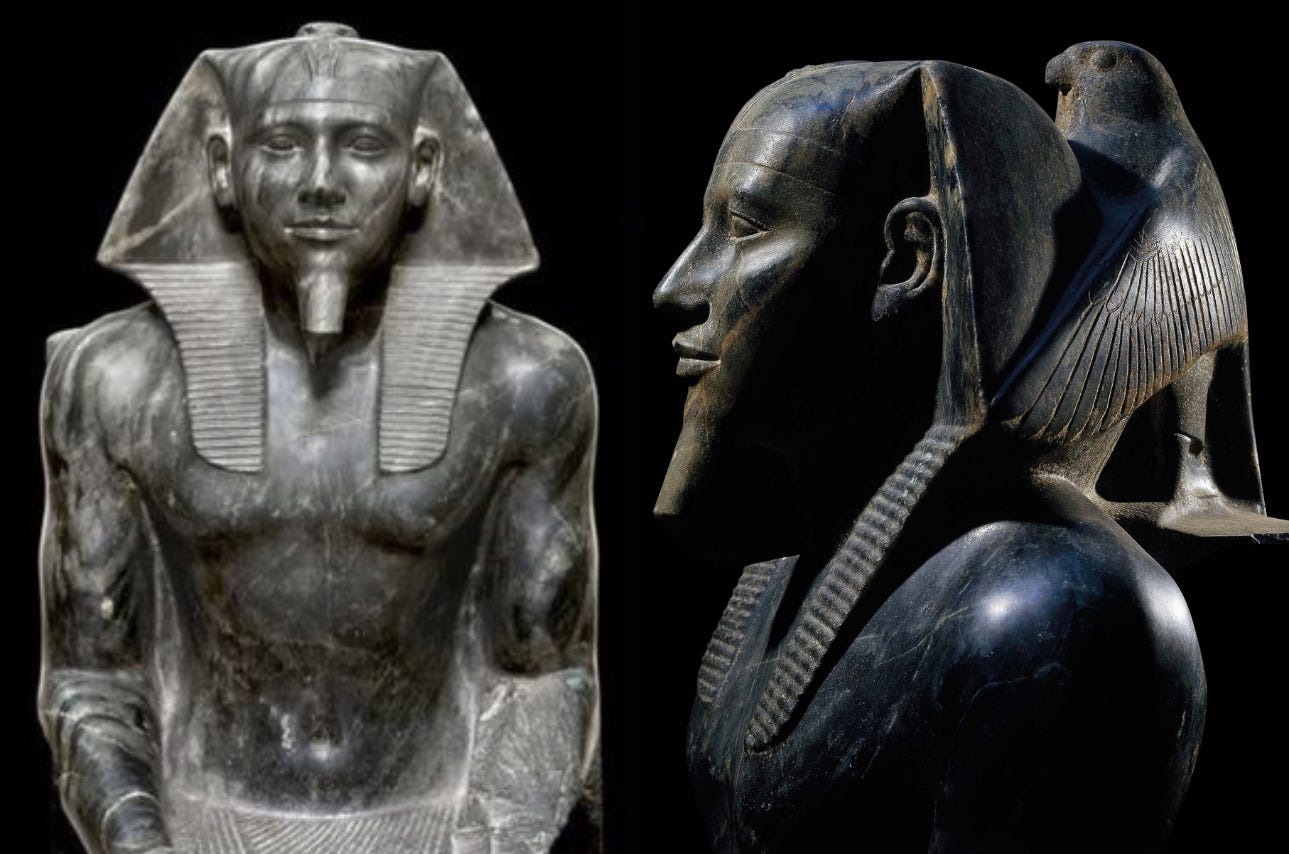
The Egyptians understood perspective and optical illusion well enough to build both into the same block of stone — a stone harder than any metal tool they are believed to have possessed.
As Egyptian Nobel Laureate Naguib Mahfouz once said:
In Egypt, the past is very palpable; it’s hard to ignore it.
With this sculpture in front of you, his words feel like an understatement.
3. Apennine Colossus
I know what you are thinking. It is not AI.
But I get why it looks impossible…
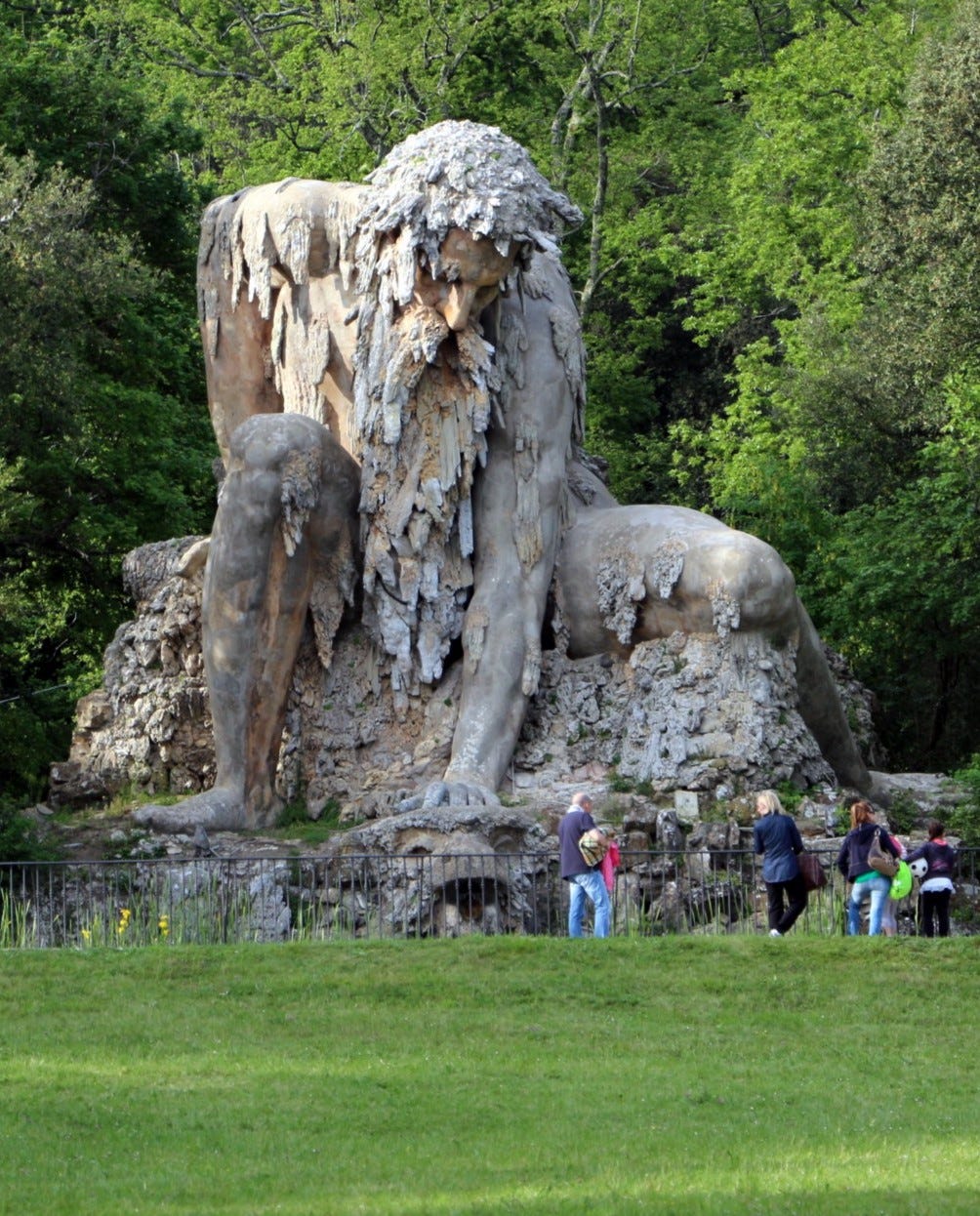
The Apennine Colossus rises eleven metres from the grounds of the Villa Demidoff in Tuscany, built in the late 1580s by the Flemish sculptor Giambologna as a personification of the Apennine Mountains themselves. Inspired, it is believed, by Ovid’s description of a mountain-like Atlas in the Metamorphoses, the giant emerges from the landscape as if he has always been there — his body merging with rock and moss and earth, stalactites forming his beard, his hair dissolving into stone. With one hand he crushes the head of a sea monster, from whose open mouth water pours into the pond below.
To the people who first encountered him, he did not seem like a statue at all. He seemed alive. And with good reason: the giant was once engineered to sweat and weep via a hidden network of water pipes running through his body.
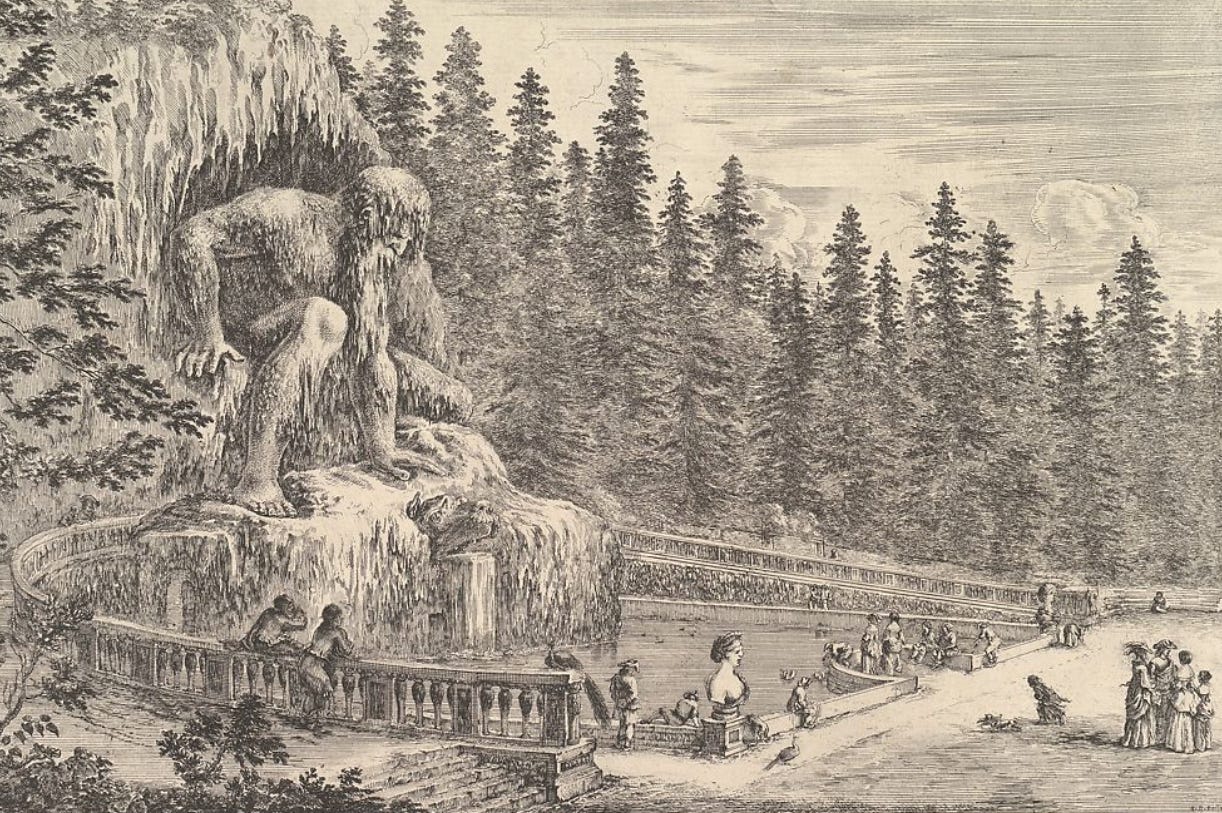
But none of that is my favourite part.
Inside the Colossus, across three levels, there are chambers. On the ground floor, a cave containing an octagonal fountain dedicated to the Greek goddess Thetis. On the upper floor, a room large enough to hold a small orchestra. And in the head — a private chamber with slits cut into the eyes and ears, and a fireplace whose smoke escaped through the giant’s nostrils.
Francesco I de’ Medici, Grand Duke of Tuscany, used to sit inside the head and fish through one of the eye slits. At night, with torches burning inside, the eyes glowed in the dark…
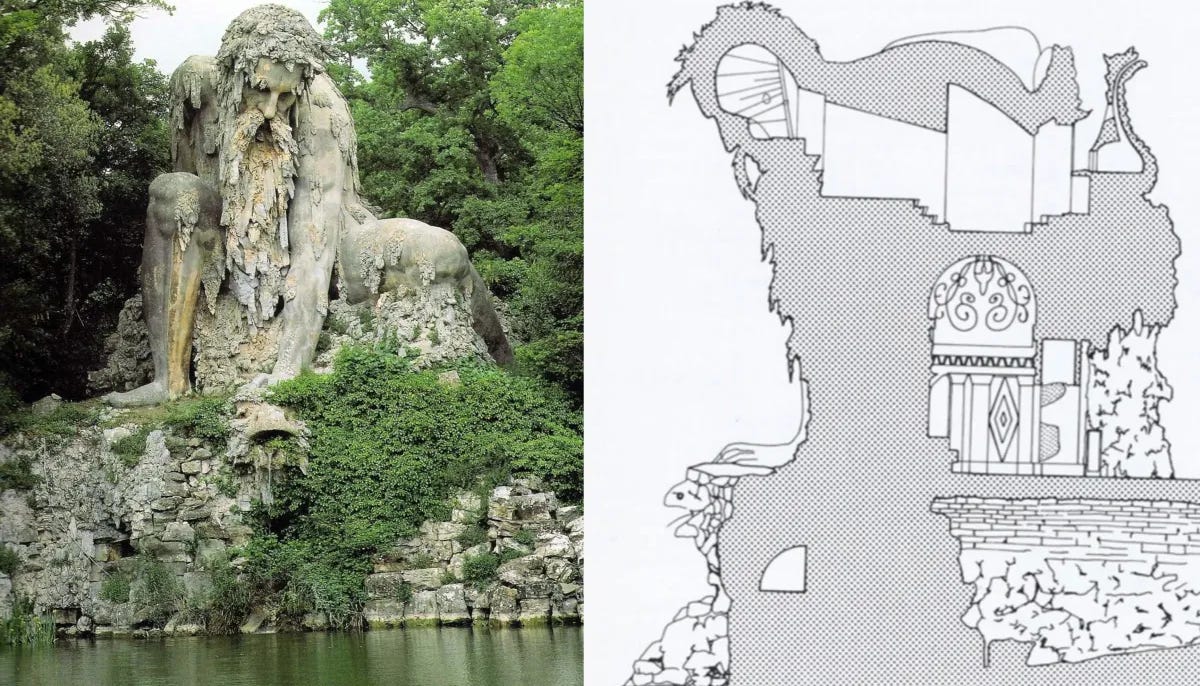
At the back of the Colossus, a structure was later added by the sculptor Giovan Battista Foggini: a dragon, whose belly served as a fireplace and whose neck and head formed the chimney.
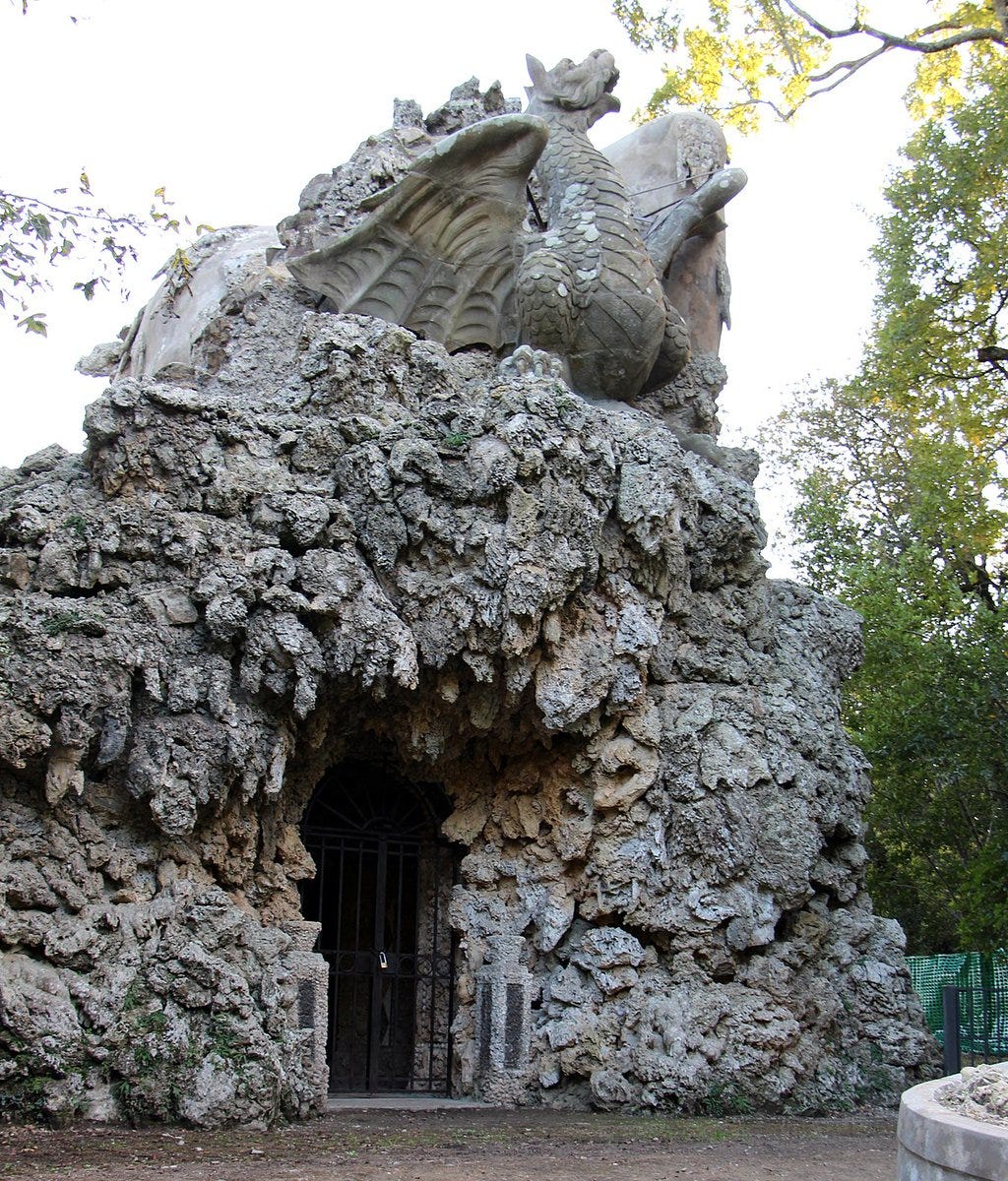
A giant that weeps. That breathes smoke through stone nostrils. That has a concert hall in its chest and a fishing room behind its eyes. The Renaissance produced many things that should not have been possible. This may be the one that should not have been imaginable…
4. The Ozymandias Colossus
Ramesses II commissioned more colossal statues of himself than any other pharaoh in history. But among everything he built one work stands apart — not only for its scale, but for what it inspired, millennia later, in the mind of a poet who never saw it intact…
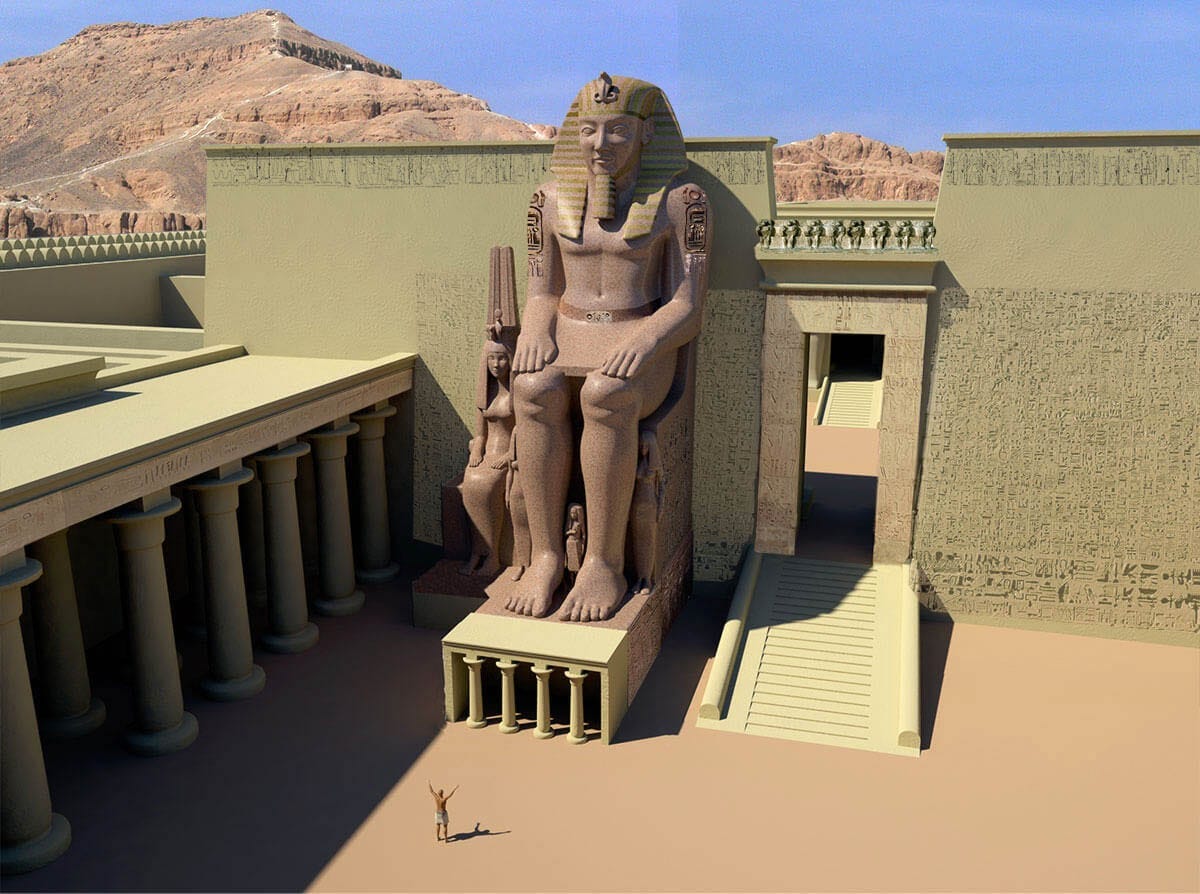
When it was whole, the Ozymandias colossus soared nearly 20 meters and weighed approximately 1,000 tonnes, making it one of the largest monolithic sculptures ever created. A single block of granite. Quarried, carved, and dragged across the desert to its final position. To put that in perspective: in 2012, the Los Angeles County Museum of Art spent close to ten million dollars relocating a 340-tonne boulder a short distance through the streets of Los Angeles. The Egyptians moved three times that weight, across open desert, without machinery, without wheels capable of bearing such a load, and without any written record of how they did it.
It now lies in fragments on the ground of the Ramesseum in Luxor.
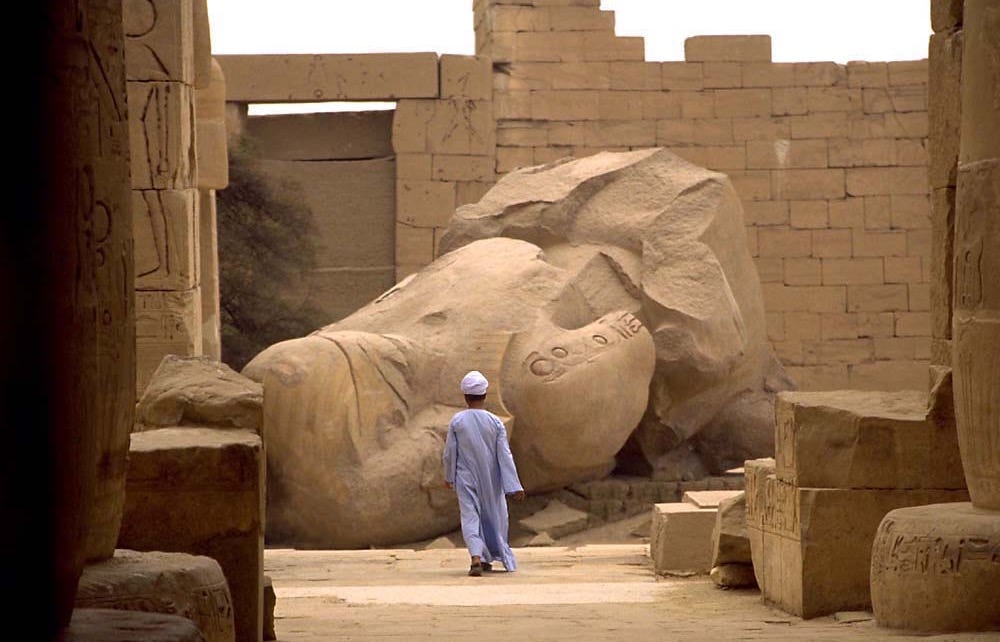
And it was in this broken state that it caught the imagination of Percy Bysshe Shelley, who in 1818 wrote what became one of the most celebrated poems in the English language:
[…] My name is Ozymandias, King of Kings; Look on my Works, ye Mighty, and despair! Nothing beside remains. Round the decay of that colossal Wreck, boundless and bare, the lone and level sands stretch far away.
Shelley had never seen the statue. He wrote the poem in response to a fragment arriving at the British Museum. And yet he understood, from that fragment alone, everything it meant — that the grandest monuments eventually return to dust, that power is the most perishable thing there is, and that the only things which truly last are the ones that were never about power to begin with.
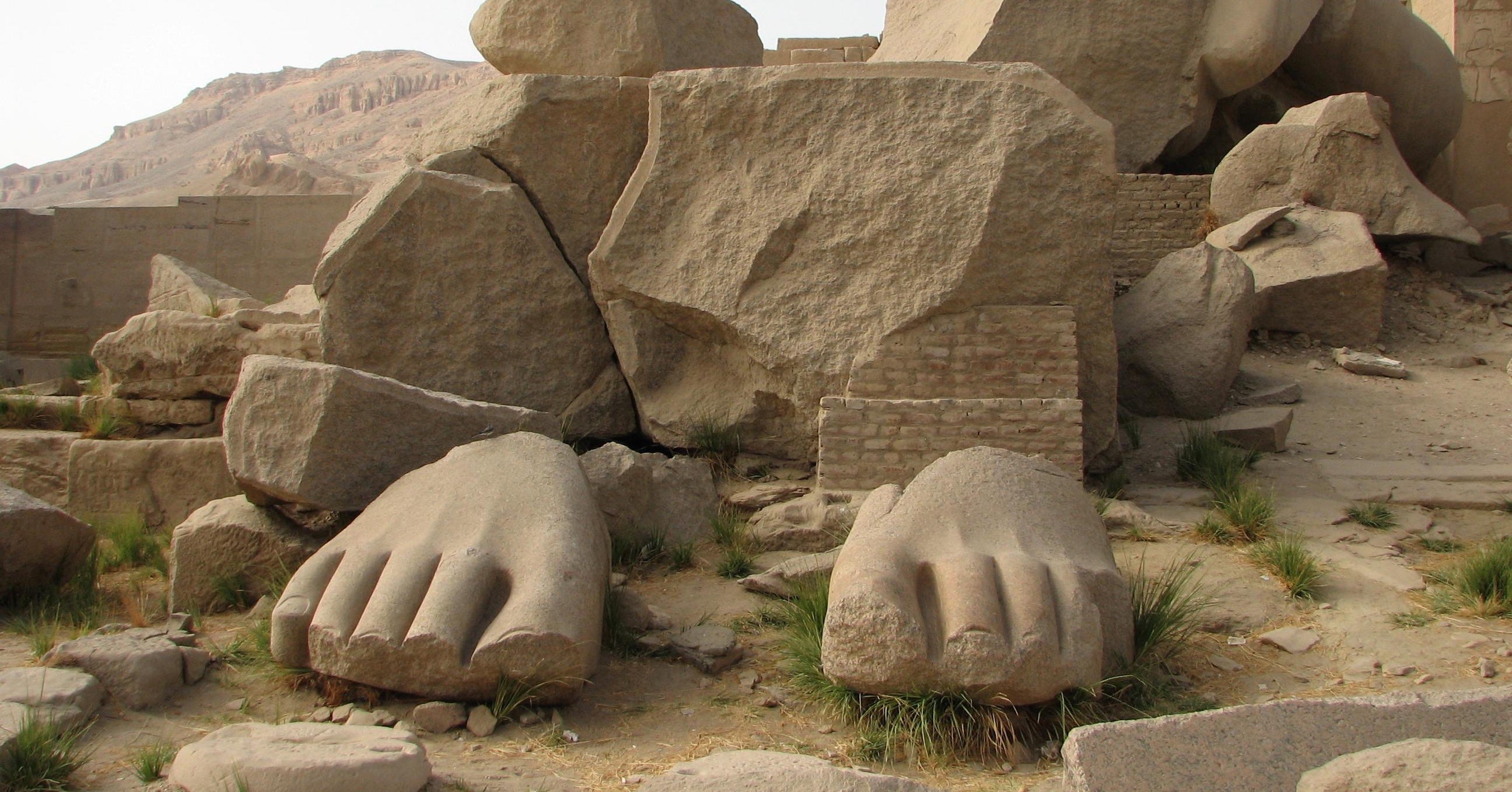
The Ozymandias colossus was not the largest sculpture the Egyptians ever made. The Great Sphinx and the colossi at Abu Simbel are larger — but those were carved in place, from the rock already there. What makes this one different is that it was moved. Transported as a single block from a distant quarry to its final resting place, by hands and methods we still cannot fully account for. At Tanis in northern Egypt, fragments have been found of four granite colossi of Ramesses II believed to have stood between 21 and 28 meters tall — which means that even this was not the most ambitious thing they attempted…
And now it lies in pieces in the desert. It inspired one of the greatest poems ever written. And we still do not entirely know how they did it. Shelley was right that power crumbles. He did not mention that the mystery outlasts everything.
5. Release from Deception
We end where we began — in Naples, in the Cappella Sansevero, in the presence of something that should not exist…
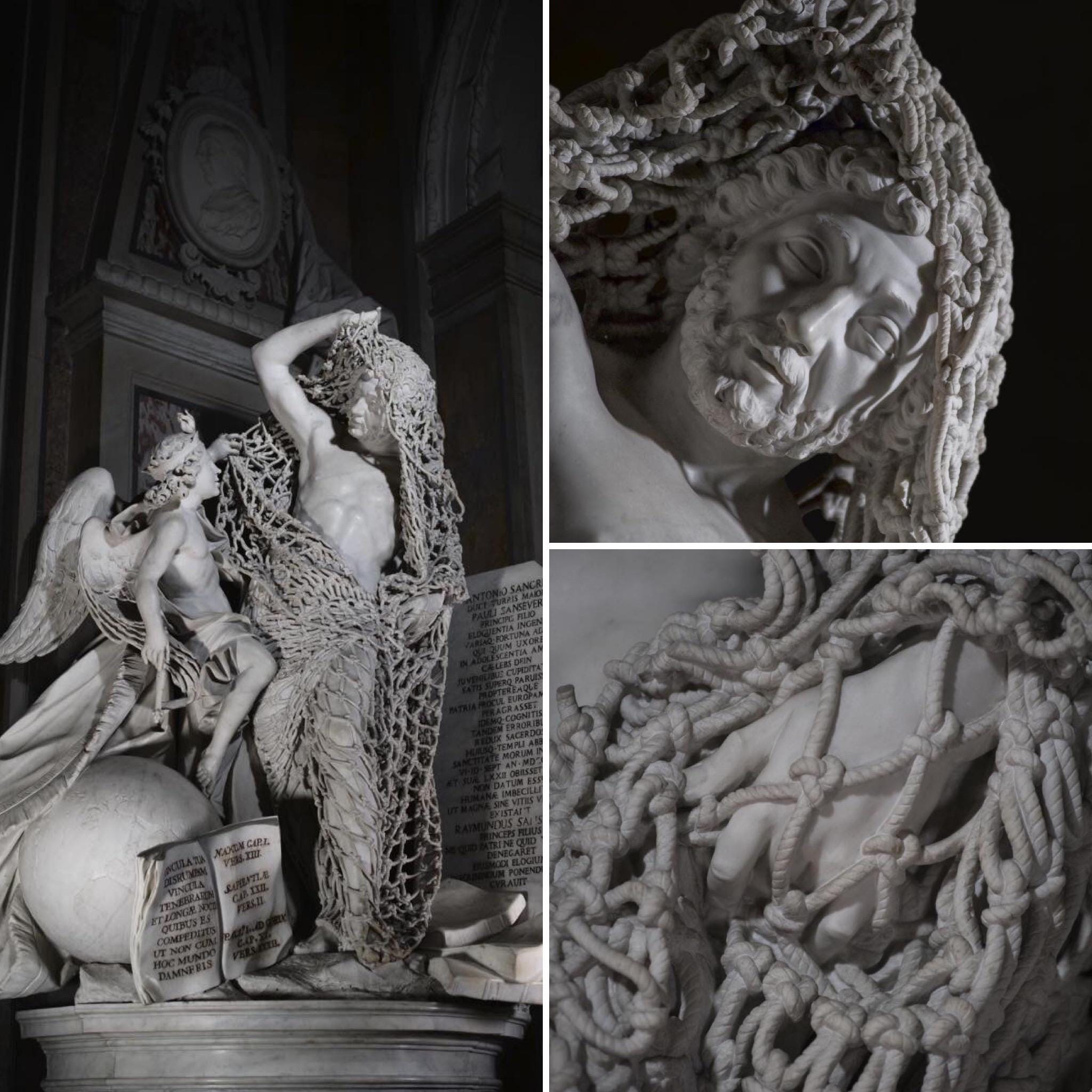
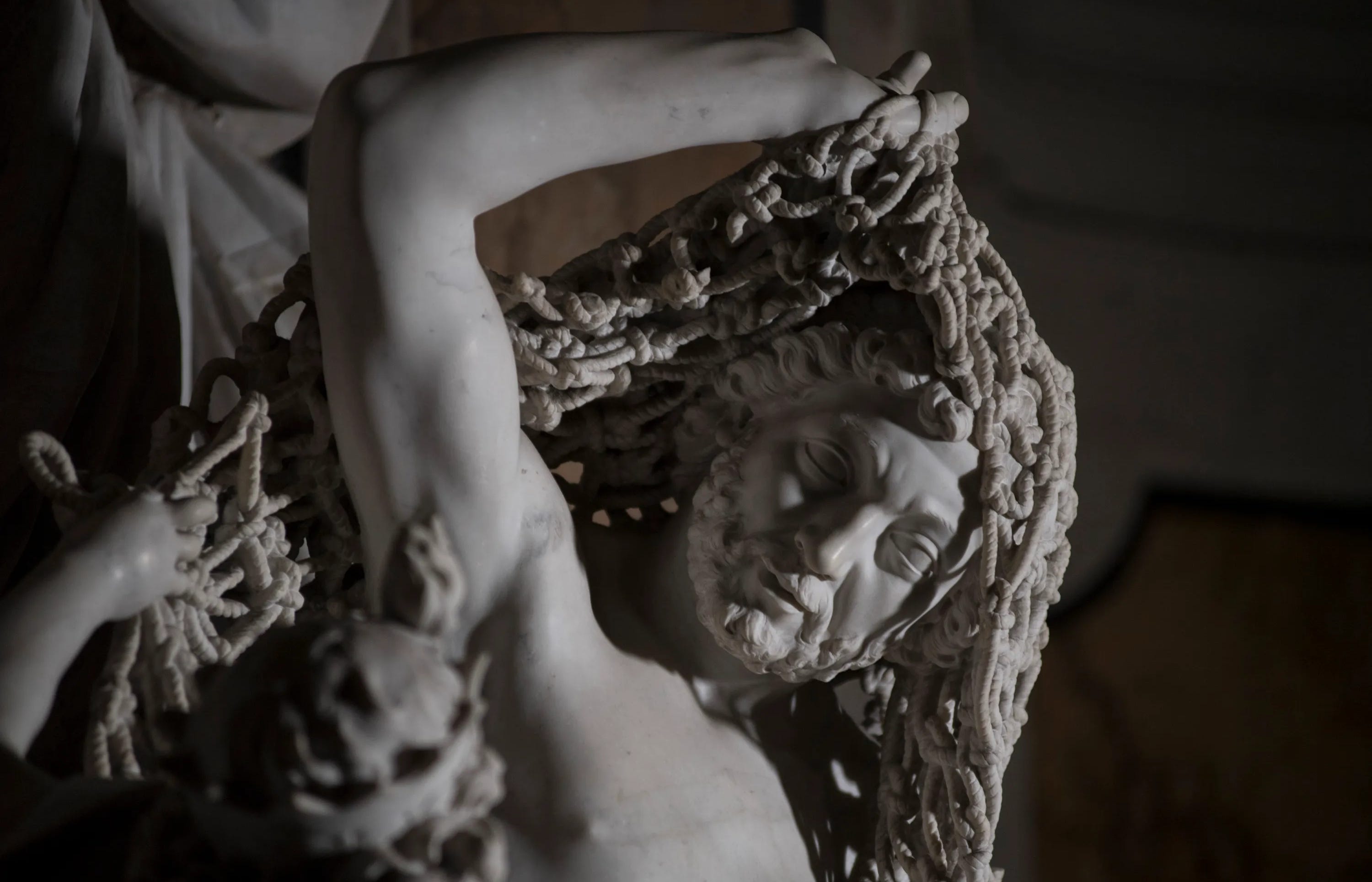
Disinganno — which translates, roughly, as disillusion or “release from deception” — was carved by Francesco Queirolo from a single block of marble, and it took him seven years. Seven years on a single stone. The work depicts a man freeing himself from a net — a symbol of human vice and sin — guided by a putto representing intellect. It is a remarkable composition. But the composition is not the point.
The net is the point…
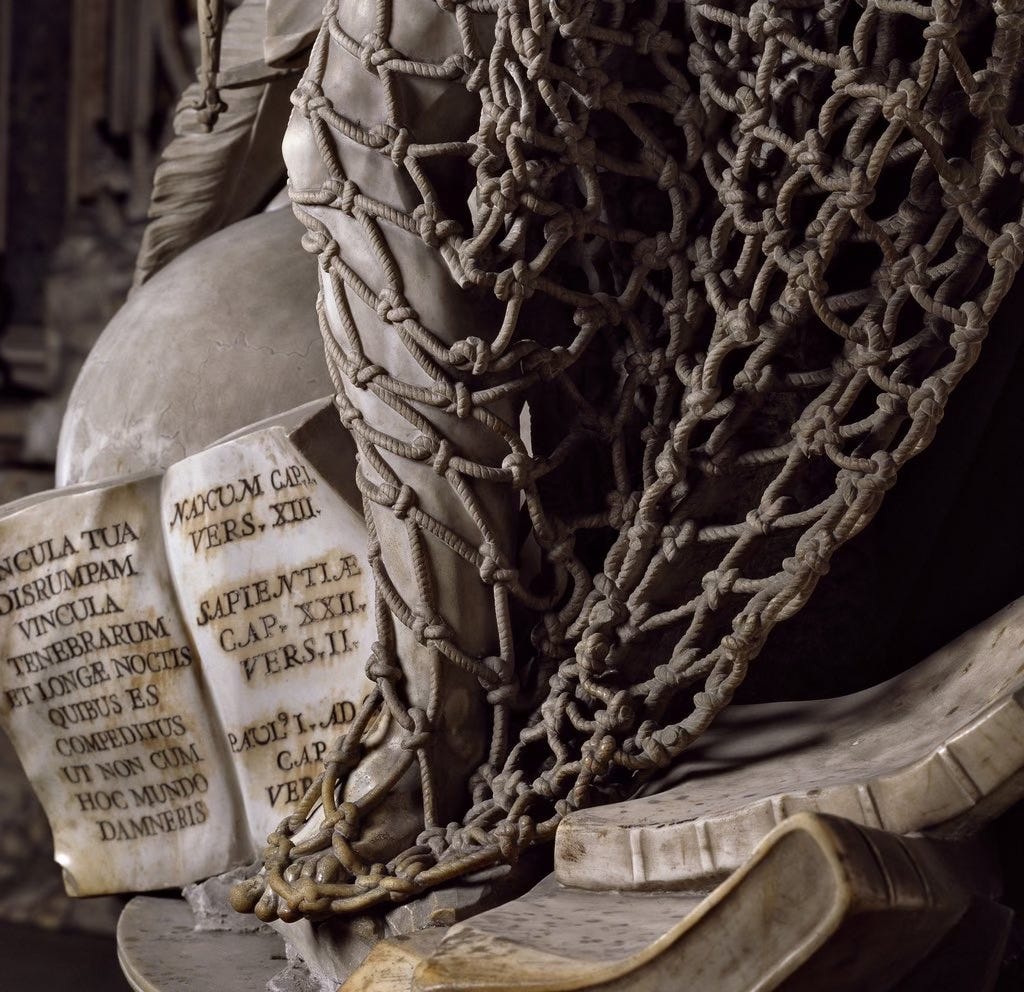
It hangs across the entire sculpture with only a handful of contact points holding it to the figure beneath — draped, knotted, catching light the way real rope catches light — carved from the same solid block as everything else. So delicate, so precisely cut, that no apprentice in Queirolo’s workshop would go near it for fear that a single wrong movement would bring the whole thing crumbling down. The historian Giangiuseppe Origlia, writing at the time, called it “the ultimate bold test that marble sculpture can dare to attempt.”
Nothing like it exists anywhere else in the history of art. Not before Queirolo. Not after him. A net, in marble, that you want to reach out and lift with your fingers. And the only reason you don’t is that you know, somewhere in the back of your mind, that your hand would find stone.
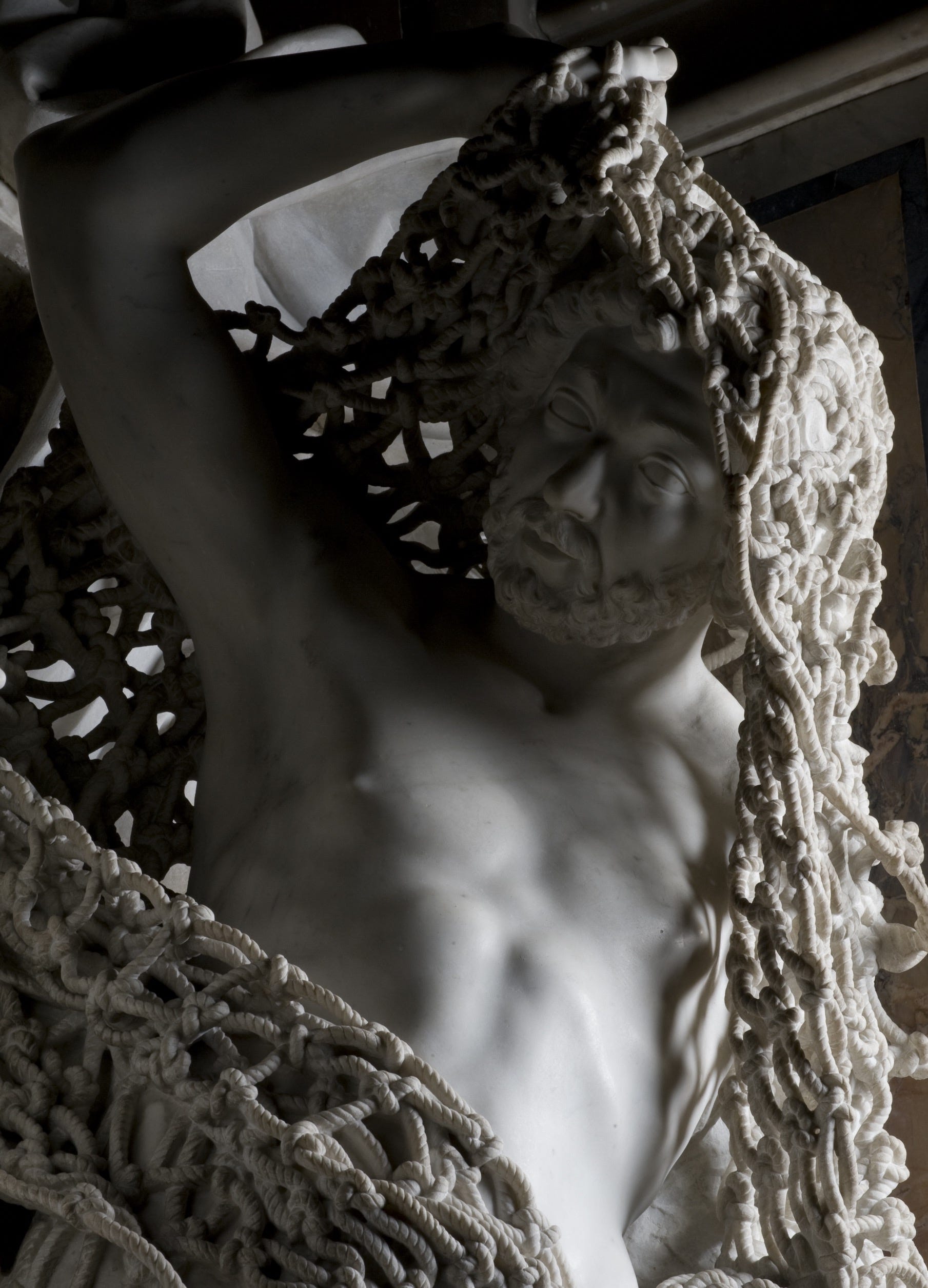
This is what the past does, when it is at its most extraordinary. It shows us that the distance between then and now is not always the distance between less and more — that some things were done, in other centuries, by human hands and human patience and human obsession, that we have not found our way back to.
And perhaps the most honest thing we can say about a marble net that took seven years to carve and has never been replicated is simply this: that some things were made not to be explained, but to be stood in front of, in silence, for as long as it takes to feel the full weight of what a human being was once capable of — and to leave, afterwards, a little more awake to what is still possible…
Thanks for reading! This newsletter is completely independent and ad-free — and it can only keep going with your help. Consider contributing a few dollars a month today, and get access to exclusive articles and the full archive:
Your support means the world to me — thank you for making it possible to continue this work.
Wow. I really appreciate the wonder and beauty you bring to my life. Especially now. Thank you.
I woke up today, uncertain about even wanting to get up out of bed. But at this moment, after reading your words and seeing the photographs of these amazing sculptures, I am looking forward to seeing what the day brings. Thank you James Lucas for sharing your passionate search for beauty. You are truly an inspiration.💫🙌