


In his essay On Living in an Atomic Age, C.S. Lewis wrote:
If we are all going to be destroyed by an atomic bomb, let that bomb when it comes find us doing sensible and human things — praying, working, teaching, reading, listening to music, bathing the children, playing tennis, chatting to our friends over a pint and a game of darts — not huddled together like frightened sheep and thinking about bombs. They may break our bodies (a microbe can do that) but they need not dominate our minds.
He was writing in 1948, in the immediate aftermath of the most destructive war in human history, with the shadow of nuclear annihilation hanging over everything. And his argument was that how we choose to live during difficult times matters more than the difficult times themselves. That the quality of ordinary human life is not a distraction from the darkness. It is the answer to it.
It is easy, in times like these, to lose faith in people. The news is designed to make you lose it. Every headline is calibrated to tell you the worst of what is happening. And if that is your primary window onto the world, your view of humanity will be dark, and it will stay dark, because the machine has no incentive to show you anything else…
But the machine is not showing you most people. It is showing you the loudest ones, the most extreme ones, the ones with the most power and the least accountability. What is happening is something the Romans understood well enough to give it a name: convince people that whoever stands on the other side of the political divide is the enemy, and they will never look up long enough to notice who is pulling the strings — divide et impera, divide and conquer, as old as power itself. And while they are busy fighting each other, keep them fed and distracted, satisfy their most immediate appetites, flood their days with enough entertainment and outrage to drown out any difficult question — panem et circenses, bread and circuses.
The version we have today is more sophisticated, but the logic is the same.
The Italian poet Trilussa understood this when he wrote his Lullaby of War in 1914, on the eve of the first great catastrophe of the 20th century:
The den of killers staining the earth with blood
knows full well that war is just a big money game,
feeding the thieves of the Stock Market.
Hush-a-bye, my dear little one, while this chaos lasts,
Tomorrow we’ll see the rulers again,
exchanging friendly smiles like old pals.
They’re cousins and soon their personal ties will be as warm as ever.
And gathered together, without a shadow of remorse,
they’ll give a fine little speech on Work and Peace
to those poor fools spared by the guns.
More than a century later, it reads like it was written this morning.
Here is what I believe, and what I think the evidence supports: most people are good. Not perfect, but fundamentally decent. If that were not the case — if the majority of human beings were motivated primarily by cruelty — society would not function for a single day. The fact that it does, that people still help strangers and show up for each other in ways that nobody reports on, is proof of something the news will never lead with.
The people in power are not most people. They are, almost by definition, the exception, because the kind of person who seeks power at any cost is rarely the person who should be trusted with it. They make decisions the rest of us have to live with, and their faces are the ones we see, and so we mistake them for a portrait of humanity. They are not.
Today I want to show you a different portrait: 5 stories that are too human and too stubbornly hopeful to survive the algorithm. I hope they remind you of something you already knew…
REMINDER: Beauty is Truth is a reader-funded publication. There are no ads here, only independent writing devoted to celebrating beauty — and it can only continue with your help.
If you’ve been thinking about supporting my work, becoming a paid subscriber is the most meaningful way to do it:
With the new annual subscription discount, it costs less than a coffee a month — and it’s what keeps all of this going. Gift subscriptions to Beauty is Truth are now available too:
1. Thirty Million Trees
In 1978, Hikmet Kaya arrived in the Boyabat district of Sinop province, in northern Turkey, to begin his career as head of afforestation at the local forestry department. The hills that greeted him were bare, stripped by deforestation. Over the next 25 years, working alongside specialist teams and local villagers, Kaya planted 30 million saplings across 10,000 hectares of steppe land.
Many did not survive at first. The team protected new growth from grazing animals, fires, and erosion — season after season, with no guarantee the effort would hold. Even after retiring in 2002, he continued the work anyway…
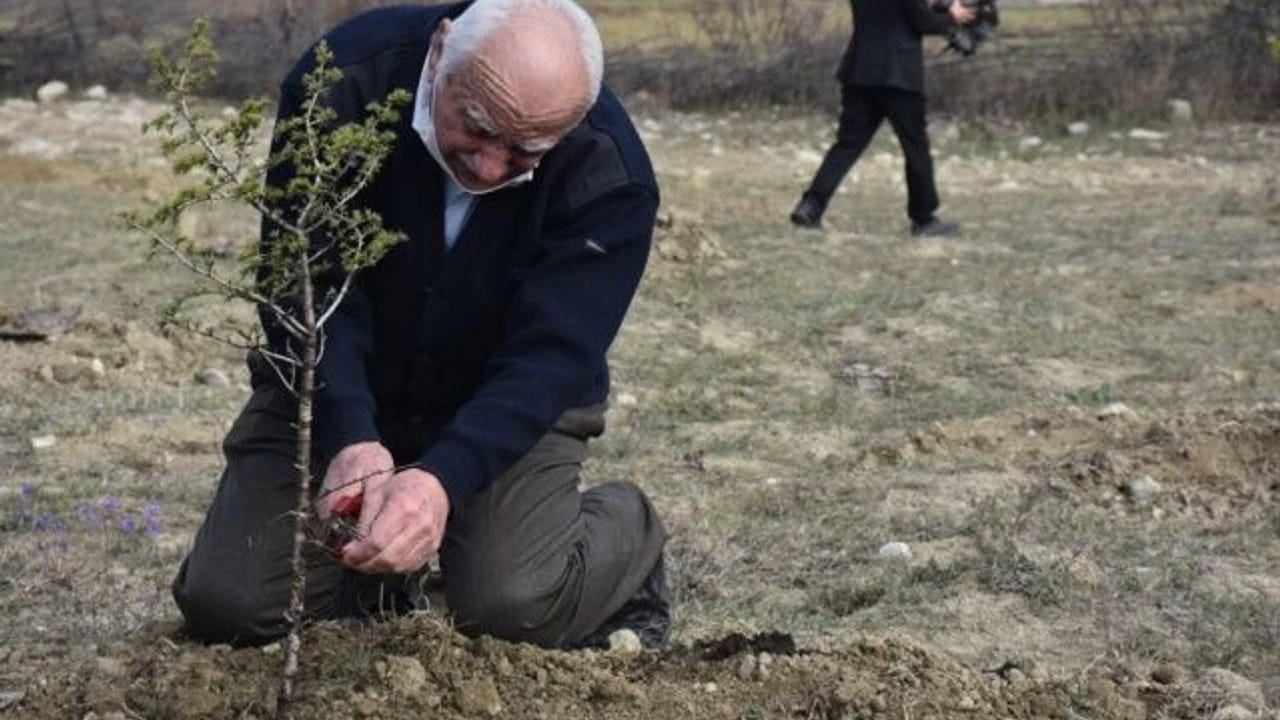
Today, the hills above Boyabat are dense with trees. Foxes, boars, rabbits, and bears have moved in. Many locals are too young to remember what it looked like before but there is a photograph that contains the whole story in a single frame: an elderly Hikmet Kaya, standing in front of a forest, holding a faded picture from 1978 of the exact same hillside — bare, dry, empty. “The transformation of those lands into forests,” he told Anadolu Agency, “has been my biggest source of pride.”
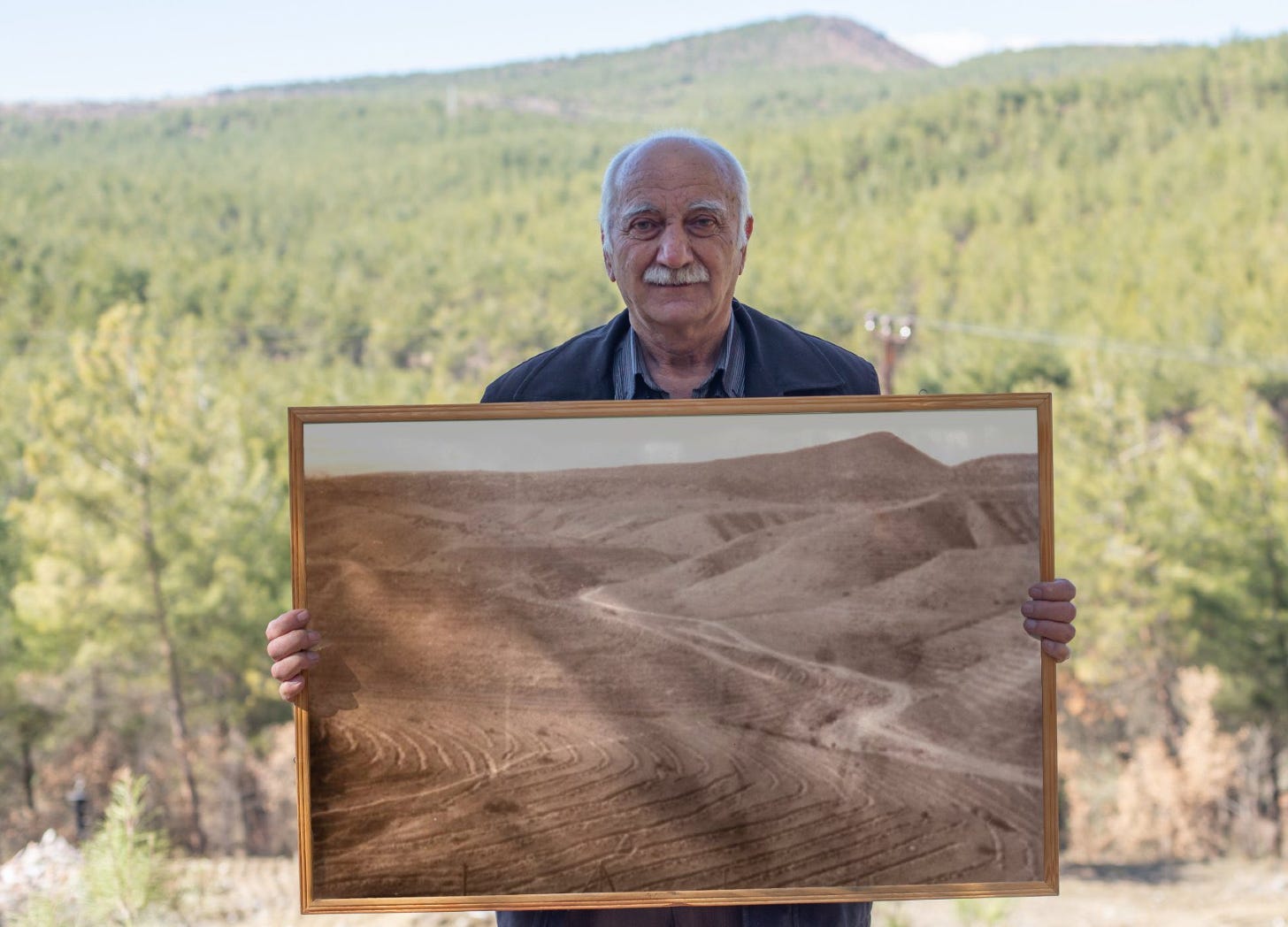
In The Myth of Sisyphus, Camus wrote:
The struggle itself toward the heights is enough to fill a man’s heart. One must imagine Sisyphus happy.
Looking at his photograph, you do not have to imagine it at all…
2. The Angel of the Gap
At the entrance to Sydney Harbour, there is a cliff called the Gap. It is a place of dramatic, vertiginous beauty — and for decades, it has been one of Australia’s most notorious suicide spots, with an estimated 50 people a year making their way to its edge.
In 1964, Don Ritchie moved into a house directly across the road from it. He had no training in mental health, no formal skills of any kind that would qualify him for what he was about to spend the next 5 decades doing. What he had was a smile, a habit of paying attention, and an instinct that would not let him look away.
Every morning, he would scan the cliff from his bedroom window. If he saw someone standing too close to the edge, he would walk over, palms open, and ask a simple question: “Is there something I could do to help you?” If they said yes — and most did — he would invite them inside for a cup of tea. That was it. No method, no script. Just a kitchen table and someone willing to sit at it with them for as long as it took…
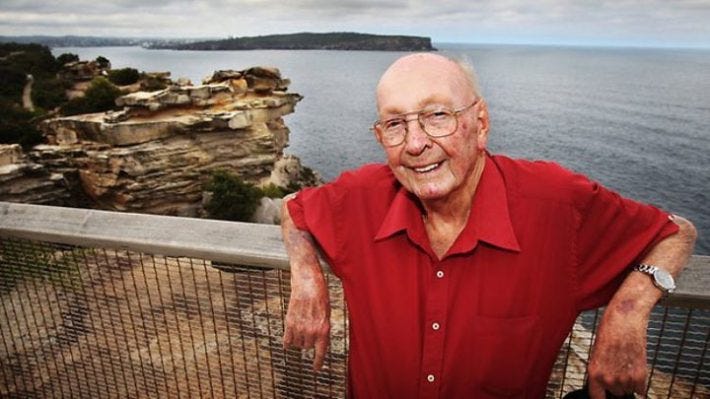
Officially, Don Ritchie saved 160 people from suicide over 45 years. His family believed the real number was closer to 500. In 2006 he was awarded the Medal of the Order of Australia, and in 2011 named Australia’s Local Hero — though he was, by all accounts, a modest man who did not court praise. He died in 2012 at the age of 85. Engraved near the grove planted in his memory are his own words:
Always remember the power of the simple smile, a helping hand, a listening ear, and a kind word.
3. The Man With the Golden Arm
In 1951, a fourteen-year-old boy in New South Wales underwent major surgery to remove a lung. He spent three months in hospital and required nearly two gallons of donated blood to survive. He had no idea who had given it. When he was old enough to donate himself, he decided to give back — despite being terrified of needles, a fear he never quite overcame. He would go on to donate 1,173 times over 64 years, never once watching the needle go in.
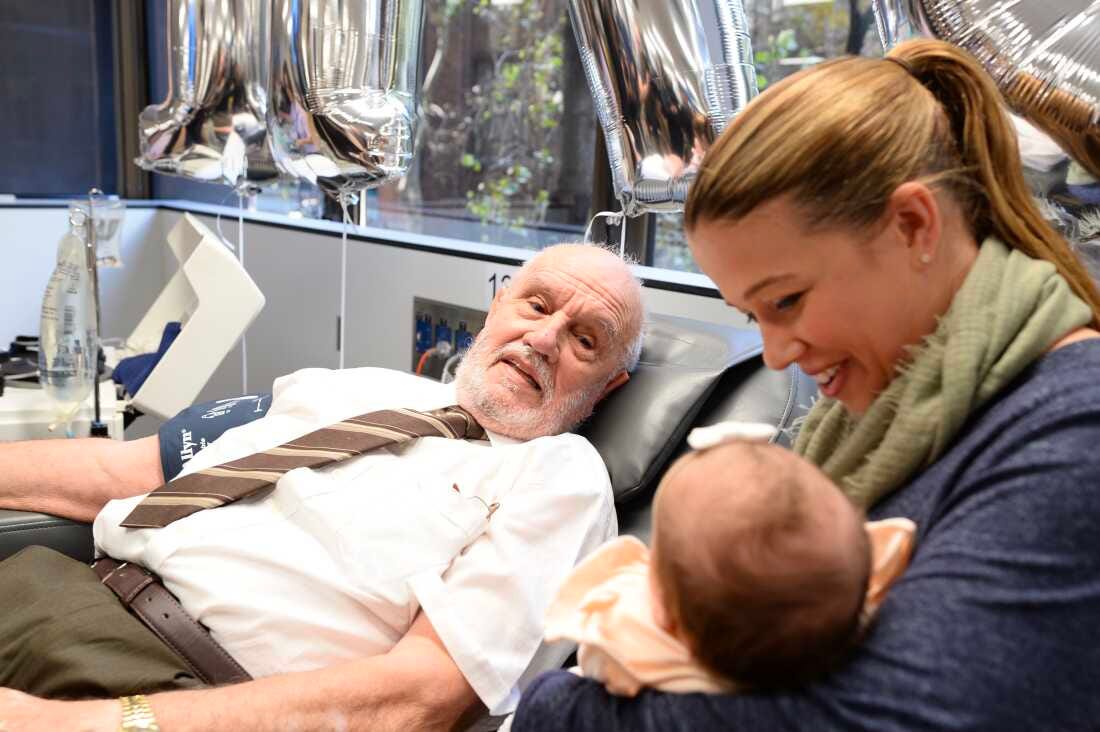
James Harrison’s blood turned out to contain something rare: a powerful antibody against the Rh D antigen, the discovery of which transformed maternal medicine in Australia. Before the 1960s, thousands of Australian babies died every year from haemolytic disease of the fetus and newborn — a condition caused by blood incompatibility between mother and child, in which the mother’s immune system attacks the baby.
Harrison became one of the founding donor of Australia’s Anti-D program in 1967, and from that year forward, his plasma went into every single dose of Anti-D produced in the country. Robyn Barlow, the program coordinator who recruited him, said: “Every ampule of Anti-D ever made in Australia has James in it.”
Australian Red Cross Lifeblood credited him with saving 2.4 million lives.
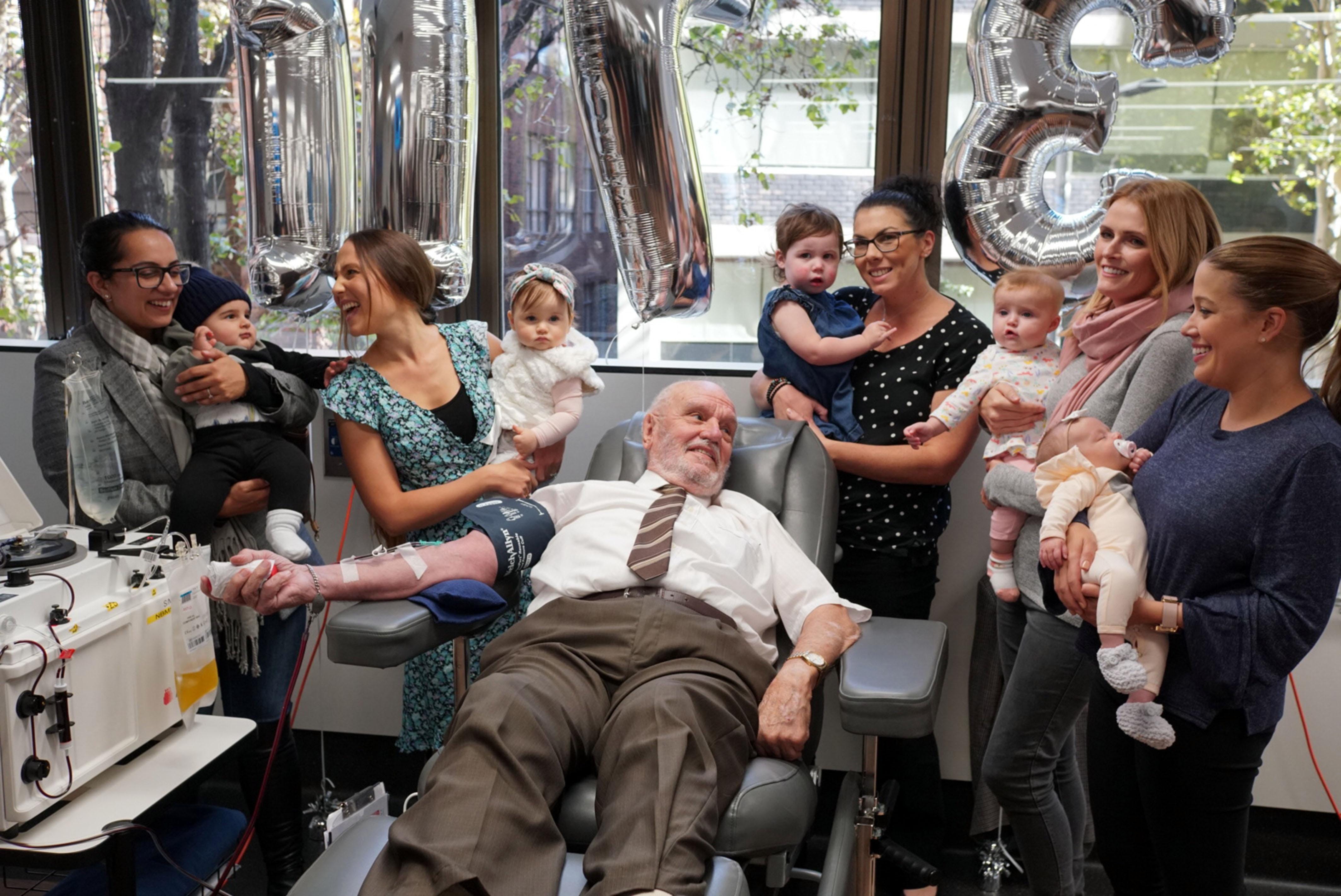
He donated every two weeks until Australian law required him to stop at 81, in 2018. At his final appointment, half a dozen mothers brought their babies to the donation centre to thank him in person. He died in February 2025, at the age of 88…
4. Kindness Always Finds Its Way Back
In November 2017, Elmer Alvarez was living on the streets of New Haven, Connecticut, when he found a check for $10,000 on the pavement. He had been homeless for over a year, was three years into his recovery from addiction, and had nothing. He tracked down the owner anyway. “It never crossed my mind to keep it,” he told CBS News.
The check belonged to Roberta Hoskie, a successful real estate broker — who, before building her company, had been a homeless teenage mother surviving on welfare. She had expected, she said, to meet someone in a suit. When she found out who had returned it, it shattered, in her own words, a lot of stereotypes.
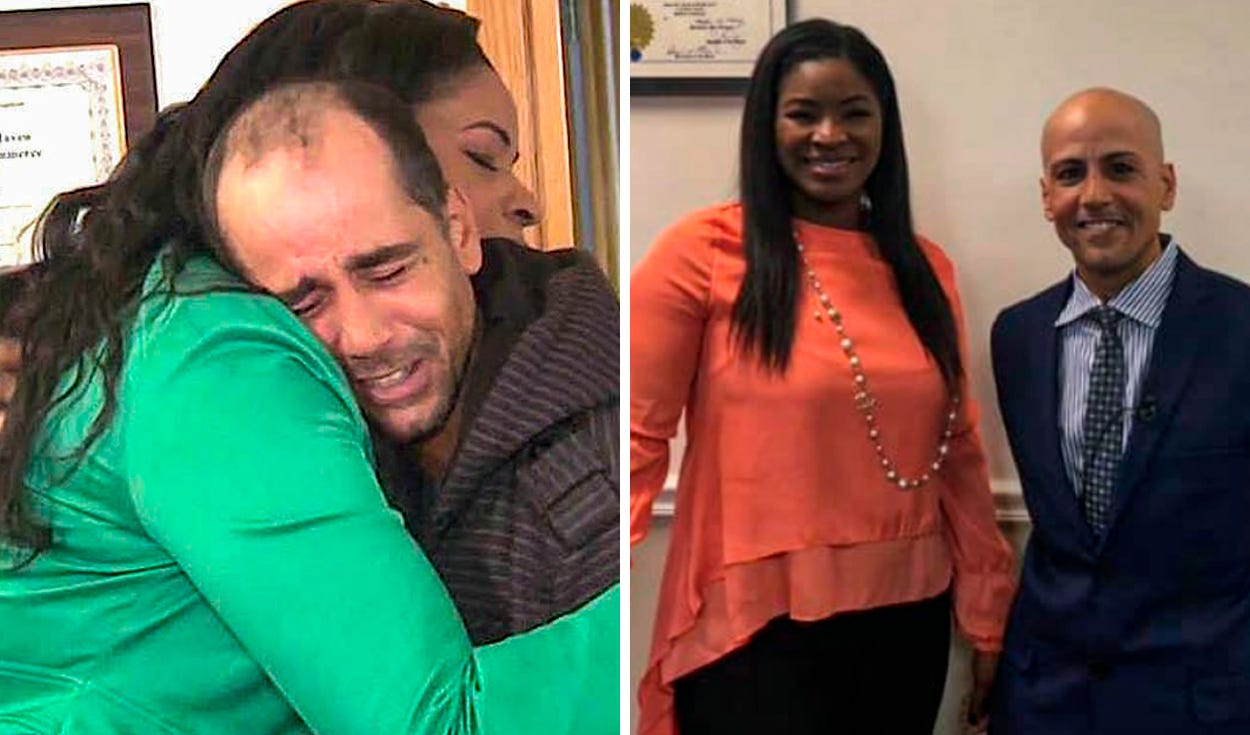
Hoskie paid Alvarez’s rent for seven months, enrolled him in real estate school, placed him on the board of directors of her company, and together they founded the Outreach Foundation — a transitional housing program for homeless teenagers and young adults.
Two people who had both been told, by circumstance, that they were on the wrong side of things, built something together from a check found on a pavement. “I feel great and I just want to keep helping others,” Alvarez said. “There was a purpose behind that check, I believe there’s more to it.”
5. The Dog Who Waited
Whenever I find myself losing faith in people, I turn, of all places, to dogs. They are far from naive and they study our moods and intentions with an attention most humans never direct at each other. They know exactly who we are. And yet they love us, with a consistency and a depth that we have spent centuries struggling to match. If they see something worth that kind of devotion in us, perhaps we should trust their judgment. There is no better argument for this than Hachikō.
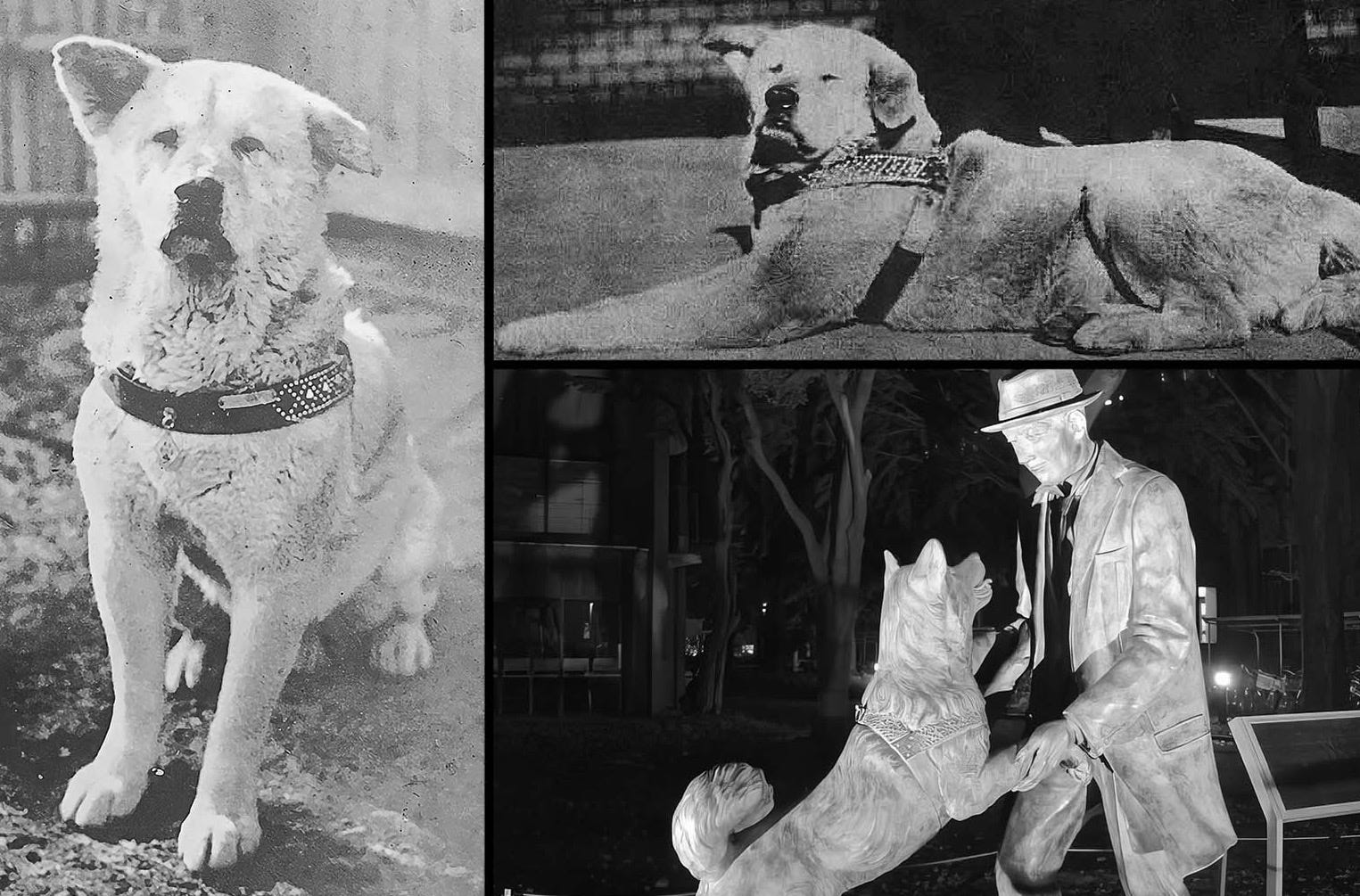
In 1924, Professor Hidesaburō Ueno of Tokyo Imperial University brought home an Akita puppy he named Hachi. A harsh winter train journey had left the dog nearly dead, but Ueno nursed him back to health over the course of six months. The two became inseparable. Every morning Hachikō walked with Ueno to Shibuya Station, and every afternoon he returned to meet him when he came home.
This continued until May 21, 1925, when Ueno suffered a fatal cerebral haemorrhage at work and did not come back. Hachikō was at the station at three o’clock, as always. He waited. Ueno never arrived. The next day, he came back. And the day after that. For nine years and nine months, through rain and winter and illness — he had chronic health problems his entire life — Hachikō returned to the same spot at Shibuya Station and waited for a man who would never come…
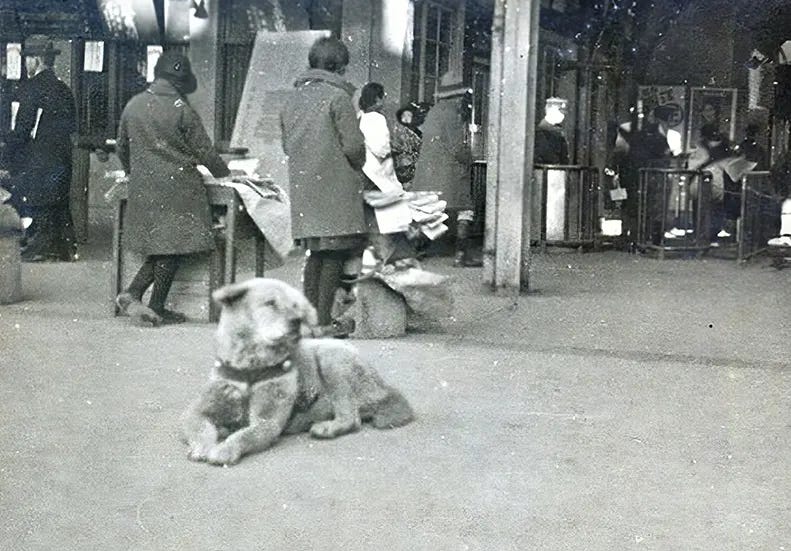
He was found dead on a street near the station on March 8, 1935. His ashes were buried alongside Ueno’s grave at Aoyama Cemetery. The professor and his dog, finally together again.
A bronze statue of Hachikō stands outside Shibuya Station to this day, at the very spot where he kept his vigil. Every year on March 8, a ceremony honors his memory, and every day, visitors leave flowers as a tribute to a bond that transcended time.
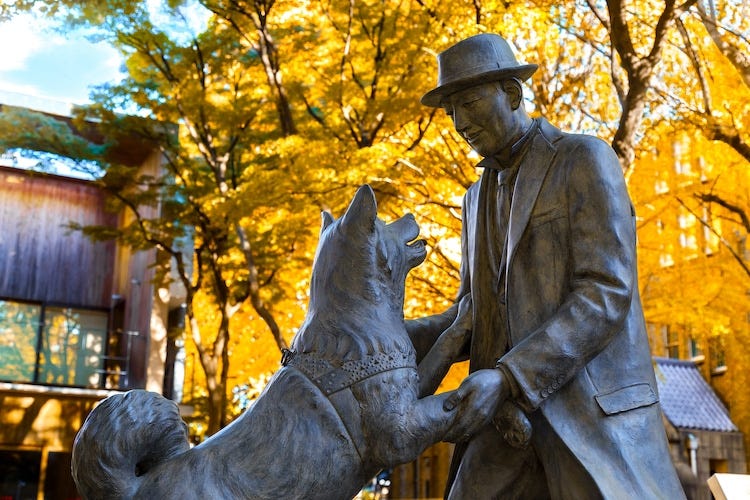
A dog waited nine years at a train station because the love he had learned from a human being was too real to abandon. Think about what that means — not as a story about loyalty, but as a story about us. Hachikō did not learn that love from a book or an ideal. He learned it from one man, in one house, on ordinary morning walks to the train. That is what we are capable of teaching. That is what we leave behind, in the ones who love us.
And if you have ever needed proof that people are worth believing in, look no further than the animals who know us best. Dogs are the purest creatures ever to walk this earth and they have lived with us for fifteen thousand years. They have seen all of it, the best and the worst, and they have simply decided that we are worth their entire hearts. That is not a small thing. That is the most honest verdict ever returned on the human race…
Thanks for reading! This newsletter is completely independent and ad-free — and it can only keep going with your help. Please consider contributing a few dollars a month today, and get access to exclusive articles and the full archive:
Your support means the world to me — thank you for making it possible to continue this work.
After reading the world news today, I cannot imagine a more thoughtful and uplifting read. It was the antidote I needed. Thank you
Thank you, that was a beautiful read.