


In his 1933 book Land of the Spotted Eagle, Oglala Lakota author Luther Standing Bear wrote:
The old Lakota was wise. He knew that man’s heart, away from nature, becomes hard; he knew that lack of respect for growing, living things soon led to lack of respect for humans too.
As Dostoevsky had observed half a century earlier in The Brothers Karamazov, the moment a man loses all respect — for himself and for others — he loses his capacity to love. The condition both men diagnosed has only deepened since…
There is a particular kind of unease that is difficult to name. You know it when you feel it. A restlessness with no obvious cause, a sense of being slightly out of step with everything, including yourself. Many people live with it constantly, without ever identifying its source.
For the vast majority of human history, our species lived in direct, daily negotiation with the natural world. Our bodies developed rhythms synchronized with sunlight. Our nervous systems learned to read the weather, the seasons, the slow language of the land. We were embedded in nature the way a river is embedded in its landscape — shaped by it and shaping it in return. That relationship, built across an incomprehensible stretch of evolutionary time, was severed almost overnight.
In 2007, humanity crossed a threshold it had never crossed before: for the first time, more people on earth lived in cities than outside them. That number has only grown since. Many of us now pass entire lifetimes without ever feeling genuinely subject to the elements. Rilke saw this coming and named it with uncomfortable precision:
Just as language has no longer anything in common with the thing it names, so the movements of most of the people who live in cities have lost their connection with the earth… they hang… in all directions, and find no place where they can settle.
Hanging. No place to settle. I have felt this. I suspect you have too.
To feel disconnected, though, you first have to have belonged somewhere. And five centuries before any of this, Leonardo da Vinci was already tracing the evidence of where that somewhere is.
He spent years measuring and drawing the interior of the human body with the same obsessive attention he gave to rivers, rock formations, and the flight of birds — and what he kept finding was that they followed the same rules. Blood vessels branch the way rivers branch. The angles at which tree limbs diverge mirror the angles at which vessels divide inside the body. When he encountered atherosclerotic arteries in an elderly man, he compared them to the dried remnants of an old orange — not as a metaphor, but as a structural observation.
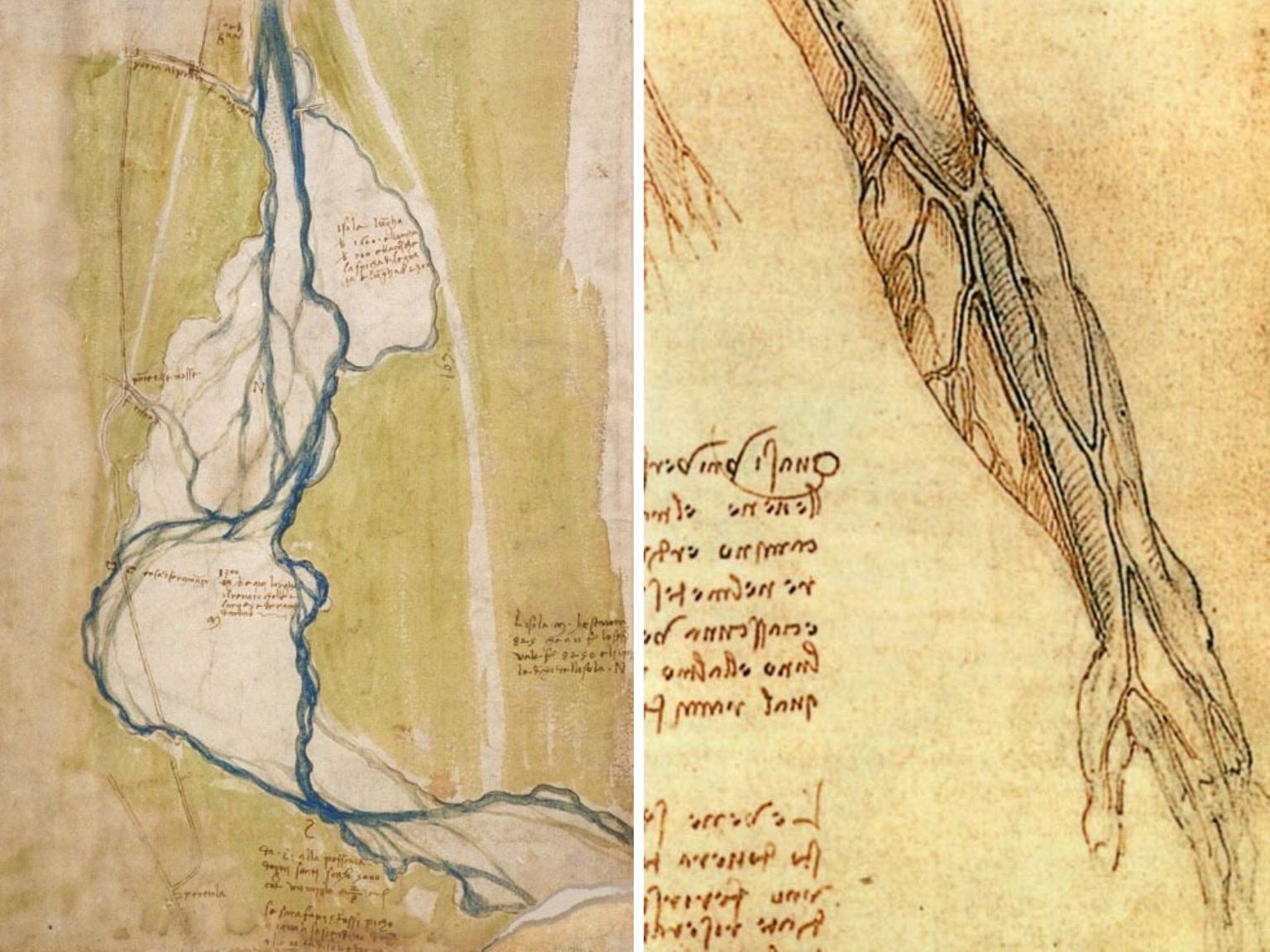
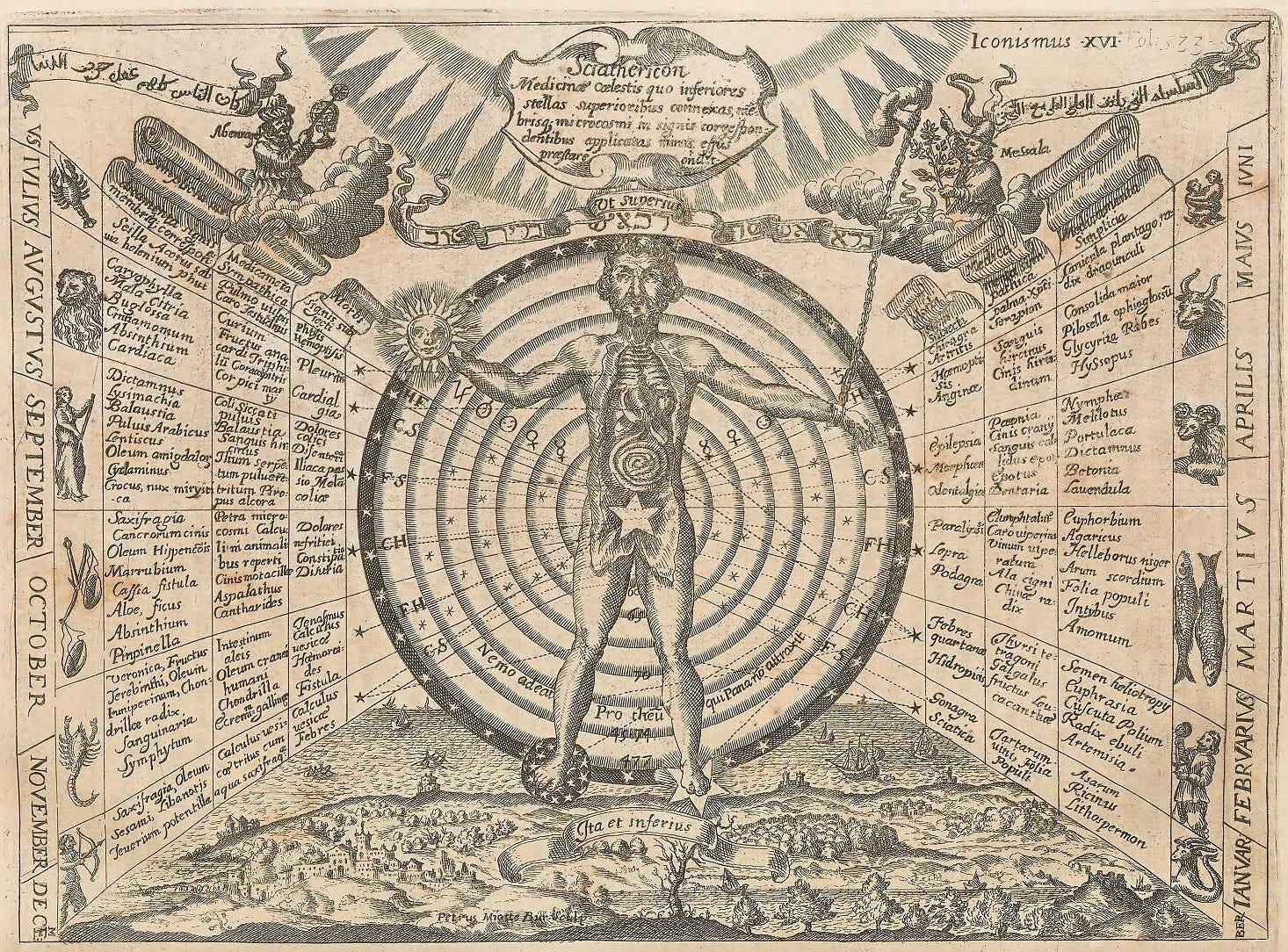
His conclusion, reached through dissection and measurement rather than philosophy, was that the human body is a microcosm of the world, and the world a macrocosm of the body.
I could keep describing this. But a picture is worth a thousand words, and Da Vinci — who reached his conclusions precisely because he looked before he theorized — would have had little patience for any argument that asked you to take it on faith. So don’t. Look at it instead…
Below are six examples that make this literal. Images of the body placed alongside photos of the natural world showing something plain and verifiable: that the same forces shaping river networks, tree stumps, and forest canopies have also shaped us. We are not observers of nature looking in from outside. We are made of the same thing.
Which means that when we feel disconnected — that restlessness, that nameless unease — we are not imagining things. We feel it because we have simply moved away from something we are made of…
REMINDER: Beauty is Truth is a reader-funded publication, supported entirely by you. There are no ads here, only independent writing devoted to celebrating beauty — and it can only continue with your help.
If you’ve been thinking about supporting my work, becoming a paid subscriber is the most meaningful way to do it:
With the annual subscription discount, it’s less than the cost of a coffee per month — and it’s what makes all of this possible.
1. Lungs and Trees
This comparison will never cease to amaze me…
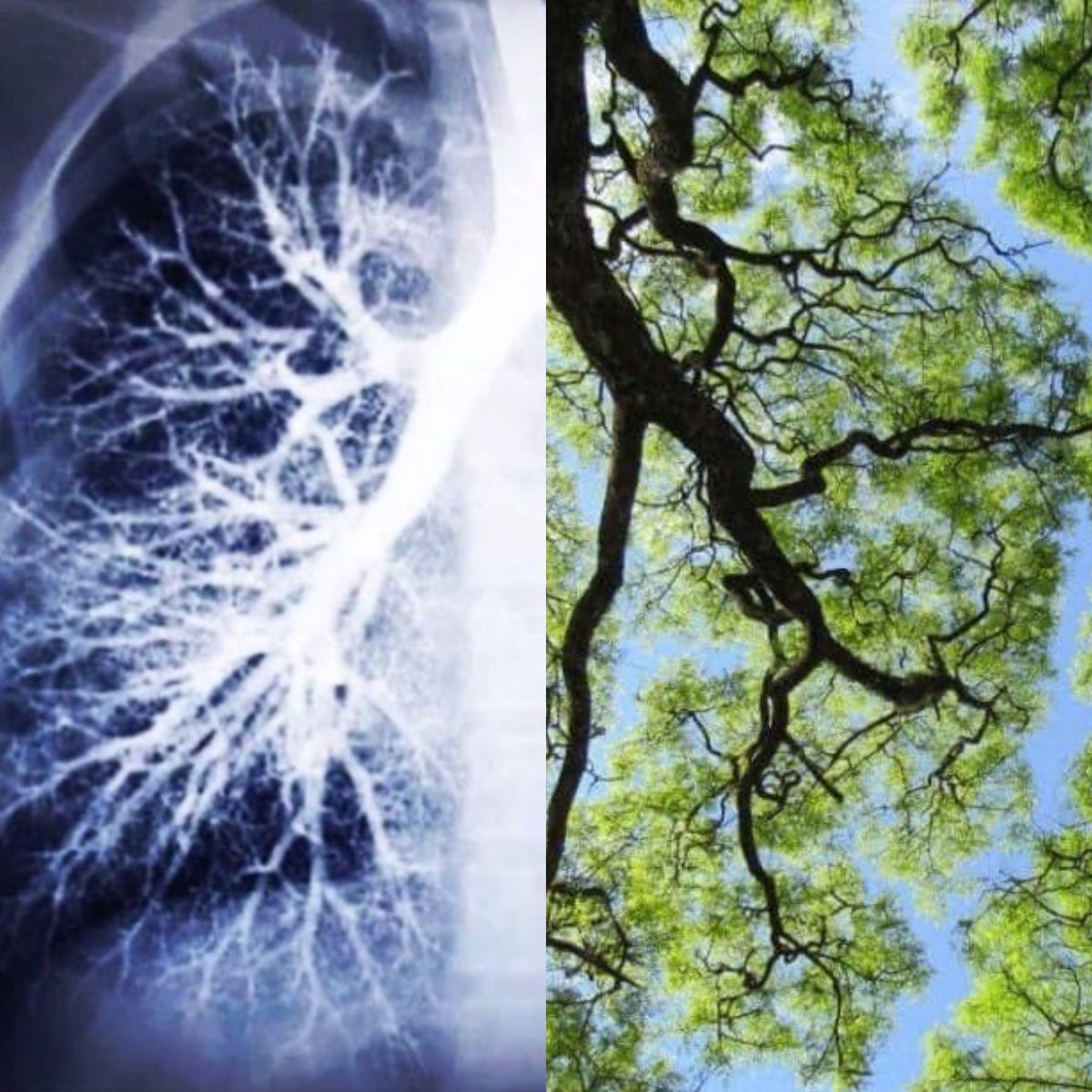
Both lungs and trees are fractal structures. They follow an identical mathematical principle: a pattern that repeats itself at every scale, each branch dividing into smaller branches, those into smaller still, all the way down to the finest tip. Nature, it turns out, is not endlessly inventive. When it finds something that works, it uses it again.
And then there is the breath itself, which may be the most extraordinary part of all this.
You exhale carbon dioxide. The tree absorbs it and releases oxygen. You breathe it in. This is not a poetic observation. It is a precise biochemical exchange — a loop so ancient and so continuous that the boundary between where you end and where the tree begins is, in chemical terms, almost meaningless.
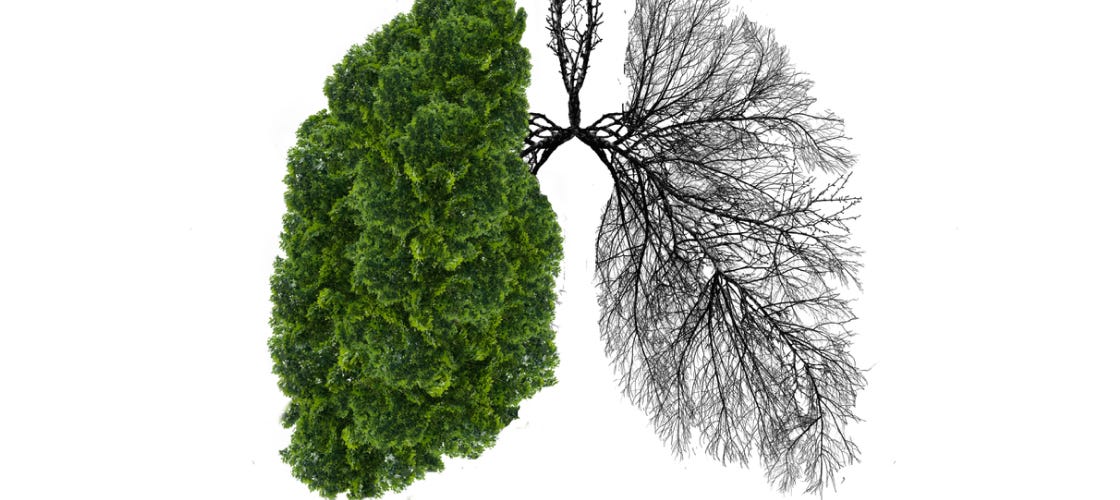
Every breath you take is, in part, a gift from a tree somewhere (and from the ocean’s phytoplankton). Every breath you release is, in part, what keeps trees alive. We tend to think of ourselves as separate from the natural world, observers looking in from the outside. But there is no outside here. You are already inside it, mid-exchange, with every single breath.
2. Tree Rings and Fingerprints
Look closely at a tree stump and you will see rings — concentric circles radiating outward from the centre, each one a complete year of the tree’s life. A broad ring means a good growing year. A narrow one means drought, cold, hardship. Everything the tree endured is permanently written in wood. As Anne Michaels wrote in Fugitive Pieces:
Trees carry the memory of rainfall. In their rings we read ancient weather — storms, sunlight, and temperatures, the growing seasons of centuries. A forest shares a history, which each tree remembers even after it has been felled.
Now look at your fingertips.
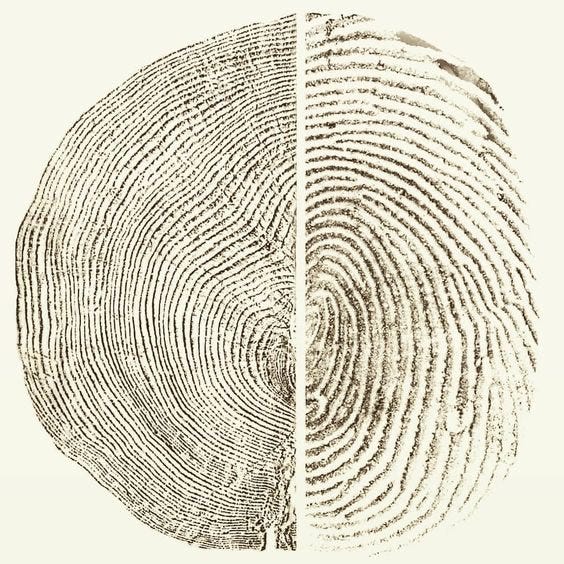
Your fingerprints formed in the womb, shaped by the pressure of amniotic fluid against your developing skin, the position of your body, the specific density of fluid surrounding you on a few particular days before you were born. They were permanently set before the 20th week of gestation and will remain unchanged for the rest of your life. No two people in the entire history of the human species have ever had the same ones.
Both are records of a life. A tree ring measures time in seasons, written from the outside in. A fingerprint captured a single unrepeatable moment of becoming — the precise swirl of fluid around a fingertip, one afternoon, before you had even taken your first breath.
Different materials, different scales, the same impulse: a body marking everything it took to become what it is.
3. Blood Vessels and River Networks
Look at an aerial photograph of a river delta — the way a great river fractures into dozens of smaller streams, spreading across the land like cracks in dried earth…
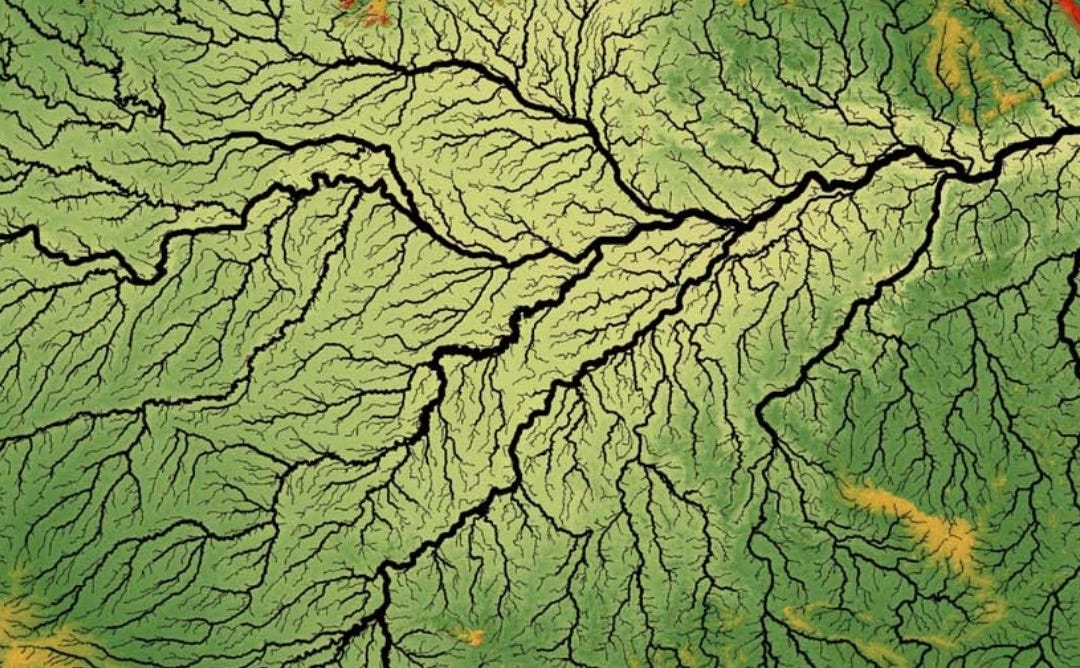
Now look at the blood vessels of a human heart (below). The pattern is identical. Both are fractal systems, governed by the same mathematical principles, built to move fluid from a central source to the furthest possible reaches using the least possible energy. Nature solved the same problem twice, in two completely different contexts, and arrived at the same answer both times.
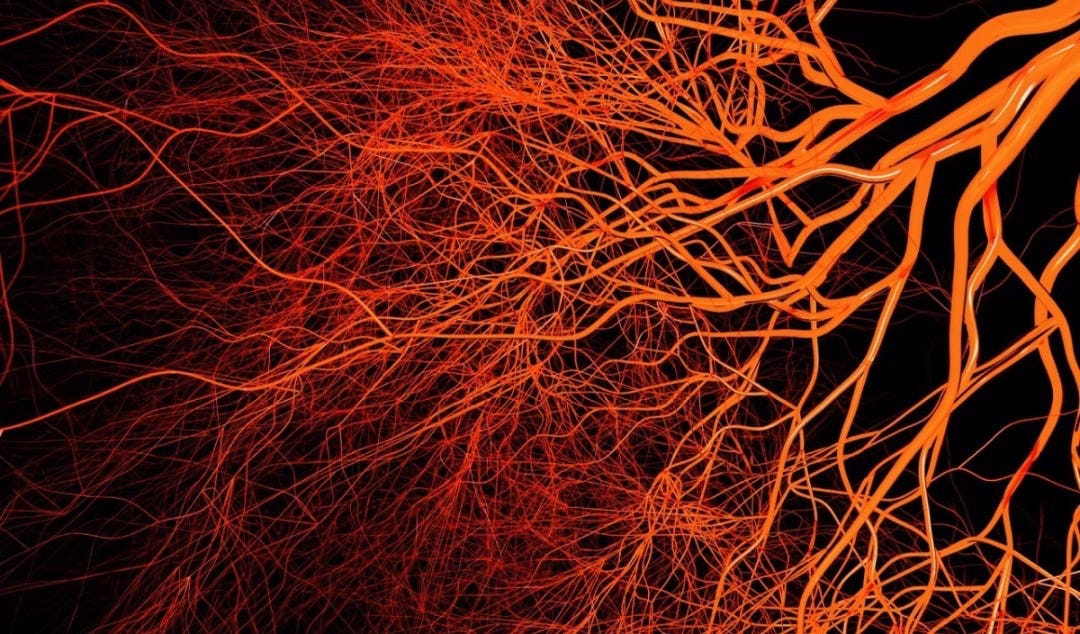
Your body contains about 60,000 miles of blood vessels — enough to circle the earth twice over — all folded inside a body you can wrap your arms around. From the aorta, wide as a garden hose, they branch and narrow and divide, all the way down to capillaries so fine that red blood cells must pass through them in single file.
Every river on earth works the same way. Da Vinci watched rivers and drew veins and saw the same thing moving through both. He was right. The body is a landscape. The landscape is a body.
4. Walnuts and the Brain
Crack open a walnut and look at what’s inside. Two wrinkled, folded hemispheres, divided by a thin membrane, the surface creased and convoluted — almost indistinguishable, at a glance, from a photograph of the human brain. The shell even resembles the skull. It is one of the more disarming things nature has produced.
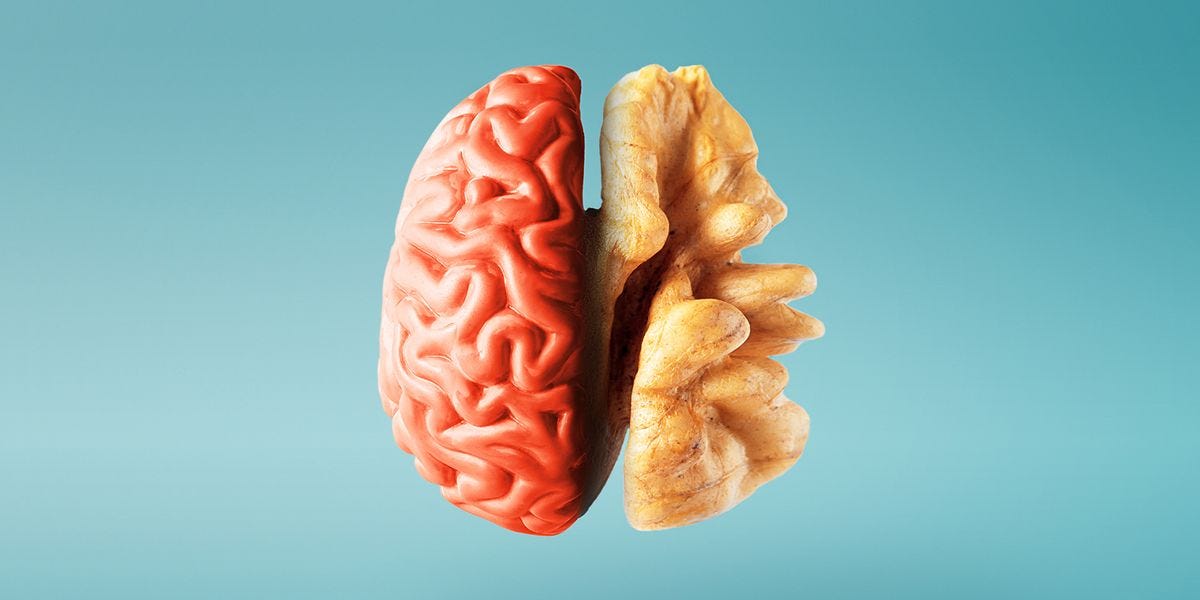
Renaissance scholars noticed this too. The ancient Hermetic principle — “as above, so below” — held that the macrocosm of the natural world was mirrored in the microcosm of the human body, and that these correspondences were not accidental but meaningful. The Doctrine of Signatures — a system of thought that ascribed medicinal properties to plants based on their resemblance to parts of the human body — held that walnuts, because of their uncanny likeness to the brain, were the obvious remedy for headaches, mental illness, and head wounds. They were wrong about the mechanism. They were not entirely wrong about the conclusion…
Walnuts are rich in alpha-linolenic acid, a plant-based omega-3 fatty acid, and contain more polyphenolic compounds than any other nut. Both omega-3 fatty acids and polyphenols are considered critical nutrients for the brain, counteracting oxidative stress and inflammation — two of the main drivers of cognitive decline.
The resemblance, in other words, is not the point. But it is hard to ignore the fact that something shaped so precisely like the organ it appears to nourish turns out to actually nourish it. Nature does not often deal in coincidences. It deals in patterns — the same ones, repeated at every scale, in every material, until you cannot look at anything without seeing the echo of something else.
5. The Placenta and a Tree
The placenta is literally the “tree of life.” Look at these photographs and you will see why — its network of branching blood vessels arranged in a tree-like structure, known in medical terms as the villous tree, with the umbilical cord at its centre acting as the trunk.
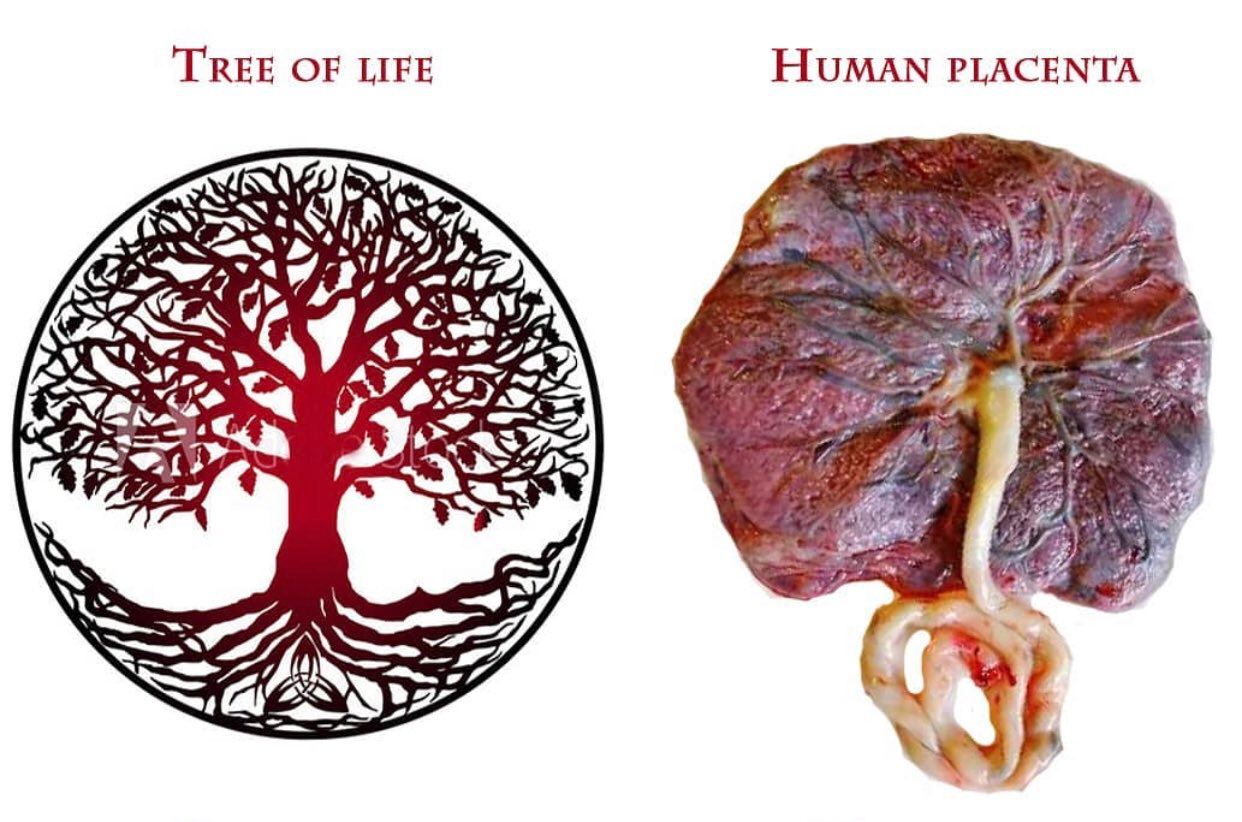
It is perhaps no coincidence that in Norse mythology, Yggdrasil — the great ash tree at the centre of the cosmos — was believed to be the source of all life, connecting every world in existence through its roots and branches…
6. Hands and Leaves
In palmate venation, several main veins radiate outward from a single point at the base of the leaf — like fingers extending from the palm of a hand. Botanists named the pattern after what it looked like. They could not avoid it.
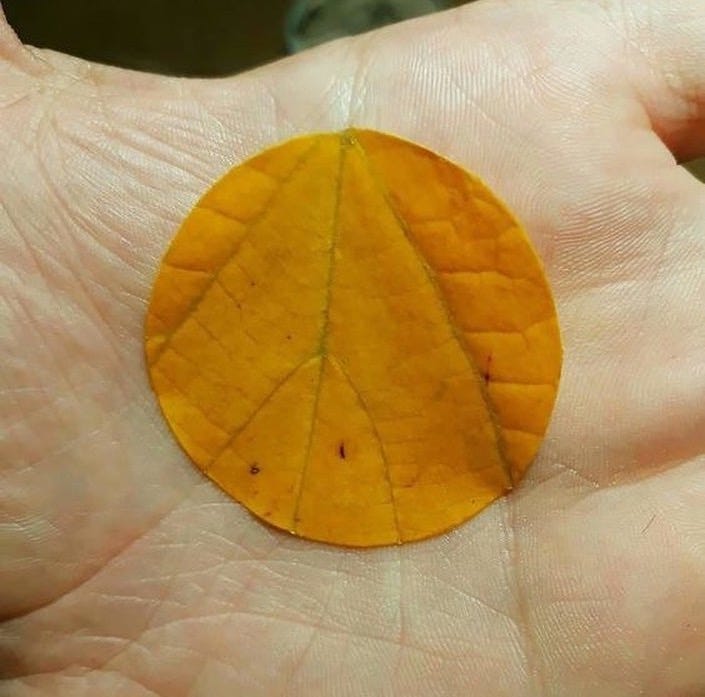
Both systems exist for the same reason: to carry what is needed to the furthest possible point. The veins of a leaf transport water and minerals inward and carry sugars produced during photosynthesis back outward, ensuring every part of the leaf is supplied and nothing goes to waste. The veins in your hand do the same — blood in, blood out, to every last fingertip.
Looking at these images, it becomes clear that the distance we feel between ourselves and the natural world is, in the most literal sense, an illusion — and perhaps the most costly one we have ever believed. Scottish poet Donna Ashworth said it better:
There is a reason why walking amongst nature is most people’s best advice when depression strikes. Because walking in nature is a return to home. You are not a lover of nature or in need of some nature; you are nature. You are as much nature as the trees in your garden and the bees on your picnic. You were designed to live your days out in the wild with your fellow creatures and plants, but progress had different plans for us all. And so we exist day-to-day, in our homes, but never home. The quickest route back to self, to inner peace, is bare feet on grass, arms around trees, head in the clouds and heart in a forest. Put your weary body in water, whenever you can. Smell every flower you see and crumble dirt between your tired-of-typing fingers. You are nature, so go home once in a while. It will bring you so much you didn’t even know you were missing.
Thanks for reading! This newsletter is completely independent and ad-free — and it can only keep going with your help. Consider contributing a few dollars a month today, and get access to exclusive articles, the subscriber-only chat, and the full archive:
Your support means the world to me — thank you for making it possible to continue this work.
Beautifully written James Lucas! Thank you for sharing this so more people on this earth may read it and know!
So gorgeously perfect. Thanks for sharing.