


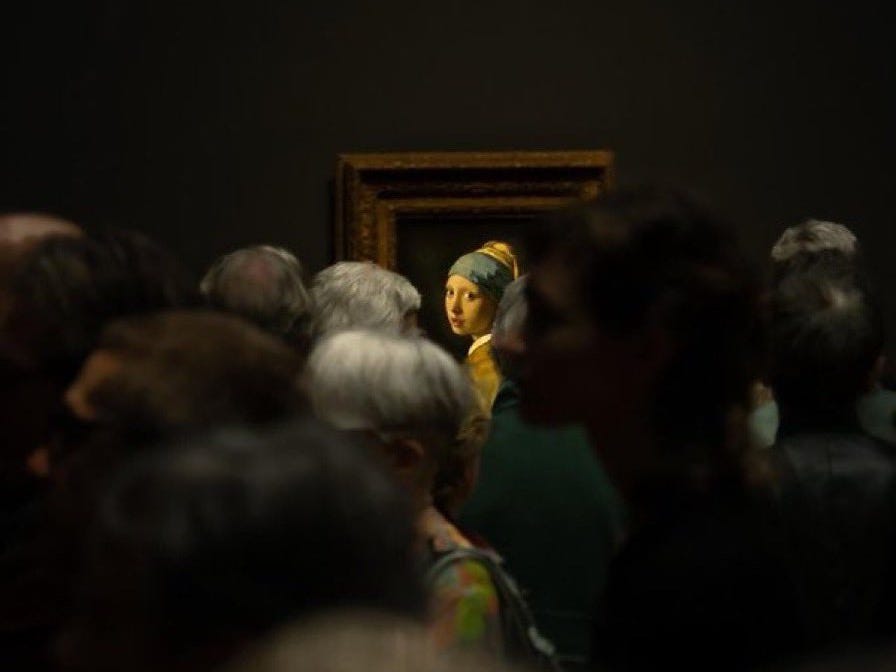
What can art actually do?
Not in theory. Not in metaphor. But in the world as it is — fractured, corrupt, unequal, grieving, and at times hopeless… Across the centuries, certain works prove that art is never mere ornamentation. It is a lifeline, a way we endure existence itself. As Pablo Picasso once said:
Art washes away from the soul the dust of everyday life.
Art reshapes how we see pain, beauty, injustice, and even ourselves. It can confront power, restore dignity, change how a city feels, or make pain visible without turning it into spectacle.
The Greeks understood this power. They called it mimesis — not simple imitation, but the shaping of reality so we can see it anew. Art gathers the chaos of experience — suffering and joy alike — and gives it form. And through the emotional alchemy that Aristotle named catharsis, it does more than show… it moves us. In witnessing, we are shaken and opened. Grief becomes comprehension. Anger sharpens into clarity. Fear widens into empathy.
The power of art lives here, in the tension between these forces: the precision of mimesis and the emotional reckoning of catharsis. It reflects, but it also transforms...
Below are 10 examples — paintings, murals, sculptures — that show this energy at work. Some confront violence. Some repair what is broken. Some simply demand that we see the world differently. Each, in its own way, shifts perception, urges us to feel more deeply — and perhaps even to act more courageously. Because as Leo Tolstoy argued:
Art should cause violence to be set aside. And it is only art that can accomplish this.
REMINDER: Beauty is Truth is a reader-funded publication, supported entirely by you. There are no ads here, only independent writing devoted to celebrating beauty — and it can only continue with your help.
If you’ve been thinking about supporting my work, becoming a paid subscriber is the most meaningful way to do it:
With the annual subscription discount, it’s less than the cost of a coffee per month — and it’s what makes all of this possible.
1. Painting Life Back In
In small towns across France, blank, aging, and often visibly neglected facades have been transformed by Patrick Commecy into magnificent trompe-l’oeil murals.
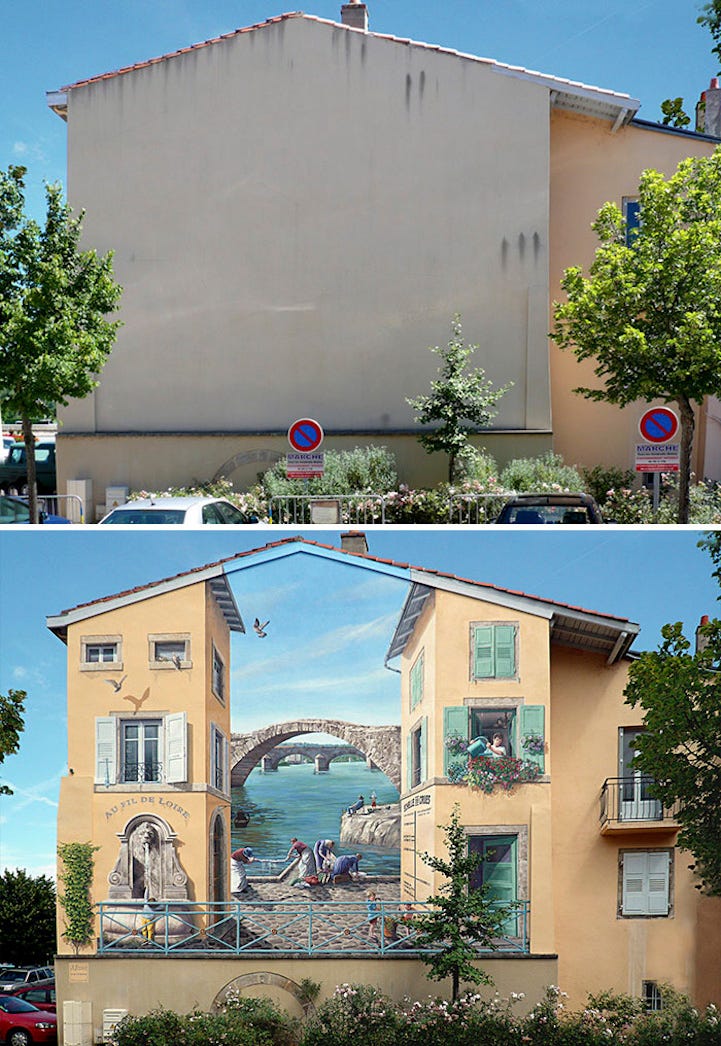
Windows appear where there were none. Historical figures return. Architecture gains depth and story.
What was once neglect becomes a canvas for beauty and connection.
These murals do more than decorate. They alter how residents relate to their own streets. They draw visitors. They shift mood.
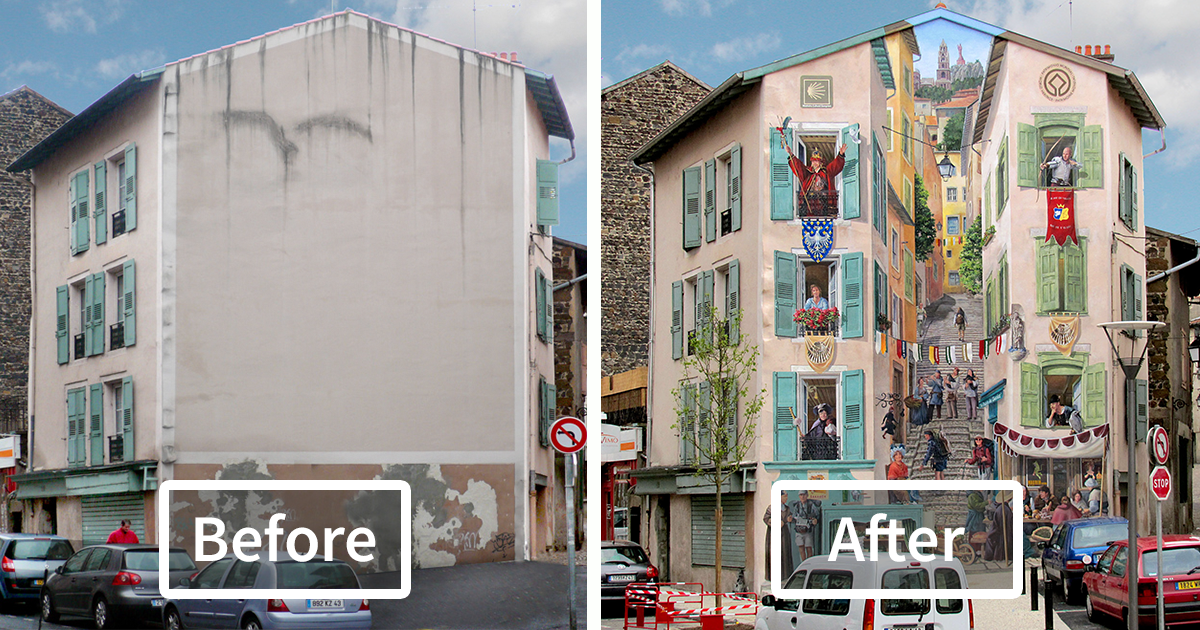
Sometimes the power of art is simple and practical: it makes a place feel cared for.
2. Judith Slaying Holofernes
With veins bulging and blood spurting, Judith grips the tyrant’s hair and drives a sword through his neck, her maidservant aiding with fierce determination.
Painted after Artemisia Gentileschi survived sexual assault and endured a public trial that scrutinized her more than her attacker, the scene is visceral. The women strain with physical effort. The violence is not romanticized.
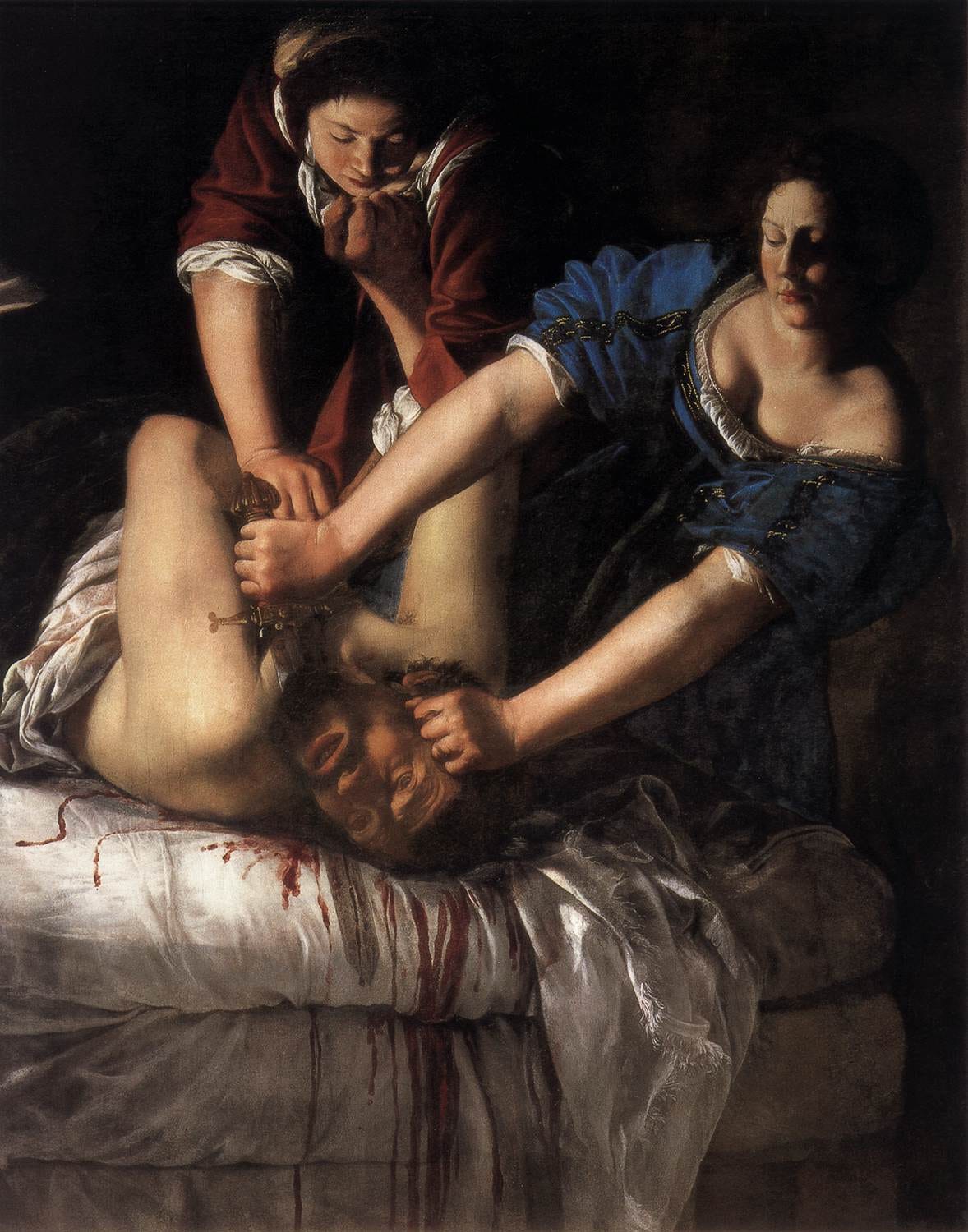
The painting feels personal without being confessional. It is controlled, deliberate.
In a world that tried to reduce her to silence, Artemisia answered with mastery. Art became a place where she decided how the story would be told…
Jorge Luis Borges observed:
A writer — and, I believe, generally all persons — must think that whatever happens to him or her is a resource. All things have been given to us for a purpose, and an artist must feel this more intensely. All that happens to us, including our humiliations, our misfortunes, our embarrassments, all is given to us as raw material, as clay, so that we may shape our art.
3. Michelangelo’s Pietà
Have you ever stood before a work of art and felt something shift inside you? That is exactly what happened to me in St. Peter’s Basilica.
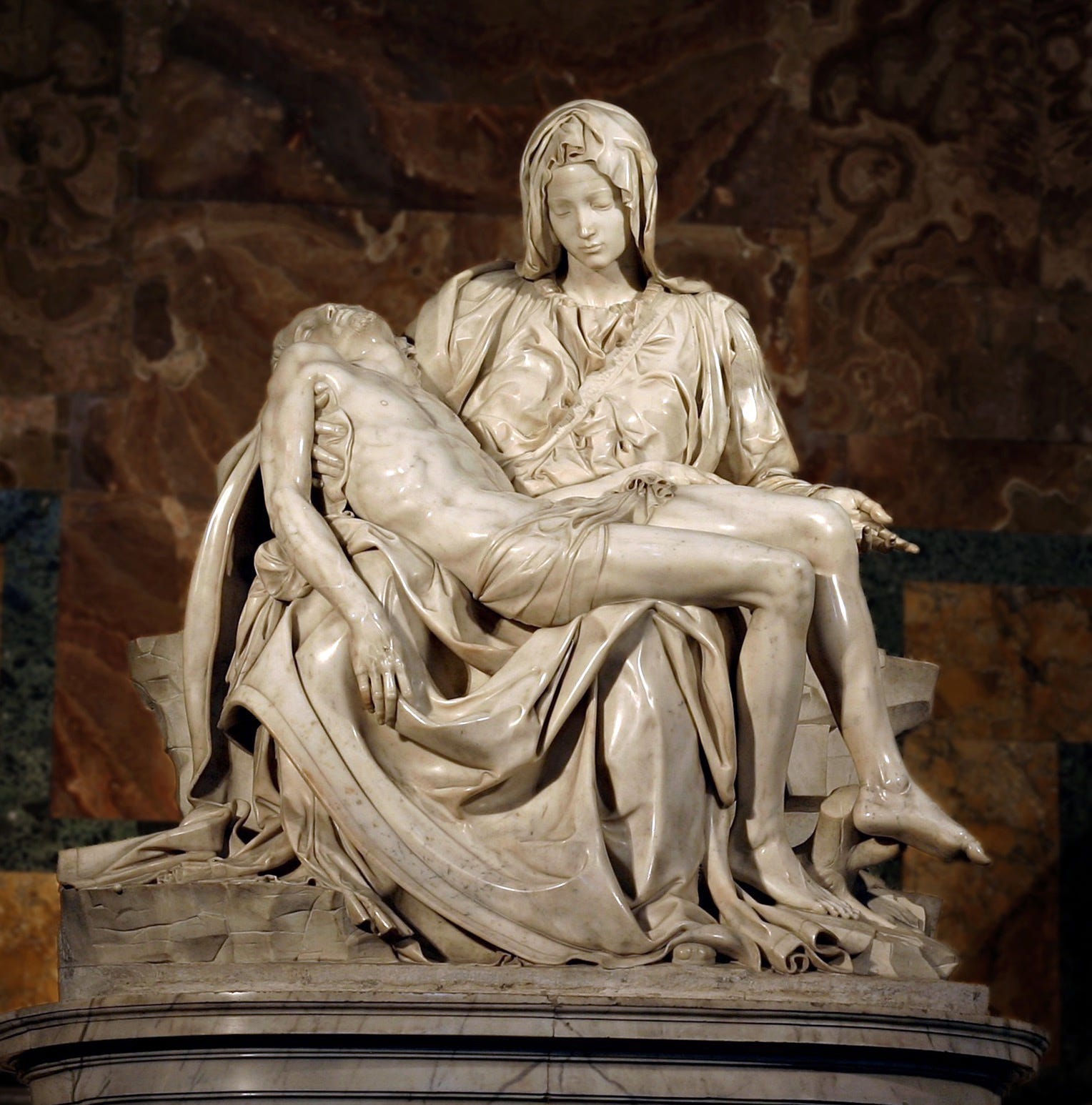
A young mother cradles her grown son’s lifeless body. Mary’s face is not twisted with anguish but softened by an otherworldly calm. Michelangelo, only twenty-four, carved this from a single block of marble, transforming a scene of unbearable grief into a meditation on love beyond measure.
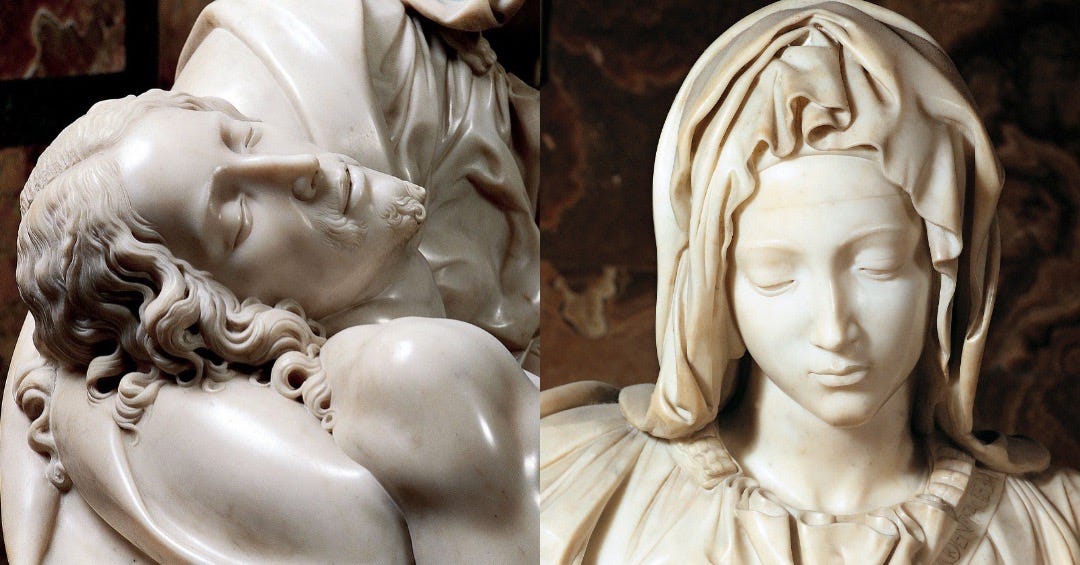
The work demonstrates art’s ability to translate agony into transcendence, offering a glimpse of grace even amid our own heartbreak.
4. Invisibility of Poverty
In many cities, poverty is present and unseen at the same time. People step around it, over it, past it.
Kevin Lee’s work confronts that selective blindness. Through stark visual interventions, he forces a second look at those who are typically ignored.
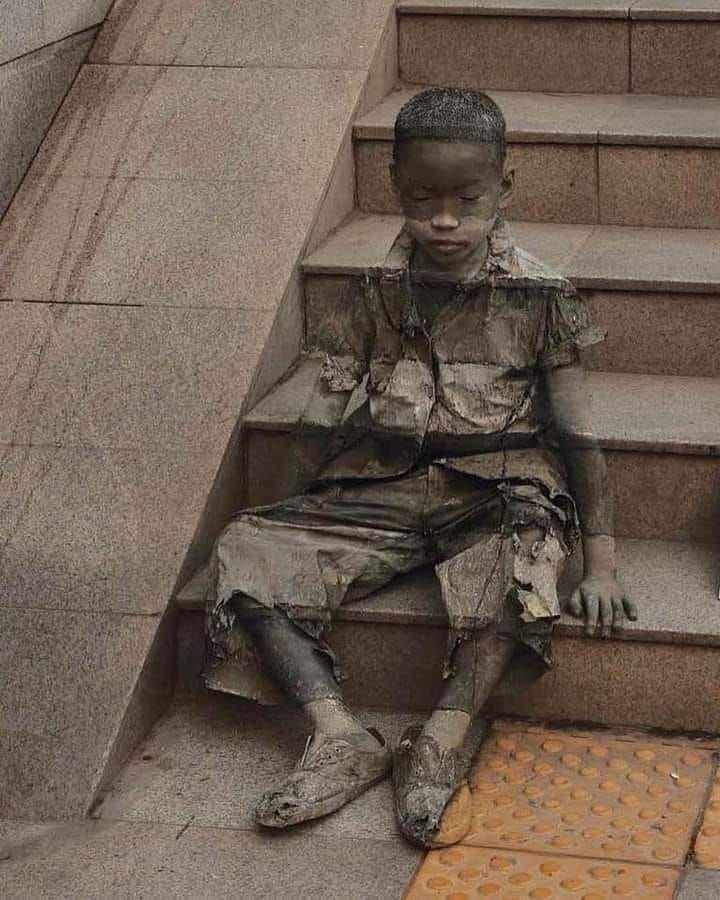
The effect is uncomfortable in the best way. It interrupts routine.
Art here is not about aesthetic pleasure. It is about attention. It insists that visibility is a form of dignity…
5. The Calling of Saint Matthew
Caravaggio stages a spiritual awakening in a dim tavern. Men count coins at a rough wooden table. Boots are dusty. The room is ordinary.
Then a shaft of light enters from the right. Christ stands almost unnoticed, pointing.
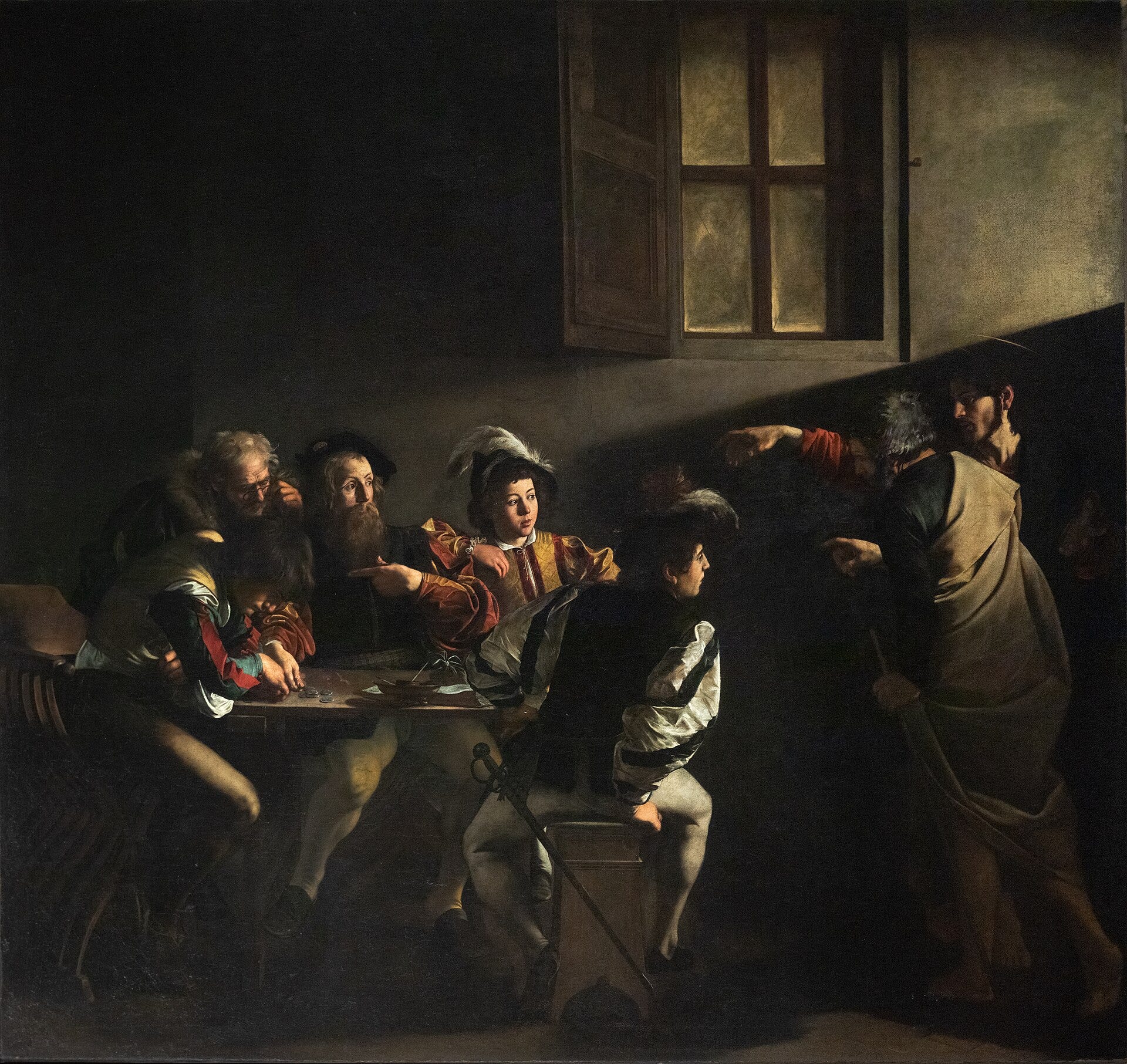
God does not descend with spectacle. He appears in a room full of flawed men who were not looking for Him. Caravaggio’s dramatic chiaroscuro lets the divine spill across the room and, like all great art, reshapes time and space — its power measured by how completely it draws you into that world.
The painting suggests something radical: revelation can happen in the middle of everyday life. Art trains us to recognize that possibility.
Reflecting on this, and on the art our own age produces, I am reminded of William Blake’s warning:
Degrade first the arts if you’d mankind degrade,
Hire idiots to paint with cold light and hot shade.
6. The Broken Column
Frida Kahlo painted her own body split open, her spine replaced by a crumbling column. Nails pierce her skin. Tears trace her face. She stands upright, meeting our gaze.
After a devastating accident and years of surgeries, pain was a constant presence in her life. She did not disguise it.
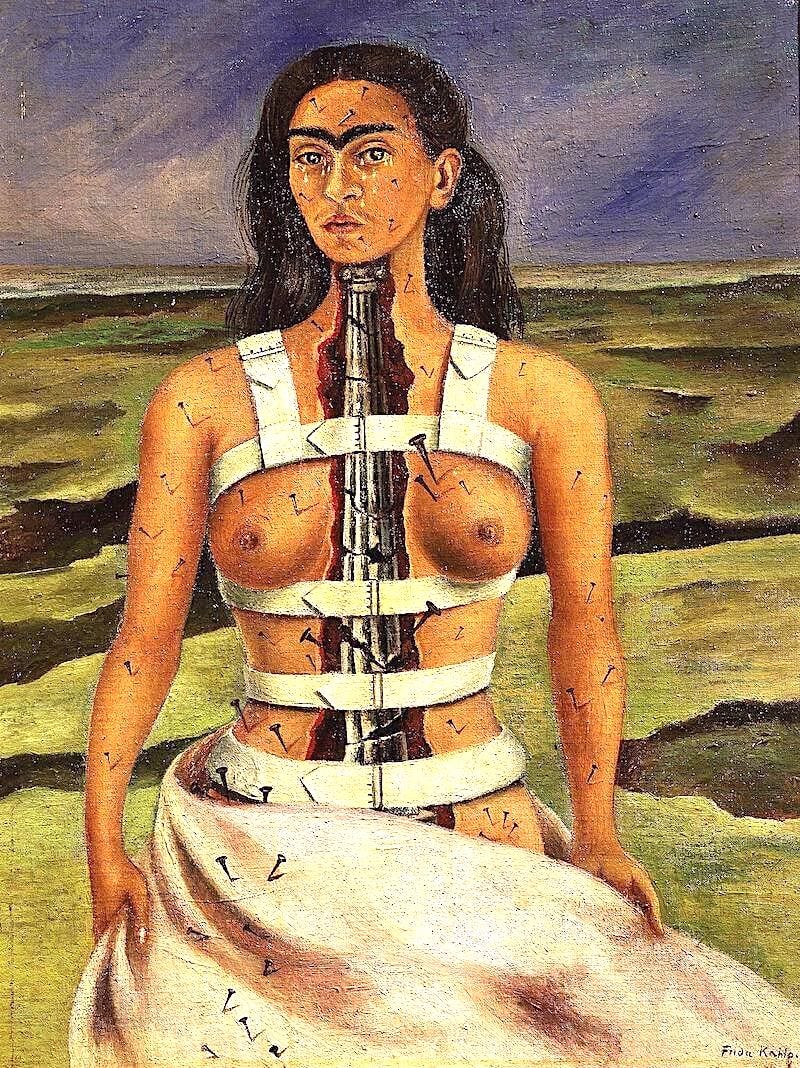
What makes the painting powerful is its steadiness. There is vulnerability, but also strength. By externalizing her suffering, she refuses to let it remain invisible.
Art becomes a way of saying: this is what it feels like — and I am still here.
7. Kintsugi
This 17th‑century tea bowl, part of the Smithsonian collection, was once broken and then restored with lacquer and powdered gold. The result is not merely a repaired object but a testament to the beauty of imperfection, a harmonious balance of fragility and strength…
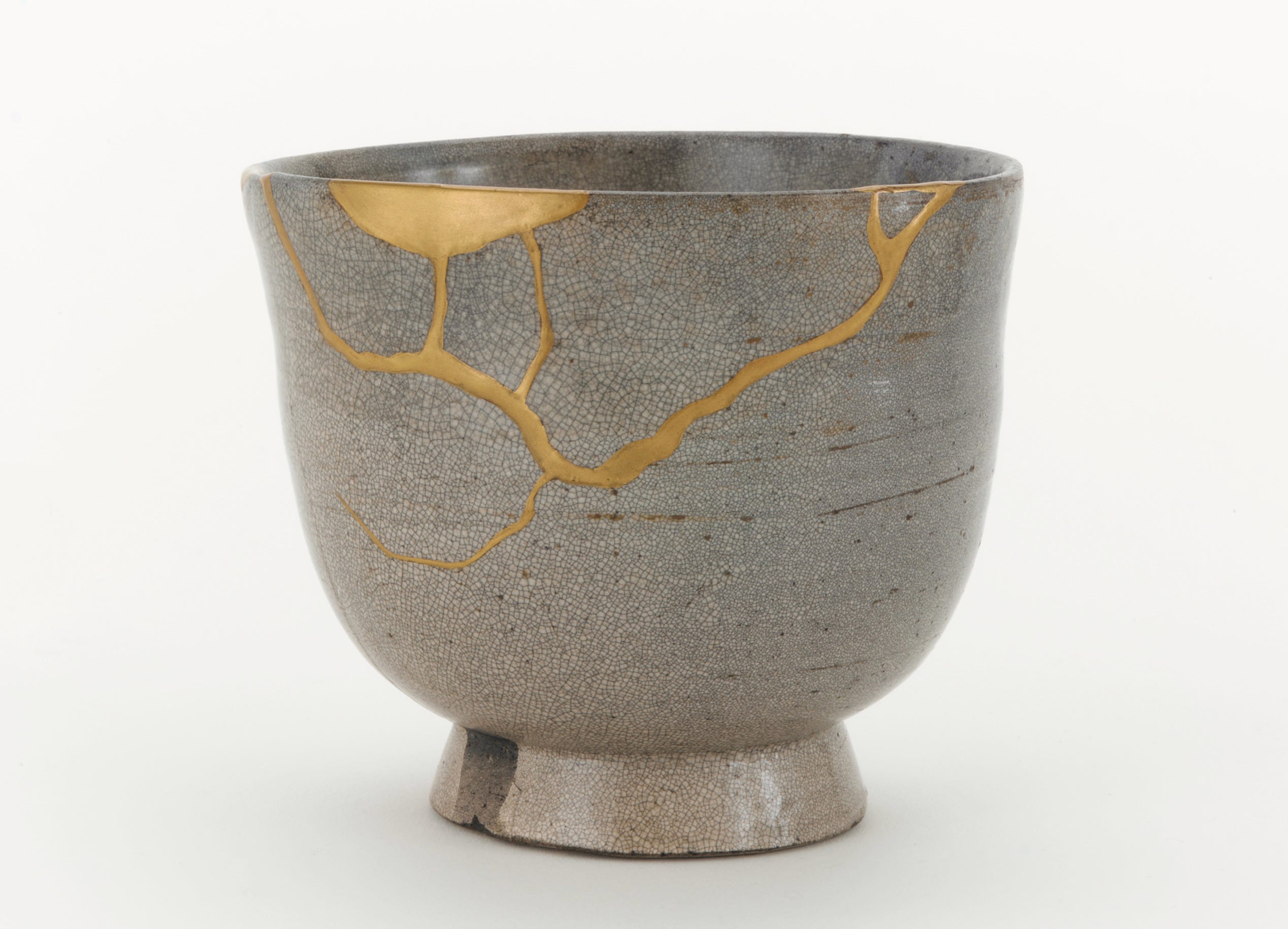
This is kintsugi, the ancient Japanese art of “golden joinery” (kintsukuroi), in which broken pottery is mended with precious metals, transforming what was damaged into something extraordinary. Unlike conventional repair that hides flaws, kintsugi celebrates them.
More than an art form, it is a philosophy, a Japanese echo of “waste not, want not”. In the delicate shimmer of a repaired bowl, we find a meditation on life itself, grace in repair, dignity in mending, and beauty in the traces of time…
8. Water Lilies
Late in life, Monet’s eyesight deteriorated. He continued painting the pond at Giverny, enlarging the canvases until they surrounded the viewer.
In the final panels, the horizon disappears. You stand inside light and color.
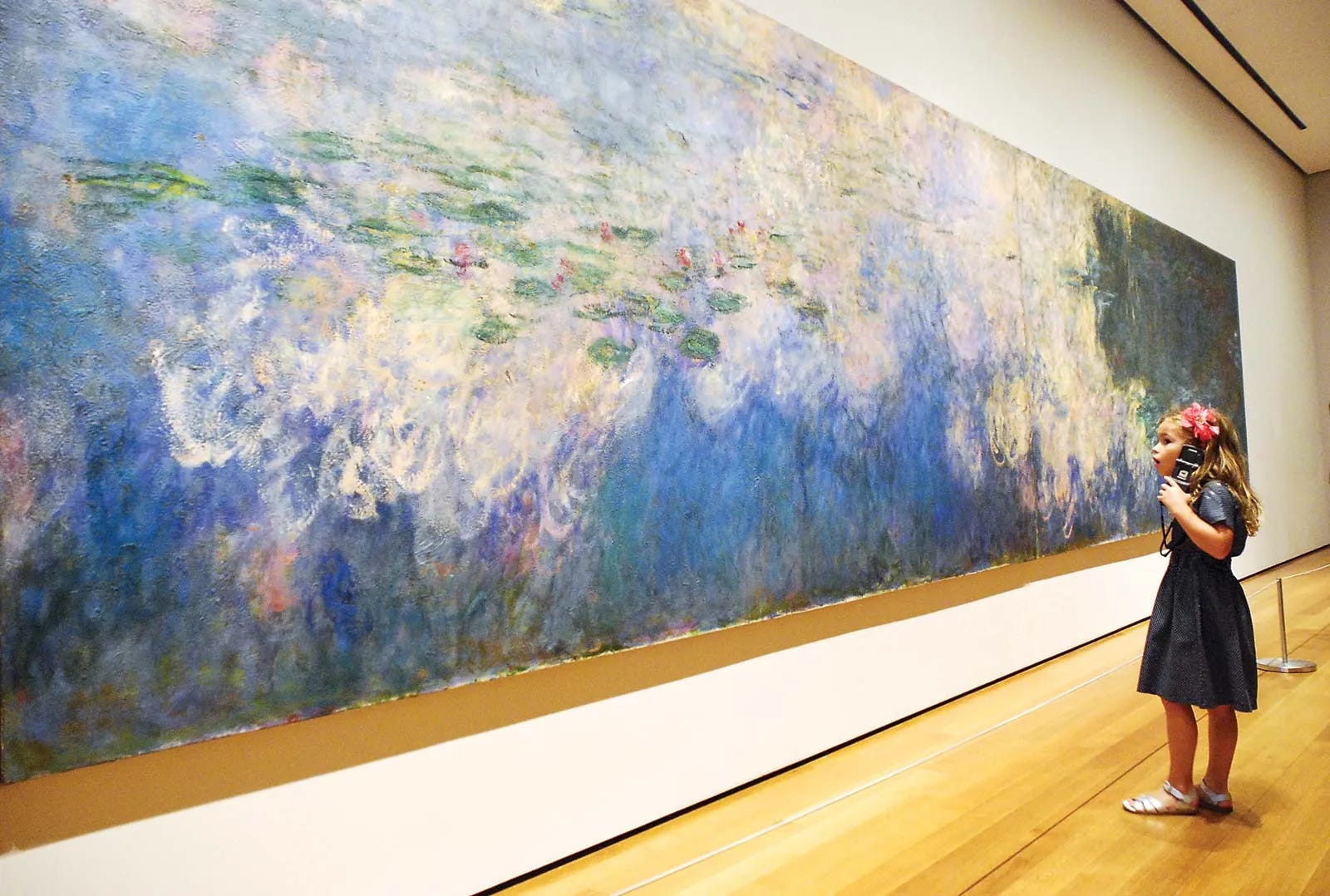
After World War I, Monet donated these works to France as a gesture of peace.
There is something moving about that: a painter losing vision, offering beauty to a country recovering from devastation. Even as his world dimmed, he widened ours with art.
9. Royal Courts of Justice
On 8 September 2025, Londoners passing the Royal Courts of Justice on Carey Street were confronted with a new mural by Banksy.
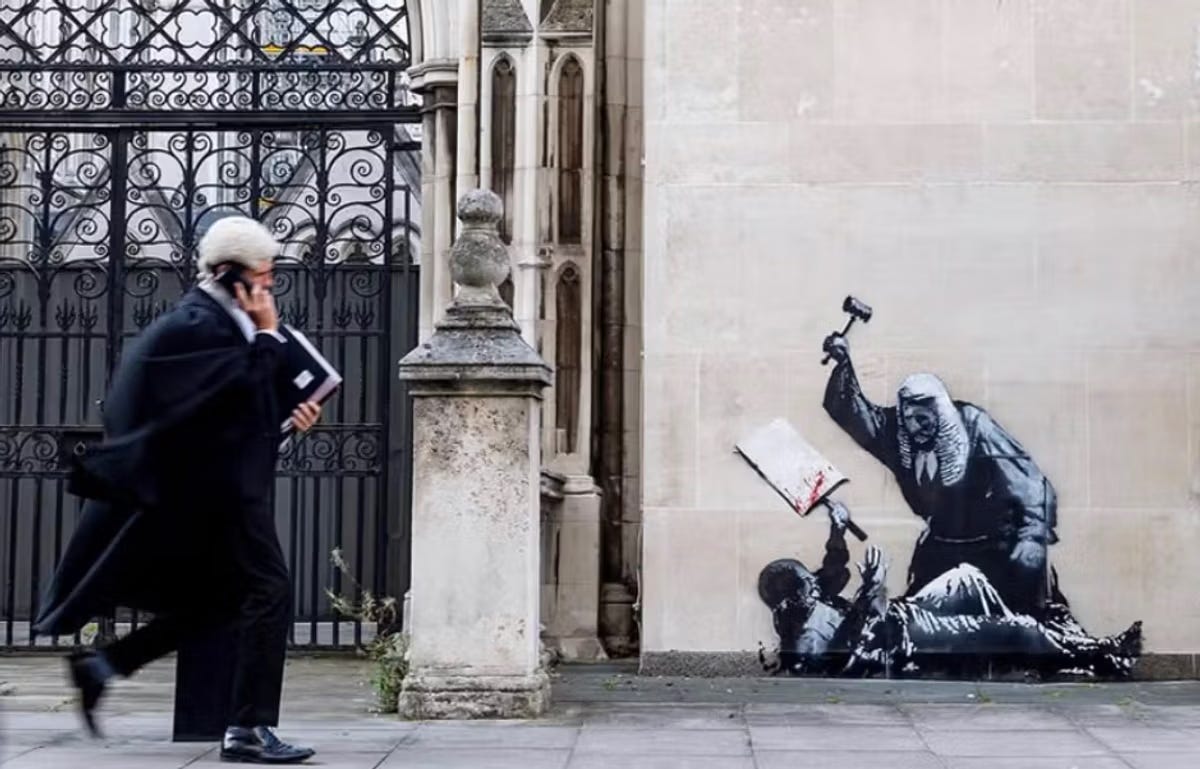
The stencil, appearing overnight on the Grade II listed Queen’s Building, shows a bewigged judge raising a gavel over a fallen protester, whose blank placard is splattered with red. The imagery quickly drew attention for its commentary on the suppression of free speech.
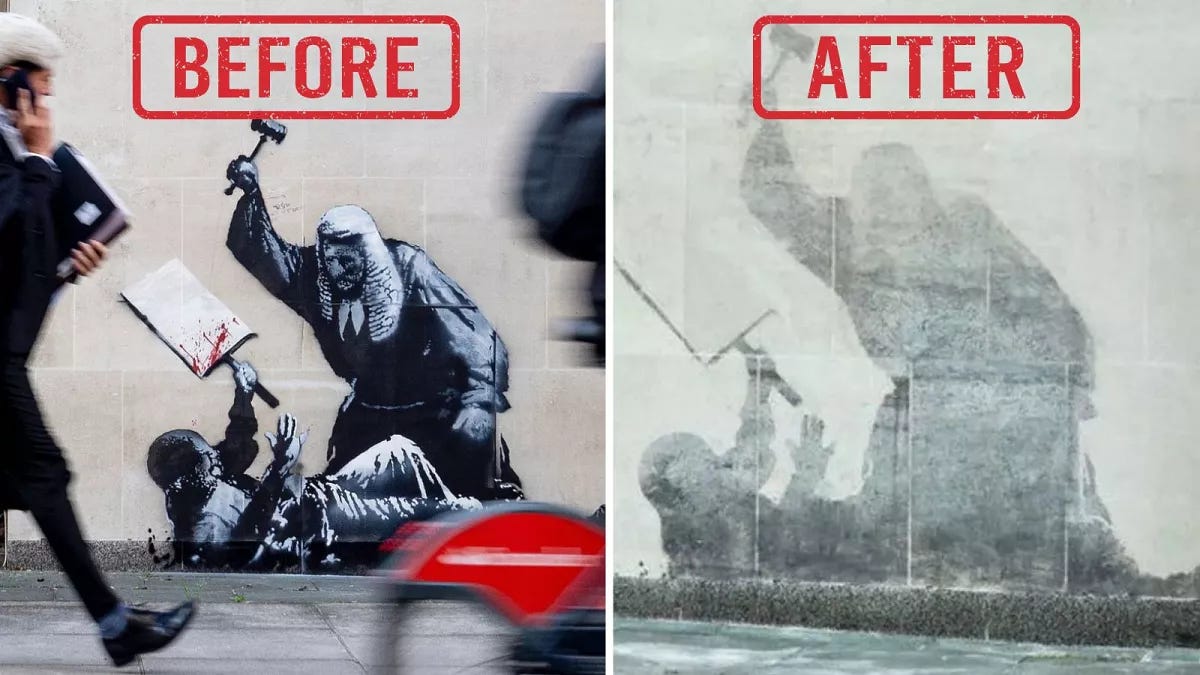
Ironically, the work’s rapid partial removal the following day only reinforced its message, illustrating how a single artwork can provoke debate and linger in the public consciousness far beyond its physical presence.
10. Guernica
When the Basque town of Guernica was bombed during the Spanish Civil War, Picasso responded with a vast, monochrome mural of fractured bodies and silent screams — regarded by many art critics as the most powerful anti-war painting in history.
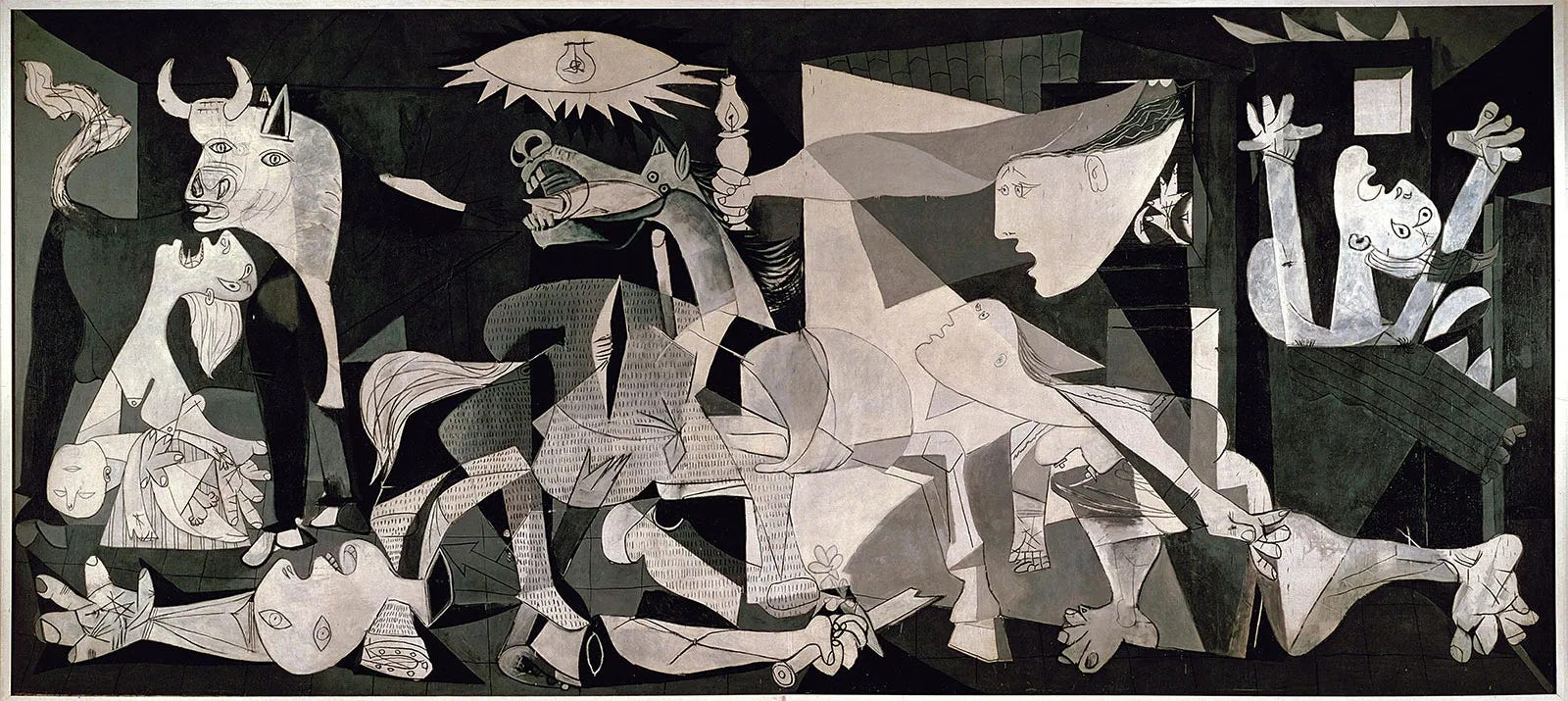
There is no landscape, no comfort, no hero. Only death. Only pain.
The painting traveled the world, becoming a visual argument against war. It ensured that the event would not fade into abstraction. Here, art is witness. It holds history in place.
Picasso lived in Paris during the German occupation of World War II. A widely told story recounts that a German officer, seeing a photograph of Guernica in Picasso’s apartment, asked, “Did you create this horror?” Picasso reportedly replied, “No. You did.”
Art helps us make sense of society and our place within it. As Albert Camus wrote in The Myth of Sisyphus:
If the world were clear, art would not exist.
While it cannot shield us from war, loss, pain, or the inevitability of death, creativity can revitalize us amid chaos, and the dialogue it inspires can help shape a better world.
Art changes us quietly — it rearranges the furniture of the soul. It teaches us to see light inside fracture, to find language for the unnamed, and to turn survival into meaning...
Until next time, keep seeking the beauty in the brushstrokes of life.
Thanks for reading! This newsletter is completely independent and ad-free — and it can only keep going with your support. Consider contributing a few dollars a month today, and get access to exclusive articles, the subscriber-only chat, and the full archive:
Thanks for being here — readers like you make it all possible.
Re kintsugi, we should think of the body’s capacity to repair itself as we grow older in the same way.
Whilst we were born without choice, we can choose how we develop though time.
Kintsugi is profoundly philosophical & aesthetic, simultaneously.
This is an uncommonly useful and insightful piece.
I remind people frequently that art is never just about beauty, but about human experience.
A print of Guernica hung over my father’s bed when I was very young. At twenty, I stood before the real one, at MOMA, and coincidentally began a wonderful affair with a fellow viewer. We shared a great deal over the work, and I would go a bit farther than to say that it is anti-war. I think it’s anti cruelty, anti suffering, and more. Things which we in America are experiencing even in the absence of war.